
I love a book about books, so I thought I’d pick up the slim 84, Charing Cross Road by Helene Hanff, and the sequel, The Duchess of Bloomsbury Street. Between reading the two books, I also watched the movie, staring Anne Bancroft and Anthony Hopkins as part of Chance #10 (Book/Movie Comparison) for the Take a Chance Challenge.
I hadn’t realized when I began reading that these books were true, but then I found them in the nonfiction section! The first is collection of letters between Helene Hanff and Frank Doel, the proprietor of a used book shop in London, during their 20-year correspondence (1949-1969). The second book is Helene’s journal when she finally makes it to London, a lifelong dream that comes true only after the first book was published.
I loved the book talk, and while neither of these books were favorites of mine, I did love learning about Helene’s reading and studying style. Oh, the power of books!
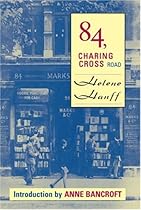 84, Charing Cross Road was a delightfully light collection of letters. I enjoyed the banter between Helene and Frank. I was a little sad by how few letters captured the last years of the correspondence. The friendship was still obviously clear, but the letters were fewer. Keeping the book as it was (simply a collection of letters) made it more powerful, though. Because the letters were every few years instead of every few months, I, as the reader, could see how this long-distance friendship meant so much to the two book lovers. It was sweet.
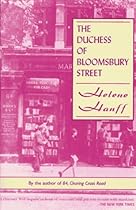 I wanted to see how Helene finally got to London, so I quickly found the second book after I finished the first. I admit that I was disappointed in The Duchess of Bloombury Street. I disliked the casual writing style in the second book (although it hadn’t bothered me in the letters of the first), and I didn’t like Helene’s overbearing personality as it came across in the second book (most people seem to like her sense of humor, but it wasn’t for me). I couldn’t relate to most of the sites she was longing to see in London (I have not read enough to know the authors and places she mentions), and I’m the wrong generation to be interested in the celebrities she spent time with.
But all the complaints aside (and I think I’m the only person in blogdom to complain at all), I’m very glad I read both books. I loved the book talk, and I loved the look at the thoughts and desires of another compulsive reader. What struck me was how isolated Helene seemed, living alone and working freelance at home. She seemed to have no other person with whom she could share her reading loves and the thoughts she had about books.
In that sense, then, reading Hanff’s story made me all the more glad for book blogging. Helene Hanff was a blogger born 50 years too early. She missed the community, and she would have loved it.
The Movie
 I normally have a hard time with books to movies, and I find I enjoy the movie much more if I wait to watch it until long after I’d read the book. This was one that probably could have used some distance.
The majority of the movie was excerpts from letters that Helene (Anne Bancroft) and Frank (Anthony Hopkins) wrote to each other, and so there was little action (my husband fell asleep in about 15 minutes). The action that there was seemed to suggest things that I hadn’t interpreted from the book: that Frank wasn’t completely happy with his wife, that there was an unspoken romantic tension between the two, even though they’d never met. While I’m sure there was a special bond between the two book lovers, the suggested romance did not seem to have come from the book. I also missed some of the great books quotes. The movie and the acting was okay overall, but I much preferred the book (but no surprise there).
Helene’s Reading Style
I really loved Helene’s reading style. First, she has no qualms with disliking books:
I houseclean my books every spring and throw out hose I’m never going to read again like I throw out clothes I’m never going to wear again. It shocks everybody. My friends are peculiar about books. They read all the best sellers, they get through them as fast as possible, I think they skip a lot. And they NEVER read anything a second time so they don’t remember a word of it a year later. But they are profoundly shocked to see me drop a book in the wastebasket or give it away. They way they look at it, you buy a book, you read it, you put it on the shelf, you never open it again for the rest of your life but YOU DON’T THROW IT OUT! NOT IF IT HAS A HARD COVER ON IT! Why not? I personally can’t think of anything less sacrosanct than a bad book or even a mediocre book. (84, Charing Cross Road, page 54)
I don’t throw my books out any more, but that’s only because Bookmooch allows me to pass them on to a happier reader. I could really relate to Helene, and I felt like saying “Finally! Someone who understands me!”
Do you throw away (or give away, etc.) books you hate? Do you throw away (or give away) books you’ll never read again? Why or why not?
And then I also really liked her description of how she gave herself her college education: by reading Arthur Quiller-Couch’s serious of lectures. Whenever she first got to a literary reference she wasn’t familiar with, she said, “Wait here” and went and read the book in question. And when that book had a reference she wasn’t familiar with, she went and got that book. This went on until she was familiar with the issues at hand; then she returned to Quiller-Couch (Q). She says,
So what with one thing and another and an average of three ‘Wait here’s’ a week, it took me eleven years to get through Q’s five books of lectures. (The Duchess of Bloomsbury Street, pages 51 to 52)
Now, that is a dedicated learner! I envy her dedication to the project, and I realize that that kind of careful reading, reading to truly understand, is what I’d love to do. I often find I’m lacking patience. I think I’d fail to get through one volume of Q at that rate. And yet, how marvelous it would be to have read so carefully!
Do you do research if you don’t know a reference you come across in a book? I’m sad to say I certainly don’t do much, beyond consulting Wikipedia and moving on.
The last thing that stood out to me was her depth of reading. She may have been pretty narrowly limited to English Literature, but she sure knew it well.
I’m always ashamed when I discover how well-read other people are and how ignorant I am in comparison. If you saw the long list of famous books and authors I’ve never read you wouldn’t believe it. My problem is that while other people are reading fifty books I’m reading one book fifty times. (The Duchess of Bloomsbury Street, page 106).
I can definitely relate to that. I want to be a widely-read person (as I’ve mentioned before), but I’d also love to really know some books. My problem is, I can’t decide which books to read fifty times!
Do you/have you read any book fifty times?
If you love reading, you may be intrigued by Helene’s letters and journal. Neither of these books are books I’ll ever revisit, but I enjoyed reading them once.
P.S. I do personally think this book about books beginning during the aftermath of WWII was the inspiration for Guernsey (thoughts here). But I thought Hanff’s story was better, mainly because it was real.
If you want to know which books are part of the exchange between Helene and Frank, Wikipedia shares a partial list of the books mentioned or ordered by Hanff in 84, Charing Cross Road.
Other reviews:
- Nymeth (review got me to read the book)
- At Home With Books
- The Literate Housewife Review
- Care’s Online Bookclub
- Books and Movies
- Citizen Reader
- Book Nut
- The Book Lady’s Blog
- The Bluestocking Society
- Library Queue
- A Comfy Chair and a Good Book
- Bart’s Bookshelf
If I missed your review of either book, let me know and I’ll add it here.



I was very nervous abt the movie because I was afraid Hollywood had to add that romance crap but it wasn’t as bad as I feared. I, too, was amazed at how Hanff approached her self-education. You are right – she would have loved blogging!
I had no idea they were non-fiction either at first! Sorry that the Duchess didn’t quite work for you – her sense of humour is quite quirky and I understand why it wouldn’t work for everyone. I want to watch the movie, but I’ll definitely wait until the book is no longer so fresh in my memory.
I do sometimes research references I come across in books, but sometimes I mean to research them later and end up forgetting 😛
I am one of the many who loved this book mainly for the book chat and, like you, recognising myself in Helene.
I couldn’t imagine reading one book fifty times as that’s forty nine books I then wouldn’t have time to read and that’s too distressing a thought. I do have favourites that I re-read though and would love a working knowledge of many but I am afraid it would taint my enjoyment of it some if I could recite it and have no further surprises.
I haven’t seen the film.
I think I’ll stick with just the first book. The second doesn’t sound as interesting. Nor does the movie – how does one make a movie about letters, anyway??
I do get rid of books I don’t like or won’t want to read again, or even sometimes books I haven’t read but know I’ll never read. I either donate them to the library, sell them to half price books, or give them away. Sometimes they make good gifts to people with different tastes than me!
This was a really interesting post because I’ve been wanting to read 84 Charing Cross Road for a while now. I loved the excerpts you posted on Helene’s philosophy when it comes to books and reading. I personally have a really hard time throwing a book in the garbage, but in a similar vein, even when I’m culling my closet, I don’t throw away clothing unless no one could wear it. I’d much rather see my belongings get a second life and be used by someone else. So rather than throwing out books, I sell them back to the used bookstore… and I have no problem doing so with books that I know I won’t read again (or know it will be easy enough to get a copy of from the library or wherever, should I find myself wanting to!).
I’ve never read a book 50 times, but books I decide to keep because I love them greatly, I will certain read more than once. I think my record for re-reading is probably one of the Harry Potter books, which I’ve probably read 6 or 7 times.
This is one of those books that I intend to read some day just for the literary references! Great review, very thorough.
Care, like I said, I think i’d have liked the movie better if I hadn’t just read the book! As it was, I thought it still portrayed a bit too much ‘romance.’
Nymeth, yeah, I think maybe I just wasn’t in the mood for that particular “quirky.”
I too always intend to learn more about a given subject, but then I forget. So much to learn, so much to read!
claire, I know what you mean about missing the 49 other books! But I’m a big fan of rereading and really getting in to them. And I find memorising them *because I love it* isn’t all that boring, because I love it. I’m thinking Pride and Prejudice and the like.
Amanda, I thought the second read more like a travel memoir, but I just wasn’t interested enough in Helene’s travels. There are some good quotes in it. Both are very quick reads, so I wouldn’t write it off completely.
Steph, If a book is horrible and I don’t think anyone else should read it, I do toss it in the garbage. But yeah, I love bookmooch so I can swap it for a book I want!
I think 50 would be hard to do, but I too have read some books six or seven times.
J.T. Oldfield, yeah, it’s always nice to think about books! If you love English lit, this one is probably even more fun.
Both of these books are on my wish list. I have a hard time getting rid of books, even though I don’t re-read very often.
Kathy, enjoy them when you read them!
I loved these books, for all the reasons you mention and more. I found them because I love nonfiction, so it was fascinating to hear that they could have been taken for anything else (although it make sense; tons of novels have been written as series of letters). Everything about Hanff’s approach to reading and books and learning made me glad she got her books published–she was a true scholar, even if she never finished college. And I’m so glad to see her books still getting such wide and varied readership.
Citizen Reader, I agree: she’s definitely a true scholar!! You don’t need a college education to be one.
Rebecca, great reviews. As you know, I went on a bit of a Helene Hanff binge last month and read everything by her that I could get my hands on. Unfortunately, I was largely disappointed. I love 84, Charing Cross Road, but I had similar complaints about The Duchess of Bloomsbury Street and the rest of her oeuvre.
I tend to horde books, but I am to the point where there are more books than shelves, and I need to reevaluate – maybe join Book Mooch. I haven’t ever thrown a book away, but I do give books away to friend or charity if I don’t think I’ll read them again.
I don’t think I’ve read any single book 50 times. I’ve probably read Pride and Prejudice 10 times or so. There are just too many new books to read!
Jessica, I saw you’d read all of those, so I was curious to see how they all compared. I’m glad I’m not alone in not loving the second one, and I’m sorry the others weren’t so great.
I love Bookmooch, but most of the books I want are never available and the books I own aren’t requested.
Also love Pride and Prejudice. I’d love to reread it every year, but I’m thinking I need to read Austen’s others at some point too….
This is one great post — so full of information and questions and things to think about. I have to say, it doesn’t seem like a book that calls for a movie to be made of it!! And I love your comment that Helene was a blogger born 50 years too early! And I’m pretty sure my husband would fall asleep during this too — maybe even I would!
Jenners, I think the movie did a pretty good job of creating tension but I think it added the romantic element that wasn’t really there. And it was really just letters so one should read the book!! It was fun to read the letters, though.
Just finished reading Duchess of Bloomsbury Street. I wasn’t sure what to expect, a fellow co-worker passed it on to me and said I think you will like this. For most of the book I thought it was about a young woman travelling for the first time. It wasn’t until the end i realized this book was about a middle aged woman like myself– no wonder i thought she sounded so nice. A easy read, enjoyable but definitely not a reread.
Thanks for really good, in-depth review – enjoyed it and reading all comments. I saw the movie first and loved it, then my husband bought me the book with the letters – I read it but like you wouldn’t revisit it! I didn’t know there was a sequel, so interesting. Yes I too pass on books to charity shops, unless they are hard backed and a gift from my husband – I have every biography written on Anthony Hopkins!!
I have just read the book, Charing Cross Rd after seeing the movie and thought the movie captured the spirit of the book well. Great review, especially interesting about Helen’s character.
Thanks for that great review! I am a fan of Hopkins movies but have to say I found this movie rather slow, disappointing and dull – kept thinking they would meet and something would come of it. The book, however, sounds more interesting – agree about Helene being a bit of a modern blogger!!
Jamie, the book is fun because of Helene’s attitude. I hope you enjoy it!
[…] The Reading Life, Whimpulsive, at home with books, Jenny’s Books, Bart’s Bookshelf, Rebecca Reads, The Literary Stew, Book Harbinger, Sophisticated Dorkiness, Buried in Print, Care’s Online […]