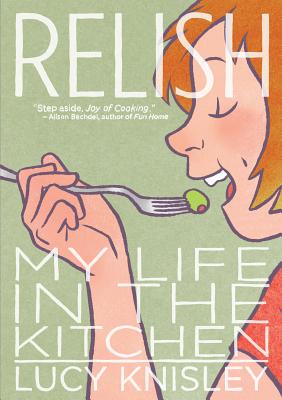
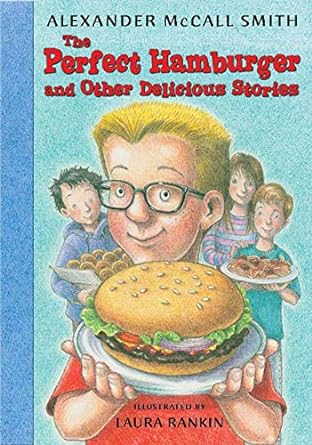
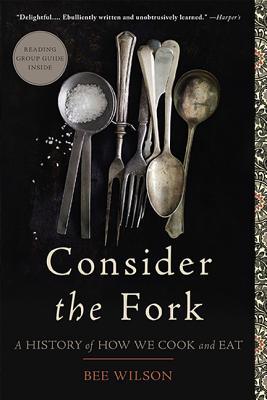
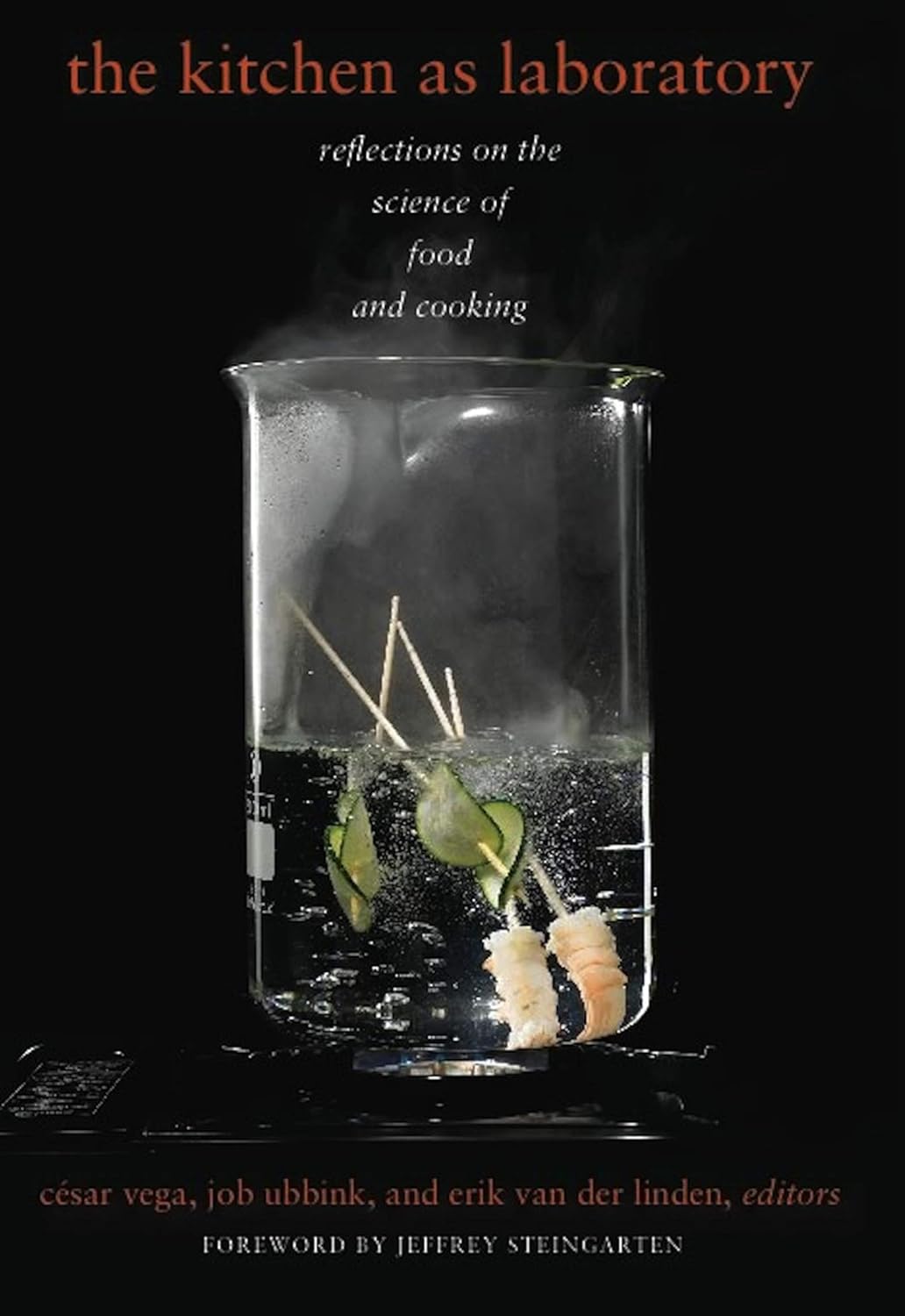
A Bite of the Spice of Life (Two Books by Julia Child and Too Many Cooks by Emily Franklin)
When I decided to start posting reviews of a few books at the same time, I still intended to write the reviews as I go as I did for my math and science reviews the other week. Although I wrote a separate review for the cookbook memoir I read by Emily Franklin, once I read the two books by Julia Child I realized I could not post my thoughts about Ms Franklin’s book in quite that way.
You see, I’ve been converted. There is, there has been, and there will have been, only one Julia Child in all of history. Her story (which I read in My Life in France) is fascinating and inspiring, her cooking style (which I experienced in part in Julia’s Kitchen Wisdom) is refreshingly simple, and together the two Julia Child books I read gave me hope for my own pathetic cooking abilities. It is, therefore, completely unfair to include Ms. Franklin’s book (and my criticisms of it) in the same post. Nevertheless, because I read Julia Child on the wake of Too Many Cooks, Ms. Franklin is a part of my experience in the past few weeks. Continue reading »
Baking Cakes in Kigali by Gaile Parkin
At first, Baking Cakes in Kigali by Galie Parkin reminded me of The No. 1 Ladies Detective Agency by Alexander McCall-Smith.
In both novels, an independent woman in an African country runs a business and listens to the gossip of her neighbors, showing the reader a little bit about African locale, but also illustrating the pure spunk behind a strong woman in various situations. Both books share humorous anecdotes in a light, easily accessible tone. Even when difficult things happen, the tone remains hopeful.
But that is where the similarities end. McCall-Smith graciously paints the beautiful and peaceful, yet poor, Botswana. Parkin, on the other hand, illustrates a pained Rwanda. The stories Angel hears are those of genocide survivors. And yet, even Angel’s story is ultimately full of hope. Continue reading »
An Edge in the Kitchen by Chad Ward
I needed to sharpen our kitchen knives, so I found a book to help me along, specifically, An Edge in the Kitchen: The Ultimate Guide to Kitchen Knives by Chad Ward.
Overall, I liked the information I read. I got excited about my kitchen knives! But when I went to try and sharpen my own knives according to the instructions in the book, I was a bit lost. My husband, who has sharpened kitchen knives himself before, seems to think the problem was me, and not the book. Nonetheless, for a novice knife sharpener, I’d suggest that a book is probably not a great place to start your knife sharpening education. Continue reading »
Pretend Soup by Mollie Katzen and Ann Henderson
Most mornings, after my son (age 23 months) finishes his breakfast, he jumps out of his chair and runs to the kitchen stool, yelling, “Cook! Cook!” He climbs the stool and pounds the counter, a big smile on his face, for he knows I’ll probably give in and cook something with him. (I normally prepare a batch of breakfast granola twice a week, so I think that’s when this obsession started.)
I’ve been looking for something to nurture this interest, and then I recalled a book that months ago Eva mentioned her niece enjoyed: Pretend Soup by Mollie Katzen and Ann Henderson.
I didn’t realize how wonderful Pretend Soup was until I consulted another preschool cookbook and compared the two.
The second book had cooking activities, and each treat was either in a shape (such as fruit pudding decorated like a cat, bread shaped to look like a bear) or the treat itself was a sugary desert (chocolate dipped fruit, fruit tarts arranged in a pretty pattern). These recipes seemed far too artistic for my creative design talents, let alone those of my one-year-old (or even an older preschooler).
While Pretend Soup does include some “decorated” food (“Bagel Faces,” decorated with vegetables, for example), the emphasis in the entire book is different. Katzen and Henderson assert that for a preschooler, the fun part of cooking is the actual act of cooking. Watching my son, I believe it. Continue reading »
Like Water for Chocolate by Laura Esquivel + Giveaway
Like Water for Chocolate by Laura Esquivel is almost a genre by itself. The traditional Mexican recipes are provided in a novel format as it tells the story of Tita, Tita’s overbearing mother, and Tita’s lover, Pedro, who marries her sister. And yet, it’s not a cook book, and I don’t think it’s not an ordinary novel.
The title comes from the state of water just before it’s ready for hot chocolate: the water is simmering and the bubbles are about to burst on the surface.
Such a near eruption is Tita’s state throughout her life. From her childhood, Tita has been in the kitchen, and she longs to live a life of her own and to feel the passions that she is forbidden. As the third daughter, Tita is forced to care for her aging mother for the rest of her life, rather than to love and experience life. As much as Tita longs to escape, she is constantly trapped preparing the traditional dishes that only she knows how to prepare. These dishes, and the memories and emotions that stem from them, capture the sorrows of her life.
I loved reading this book. It was part novel. It was part romance. It was part magic. It was part cook book (although I’d never attempt to create the meals, given the long-winded, unclear instructions that start with plucking feathers and so forth). Certainly, Like Water for Chocolate had it faults in that it is short and all people in it were caricatures. And yet, I didn’t care. It was a fun book.
I liked it so much that I’d like to share it with a reader of Rebecca Reads. I’m giving away my lightly used copy.
A Homemade Life by Molly Wizenberg
I have an unfair bias against memoirs. This may stem from the fact that many memoirs are written by people who are complete strangers, and I find myself wondering why their life should be of interest to me. With this book, at least, that unfair stereotype was certainly proved wrong!
Molly Wizenberg’s A Homemade Life is a great example why someone else’s life may be incredibly interesting, simply because Molly’s life has been defined by food. And as she explains each chapter of her life for us, she provides recipes so we can experience the integral food too, if we choose.
It’s so much fun to see a life through the eyes of delicious foods. Molly shows that food is a communal part of our lives, helping to form lasting memories and lasting relationships. Food really can tell the stories of our lives, as Molly’s memoir/cookbook attests.
As she writes of her childhood, for example, she shares her dad’s excellent French toast. As she writes of her first trip to Paris, she writes of the bread and chocolate that defined her days. As she writes of the holidays, she shares favorite holiday treats. And then, of course, there are her Paris recipes, and her best friends’ recipes, and her vegetarian boyfriend’s salad recipes. And Molly could just keep going, I’m sure.
But A Homemade Life is not just about the food. Molly’s memoir is excellently written, easily readable, and absolutely delightful. I know “delightful” is a cliché, but this book seriously fits the word without being cliché. It is real, and yet amusing and engaging all at the same time. Continue reading »
The Art of Simple Food by Alice Waters
In some respects, I miss the point of Alice Waters’ The Art of Simple Food.
Alice Waters is the original proponent of seasonal, local, and organic foods. But because I grocery shop for a family on a budget, I can never justify going “organic.” I also live in Chicago suburbia, which means that there are about two feet of snow on the ground for four months of the year, so I can’t ever imagine relying wholly on seasonal and local foods either. I’m sure organic and local foods taste better; I just can’t justify the cost difference.
All that said, though, I love The Art of Simple Food. I find myself referring to her pointers and recipes often. The aspect I love is this: Food should taste like itself. Don’t complicate things!
I’m a person that thinks a few fresh strawberries make a perfect dessert, so I really like her emphasis on simplicity. Her recipes are very basic essentials, so experienced cooks may find them dull or “too simple.” But as a beginning cook who loves simple dishes (both for cooking and for eating), I find her recipes refreshing. Continue reading »
My Spice of Life “Feast”: A Pool of Books to Chose From
I don’t usually write up a post for each new challenge I join; I just put my pool of books on my current challenges page. But, as I’m running the Spice of Life Challenge, I hope my list of hopefully delectable books will tempt you to join.
There are three levels of participation: “A Taste” (read just two books in any category); “A Sampler” (read four books, one in each category”); and “A Feast” (read six books from at least three categories). To sign up, get some more information here.
Below, then, is my personal pool of books from which I will chose between six and eight for this challenge. These are just the ones I’m most likely to pick up in the next six months; there are dozens more I’d love to get to, of course. I posted a few much longer lists on the challenge site (link to by clicking the picture). Continue reading »
The Spice of Life Challenge
I’m going to be hosting a new challenge for the last six months of 2009. It’s all about food. Go check it out.
I have a list of books to share with you to tempt you in to this, but putting up that site took a lot longer than I thought. List will come another day.
I’m hoping other people want to join me in the feast of good “foodie” books, but if not, I’ll be reading by myself. I’m trying to bridge my hobbies of reading and cooking. (I’m a wannabe cook.)
I’ve got to go eat. All this talk of food made me very hungry…
The Making of a Chef by Michael Ruhlman
What I Learned from the CIA
As I mentioned when I read Michael Ruhlman’s The Elements of Cooking, I’ve also been reading one of his other books about food, The Making of a Chef. This book is Ruhlman’s behind-the-scenes look at what a “culinary education” entails, particularly what it takes to earn a certificate or degree at the CIA (the Culinary Institute of America).
I have become very interested in cooking and what makes a “good” cook. What does it take to be a “chef?” About one-third of the way through this book, I began to realize that I never want to be a chef: it does not sound like fun.
However, as I read about what a chef must learn, how a chef must prepare each day before the restaurant doors open, and how to approach each day in the kitchen, I began to think differently about food and cooking. Continue reading »
Search
Recent Posts
Recent Comments
Archives
Genre
- Non-Reviews (221)
- Blogging Miscellany (109)
- Carnivals (18)
- Challenges (38)
- Meme (23)
- Polls (4)
- Writing about Reading (141)
- Essays/Articles on Reading (14)
- Libraries (8)
- Pondering Reading (48)
- Pondering Writing Styles (15)
- Reading Journal (76)
- Blogging Miscellany (109)
- Reviews (329)
- Child/Young Adult (81)
- Picture Books (40)
- Drama (10)
- Fiction (150)
- Short Stories (30)
- Nonfiction (90)
- Biography/Memoir (36)
- Reference Books (10)
- Speeches/Essays (6)
- Poetry (39)
- Child/Young Adult (81)
Subjects
rebeccarreid on Twitter
- @Zommie I love West Wing too! So good.
- Dare I do it? I'm starting blogging again -- but I suspect I'll be a little different from now on http://bit.ly/bbKvZx
- My son's obsession has been Goldilocks and the 3 bears. This morning he's playing "Blue's Clues and the 3 Bears." Hmmm...
- I spent way too long this a.m. taking apart my dishwasher to clean the filter. I'm hoping that cleaner dishes make the effort worth it.
- The REALLY OLD CLASSICS Challenge starts today! And goes for four months. One work in four months....very doable. http://bit.ly/d3Q1Xr