
Today I welcome Wilkie Collins to my blog through the Classics Circuit.
Although I like reading classics, I don’t know much. Before August of this year, I’d never heard of Wilkie Collins! I first experienced Wilkie Collins through The Woman in White (loved it!), and I recently read The Moonstone.
For this Circuit, I decided to read about his life. Although reading two biographies does not make me an expert, it’s been fun to read reviews now that I feel I know about the man! I hope this overview of Wilkie’s life interests you too.
The Biographies
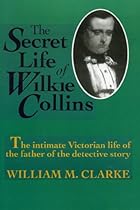 I read two biographies of Wilkie Collins. The first attracted me because the title seemed appropriate for a writer of suspense. The Secret Life of Wilkie Collins by William Clarke gave me a fresh look into Wilkie’s personal life and the controversy and complications of his circumstances. It was written by the husband of Wilkie’s great-grandaughter, so he had a personal interest in proving the facts of Wilkie’s mistresses and children. The biography met those needs, it was well researched, and it was well notated.
Yet, Secret Life failed to give me a complete picture of Wilkie Collins as a popular writer, and therefore it left me wanting more. I turned to Catherine Peters’ comprehensive biography, The King of Inventors, to get a well-rounded perspective. Since Peters’ biography was published after Clarke’s, I should have gone straight there.
Peters’ biography was what I expect when I read a biography of a literary man. She looks both at his life and at his works. Peters details the controversies and unknown aspects of his personal and family life. Then, for his most significant publications, Peters spends a few pages discussing why the books were monumental, which seems appropriate for one dubbed “King of Inventors.” Even though I skipped a few paragraphs when I was unfamiliar with a novel and therefore unable to follow the discussion, I was still able to understand the overall discussions about the breakthroughs Wilkie made in his writing.
As I have returned Secret Life to the library, all references below are to King of Inventors.
The Beginning
From his birth in 1824, William Wilkie Collins looked strange, with a bulge on the upper right of his head, probably the result of a difficult birth. He was always self-conscious of his forehead, and his large beard in his later life may have been an attempt to distract from the unbalanced look of his head (pages 18-19). He also was horribly short-sighted throughout his life and had unusually small hands and feet.
His was named after his father, the artist William Collins, and his godfather, the Scottish painter David Wilkie. Wilkie (called Willie as a child) was not impressed with his father’s religious piety, and Peters’ suggests that Miss Clack in The Moonstone is part of Wilkie’s response to his father (page 306). On the other hand, Wilkie was always close to his mother, and lived with her until 1856 (age 32).
Although he spent only one year (age 13) touring Italy with his family, Wilkie considered it a “crucial” point to his development as a writer. Among other things, he learned about life outside of his own closed family circle. From my perspective, it seems he had a remarkable memory of people and places, able to rework the images in his mind into a story even many years later.
It’s good that Wilkie had memorable experiences in Italy, for he was teased at boarding school upon his return and was actually bullied into telling stories to the other boys; if a story wasn’t interesting, they’d bully him more (page 50). That was a good start for the budding novelist; he wrote his first novel (about Tahiti) as a teenager.
A Literary Man
His father may have wanted Wilkie to become a painter, but instead Wilkie eventually entered Lincoln’s Inn to study law. When his father died in 1847, Wilkie stopped working on his second novel to write his father’s biography, which he’d promised to do. Although Wilkie wanted to write novels, he realized that writing a good biography of a respectable painter may help him get in the door with publishers (page 76). He was right.
When I read The Woman in White and The Moonstone, I found it remarkable that an author could write such a coherent story over the course of more than a year of serialization. He had to know, from the beginning, how it would end. Wilkie Collins did: he wrote outlines and plans before beginning a novel so he would not have problems later. His contemporary writers particularly disliked the idea: “Such work gives me no pleasure,” said Anthony Trollope (page 392).
In his good novels, Wilkie brilliantly captures characters, settings, and plot. There is suspense as it had never been done, and mystery as it had never been written. He wrote about fallen women; he wrote about people with disabilities; he wrote about sexual tension.
Today, we may read his works and not think them extraordinary, but at the time, he was an inventor of a new type of fiction. Peters discusses most of Wilkie’s major works in detail, discussing how Collins is an “inventor.” I look forward to reading them now that I have a better understanding of how monumental they were!
A Ladies’ Man and a Family Man
Wilkie met Charles Dickens at the acting troupe of amateur actors (all artists and writers) in the late 1850s. Although Dickens was 12 years Wilkie’s senior, the two struck up an unusual bond, as Wilkie became Dickens’ favorite companion for “nightly wanderings in strange places” (page 98). Together, they traveled Europe frequently. (The first time they traveled together, Dickens was disgusted by Wilkie’s immaturity and cheap ways). Wilkie eventually worked for many years on Dickens’ staff at the serial magazine All the World Round.
Although Dickens worked hard to keep his subsequent affair with Ellen Ternan (which began in 1857) a secret, Wilkie Collins did not attempt to hide his two mistresses. This difference in dealing with a personal matter may have lead to the rift between the two writers in later life.
 Wilkie supposedly had his first love affair in Rome at age 13, and from then on he was unabashed in flirtation. In 1858 (age 34), he began to live openly with the widow Caroline Graves, who had a young daughter (called Carrie). Supposedly, Wilkie met Caroline in a situation that inspired the opening story of The Woman in White, but there is no solid evidence of that (see page 191). Caroline was not of middle-class upbringing, but Wilkie did not like dinner parties and the physical restrictions of the middle class, so that appealed to him (page 195).
In the late 1860s, Caroline left Wilkie and married another man. Her marriage did not take, for she returned to Wilkie soon afterwards, who had, by that time, begun a second liaison with Martha Rudd, a young woman with an even lower upbringing. Yet,
Martha herself was an incarnation of the courageous and independent-minded young working women Wilkie had always found touching and intriguing. (page 294)
Martha and Wilkie went by the alias of Mr. and Mrs. Dawson, and Wilkie was to father three children. Wilkie loved being a father, and the children often traveled with him and Caroline (Martha was, apparently, not respectable enough to travel with him).
Although Wilkie Collins was quite a ladies’ man, it probably won’t surprise his readers to know he liked a woman who could think for herself.
Though he was far from conventionally attractive, Wilkie had the ability to charm and amuse women of all ages. He wooed them with his story-telling, with comic verse and intimate affectionate letters. … Though Wilkie was not in the least interested in female emancipation, he liked women who where intelligent and gifted and spoke their minds. (page 122)
I found it strange to read that he doesn’t have any interest in female emancipation, since it seems that his books have strong women: I would have thought he would like to support women and free them from Victorian class status. He lived with one woman and had three children by another, so this life style seems in conflict with the message his novels share. Peters brings up this issue. She herself asks that question and then answers it:
How could Wilkie continue, though out his association with Martha, to write polemical roman a these in which ‘fallen women’ were reinvigorated into society through marriage to great-hearted, unconventional radicals, fighting to break down class barriers? Though he thought the legal forms quite irrelevant, he took care to keep ‘readers in general’ contented with a conventional happy ending. (page 297).
Wilkie Collins, in other words, was still rather Victorian in his attitudes. He treated the women in his life well, from his perspective, but from my modern perspective, it seems he used them as he pleased. Caroline was always referred to as his “housekeeper.” Martha was a “kept woman” (she had a very generous living allowance), literally stuck with raising his family. When I understood that Martha was unable to escape the situation if she had wanted to, it seems sad to me. That said, both woman (from this distance) seemed happy with their lives.
An Ill Man
For much of his life, Wilkie struggled with “rheumatic gout,” a type of arthritis. Wilkie’s gout returned at times of stress, such as when he was under pressure to write a serial. Occasionally it attacked his eyes, and he would dictate to Caroline’s daughter, Carrie (page 335). From the early 1860s, he began taking laudanum (tincture of opium) for the pain. By the time he died in 1889, he was taking enough each day to kill twelve people (page 336).
In later years, his writing deteriorated. After The Moonstone in 1868, Wilkie did not write another such successful novel. There were some modest successes, but nothing to the same extent of his early writing. After an unpopular serial novel, magazines would not serialize his next. They even suggested that he was too literary (and therefore too expensive) for their household magazine (page 395).
Wilkie also took the time to tour America and Canada, but he was not as popular there. He also struggled to retain copyright in America; his publications were constantly underscored by illegal pirated versions, both in print and on the stage.
Peters mentions that Wilkie’s successes at the theater were detrimental to his novels. Earlier in his career, he would write a novel (such as Armadale) and then later in his career, he’d adapt it for a theater production (Miss Gwilt). In later years, he would write a novel with a theater production in mind. Thus, his later novels have less character development and more theatricality and dialogue.
Peters also suggests that he was stale.
Little of his work after The Moonstone transcends its era and the limitations of the sensation genre. By comparison with the novels Wilkie Collins wrote in the 1860s, many of the later ones seem flat and dated. (page 313)
Wilkie’s favorite writers throughout his life were Honore de Balzac, Sir Walter Scott, Lord Byron, and James Fenimore Cooper. Although they might have been influential in the beginning of his life, by the end, these were still his favorite, and he had no taste for the newer styles of fiction out there. So, while Wilkie began as an “inventor” of new types of fiction, in the end he began to resent those who invented new fiction (see page 377-8 and 420-421).
In the end, whether it was his opium addiction that brought about less clear descriptions, or his desire to put moral lessons in his novels, or his own inability to see the world in a cutting-edge way, Wilkie Collins lost his ability to consistently write engaging novels. His last years were hit or miss. When he died, his estate was worth just over £10,000, much less than he’d have expected. As specified in his will, the money was divided between the families of his mistresses. Although he’d intended for them to live well, they vanished into obscurity. Probably due to embarrassment at their own illegitimacy, his three children went by the name of Dawson for the remainder of their lives.
In Conclusion
Wilkie Collins’ life is almost as fascinating as his sensational novels. One of the aspects of Peters’ biography that I loved was her detailed discussion of the books Wilkie wrote: particularly the inspiration for the story and the ways in which each book was innovative for Victorian England. I don’t, however, have the time or space to detail all of them. If you are interested in Wilkie Collins (and this post still hasn’t fulfilled your craving!), I’d highly recommend Peters’ biography, The King of Inventors. It really puts Wilkie’s Victorian literature into context.
Also, check out the rest of the Wilkie Collins Classic Circuit.




Wow, he really got around.
Wow, it sounds like you learned a lot. There are a million things I could comment on, but instead of leaving a huge long comment, I’m just going to say I really loved this. Thanks.
What a great post! I really enjoyed reading this – I’ve read a few of Collins’s books but never knew much about him personally. Thanks for this, and especially thanks for hosting the Classics Circuit. I’ve been liking it so much!
I love learning more about Collins. He seems like he was a very interesting man. The whole idea of writing a chesive novel as a serialization must be such an act of patience and forethought!
This was so much fun and so informative to read! Collins certainly was an interesting character in his own right. The Peters biography is definitely going on my TBR list!
Although I had heard of Wilkie Collins prior to this year (and even pre-book blogging), it was only through the Classics circuit that I discovered he had been so prolific as a writer – I was only aware of The Moonstone and The Woman in White!
I’m not sure I would have gone out and read two biographies about him myself, but now I don’t have to because of this post! 😉
I only heard about Wilkie Collins for the first time last year and like Steph had only heard of his two books. Thanks to this classics circuit I am now aware of all the others and hope to read them all at some point.
His life sounds really interesting and I’d love to read his biography, but I’d worry about plot spoilers for all the books I hadn’t read. Did you find this a problem?
This is fascinating – thank you so much!
Thank you for this! What a fascinating post. I’ll definitely keep Peters’ biography in mind, but it sounds like I should read a few more of his novels first, so I can follow the discussions better.
What in interesting post! I’m glad you told me about Wilkie’s life so I don’t have to read a bio yet, lol. 😉
I’m always bemused by authors who lived in a nontraditional way in a very restrictive society, yet choose to write about characters who make all the traditional decisions. George Eliot’s another one who lived for years and years with the love of her life, unmarried, but tended to give her characters the wedding = happily-ever-after endings. (Well, either that or wedding = terrible disaster, in the case of Casaubon.) And Jane Austen, who never married but whose heroines always did. Sometimes it seems like a shame; I’d like to read a memoir about what it was like to live a non-married life back then. I mean, obviously you can see why they made those decisions, but it’s still a little sad.
That is one in-depth look at Wilkie Collins! Awesome job Rebecca.
Fascinating! I wonder why Collins chose not to marry either woman. Was he against the idea of marriage in general, or was it because he was so entangled with both women that marriage to either was basically out of the question?
I also wonder if Peters gives away too much of the plot of Collins’ books when she discusses them. If so I probably would hold off on reading this until I read more of his works.
Chris, uh, yeah….
Amanda, I’m glad you enjoyed it. I know it’s incredibly long but I didn’t want to cut anything out….and no one else was writing about his life for the Circuit, so there you go.
Jenny, I’m glad you also liked and that you’re enjoying the Circuit!
Stephanie, he certainly was interesting. And yeah, I can’t comprehend not being able to go back and edit a novel once I’ve started it! Amazing planning…
Stefanie, yeay! I got someone to want to read the book!
Steph, that was also my hope, that those who aren’t inclined to read biographies would feel they know more without having to read it!!
Jackie, as I mentioned above, she did talk extensively about the plots of his novels. For the novels I intend to read, I skimmed or skipped such discussion since I couldn’t follow the discussion of the characters and I didn’t miss too much. I am not one to ever find a book “spoiled,” though, even if I know the main themes or key scenes, so I’m the wrong one to ask!
JoAnn, glad you enjoyed it.
Nymeth, I’d say reading WinW, Moonstone, Armadale, and No Name would be sufficient. She of course talks about the others but not as extensively. Even having only read the first two, I was okay though.
Eva, Yeah, I know some people aren’t crazy about biographies so I thought I’d go all out for this post 🙂
Emily, Wilkie had a large disdain for social conventions like social class and marriage and other things like that. He wrote it because he wanted to please his public — he was very good at reading the public’s expectations for the early years of his writing! But also, he still LIVED as a middle-class man, so he only went so far to be disdainful — only when it was convenient. Yes, seems like a sad double-standard to me…
Trisha, I’m glad you liked it.
Valerie, He did not like the institution of marriage. Possibly he was disgusted by Dickens’ marital difficulties and determined to avoid it. More likely, he simply just didn’t want to be “tied down”. Although he didn’t hesitate to expect the women in his life to be tied down and live a hidden existence! (Makes me mad.)
As for spoilers, see my note to Jackie above. I have a hard time complaining about “spoilers” so I am not sure what you’d count as “too much.” I will simply say she does reveal a good amount of plots, characters, motivations, and key scenes for the novels. It didn’t seem like too much for me; I loved it, although I admit I skimmed some sections for a few novels I couldn’t follow.
Thanks for a really interesting post on Collins. I didn’t know much about him other than his friendship with Dickens. I love the tidbit about him perhaps modeling Miss Clack from the Moonstone a bit on his father. What a dubious tribute!
Really interesting summary of his life. I liked hearing about what the biographer had to say about his attitudes to women, I think that’s been the most confusing/contensiouc issue exploredduring this tour so far.
Jane, yeah, made me think not-so-highly of his father. Apparently his brother kind of went that direction too….
Jodie, I think his take on women was incredibly interesting too, especially in light of his books!
i just thought that married life is the happiest point of my life.~.`
[…] read one other biography of an author (that one about Wilkie Collins, thoughts here), and that biographer likewise summarized some key works by the author. However, that author also […]