
I was about 16 or 17 before I “got” the point of poetry. My mother (an English grad student) had invited me to come to an English conference with her, and the poet Andrew Hudgins spoke. I don’t know what he said or which of his poems he shared, but I suddenly realized that poetry can be a beautiful part of a self, that a poet is able to express feelings in words, feelings that I never thought expressible.
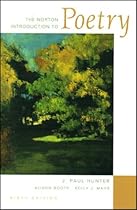 It was shortly after that that I bought the Norton Introduction to Poetry (3rd edition, 1984; the link is for the 9th edition, 2006) for a few dollars at a used bookstore. I’ve since browsed through it numerous times and always enjoyed the tutorial and anthology aspects of it: when I’m in the mood to think about poetry, it’s a nice fall back. In the last few months, I took the time to actually read most of it. (I think I skipped a total of about 50 pages in the 500 page book, mostly excerpts from long poems by Milton, Eliot, and Tennyson that I plan to read in full.)
My Introduction to Poetry
That English conference where I “got” poetry was not my first foray into the genre. I had, of course, participated in school assignments to read and write poetry.
I found two poems of mine in various journals from my childhood. I don’t recall what poetry I read at the times I was writing the poems below, but for me poetry had to be cliché.
Snow
Sonw [sic] is soft
sonw is neat
sonw is freasing
on my feetOn my ears
And on my face
Snow
Is every place. (3rd grade)Winter Wonderland [excerpt]
The snow gently falls from the sky,
like feathers floating,
resting on the bare branches of trees,
and covering the ground like powdered sugar. …(middle school)
Feel free to gag.
Apparently poetry needed to be about winter, but maybe that is simply a reflection on the fact that I grew up in Chicago, where snow is prevalent for at least four months of the year. I do have some consolation in the fact that as I got older, I attempted simile and I stopped trying to force rhymes.
But all the same, as these amateur attempts may attest, I never felt an abiding appreciation for the genre. Poetry was painful to read and painful to write, even when it was about snowfall.
When I listened to the poet at that English conference, I began to understand that poetry can be more. And that “more” is what I like about it now.
The Norton Introduction to Poetry
The Norton Introduction to Poetry has two parts: half is tutorial and half is anthology. The tutorial part is my favorite. In various sections, the editor (J. Paul Hunter) describes the role of subject, theme, and tone; text (including speaker, situation and setting, word choice, figurative language, and structure); and various contexts. For each subsection, he shares at least one poem and discusses the particular aspects of that poem. Since I still struggle with some poetry and I am a beginner each time I approach it, I enjoy the tutorial aspect.
In the very beginning, Hunter puts into words what I cannot: the reasons why I like poetry so much. He says,
[Poetry] is an experience of words, and those who know how to read poetry can easily extend their experience of life, their sense of what other people are like and especially their awareness of personal feelings. … Poems provide, in fact, a language for feeling, and one of poetry’s most insistent virtues involves its attempt to express the inexpressible. … Poetry can be the mouthpiece of our feelings even when our minds are speechless with grief or joy. (page 1)
And that is why I enjoy this introduction and anthology of poetry. The only downside is that it is more than 20 years old now – I’m sure the updated editions have a better variety of poetry and a more detailed tutorial. All the same, even the third edition is wonderful for me. It helps me to understand poetry, and by extension, the rest of the world.
(OK, so I’m back to cliché now. Trust me when I say I am no poet.)
Poetry Project
In reading The Norton Introduction to Poetry, I got some great samples of poetry from poets that I’d like to read more in depth. I will be adding them to my “poets to read” list and in the coming months I hope to read and study specific poets.
This is an extension of the poetry portion of my How to Read and Why project: in that book (which I still have not completed; I’m reading each work as I go), Harold Bloom shares his favorite poems. I feel I can read widely so I can likewise choose my favorites. This is a lifetime project, as I realize there are nearly an infinite number of poets on that ever-growing list.
Since April is National Poetry Month, I thought I’d participate by highlighting something poetry related every week, including nonfiction about poetry, a particular poet, or anthologies of poems. I’ve started a few books; we’ll see which get finished.
Poetry or Not: That is the Question
The first sentence in The Norton Introduction to Poetry is “People seldom feel neutral about poetry.”
From experience, I know that is true. Before that English conference, I hated it. After the conference, I was excited about poetry. There was no in-between.
What about you? How do you approach poetry? Do you like anthologies, or individual poets’ collections, or individual poems? What are you going to read this month in honor of National Poetry Month?
Or are you a member of the “not interested” category? Would you consider giving something (even just one poem) a try in honor of National Poetry Month?

Funny, but not two minutes ago I was looking at Norton Anthology of Poetic Forms trying to decide if I was going to purchase it, and I have this one on my wish list.
I’m not real big on poetry, but I think that’s because I don’t really know that much about it. I’m aiming to change that over the next couple of years.
Lezlie
I LOVE my Norton Anthology. It’s one of my treasured texts from college.
Thanks for this post. I’m reading some Ogden Nash and Emily Dickinson this month. Poets.org has alot of great stuff including a daily poem emailed to you if you sign up. They’ve been really good so far.
Your poem was great!
Lucky you—I didn’t “get” poetry until my 30s! I did make an early attempt at it much like yours. It began “The sun is oh so very nice / It melts completely all the ice / … ” 😀 I think poetry is like playing classical guitar. It’s easy to play a few notes but playing well is much more difficult than it looks.
I’ve been lusting after that Norton anthology but it’s so expensive! I do have some other anthologies but haven’t delved into them much. The tutorial aspect of the Norton intrigues me, and I’m thinking I should really start there.
I look forward to more poetry posts!
Lezlie, I think that’s a reason why I didn’t like it: I really didn’t know about it!
Sarah/Sylvia, well this was the Norton Introduction to poetry– a separate volume from the Anthology. And I got it used so it was very cheap. The current edition of the Norton Introduction to Poetry is going for $50 on Amazon, though, so it’s still pretty steep.
Sylvia, love your poem too!
Lula, I didn’t sign up for the poem emailed thing yet. Must go check it out!
Thanks for the clarification. To add to the confusion it seems there are two versions of the Norton anthology, big and bigger. 😀
I have the same 3rd Ed. you have, but I confess that I have not looked at it since high school.
Weirder yet — I think I wrote the SAME junior high snow poem!! I was in Omaha, not Chicago, but Cornhuskers have the same relationship to snow. You are a brave woman to share your childhood poems!
I am not good with poetry. I try every so often and I have good intentions. But I never fool myself for long. Maybe I’ll pull out the Nortons and give it another shot.
I like poetry like Jack Prelutsky and Shel Silverstein as well as WB Yeats, Robert Frost, and William Blake but other than that I’m not that crazy about it.
I’m looking forward to your posts, since my main reaction to poetry is guilt, lol. I definitely have favourite poets, but poetry is the genre that receives the least attention from me reading-wise. I think I’m going to break out an anthology I have and read a poem a night this month. 🙂
I love poetry but I don’t read it often enough. This month I’m reading as much as I can. I’m reading several collections and anthologies right now.
I tend to like individual poets rather than collections of poetry or poetry from a single period. I think I like reading poems by an author because you start to see a picture from the poems when you read them in sequence. I don’t read a ton of poetry, generally, mostly because I feel like I want to discuss it rather than just read it.
Sylvia, apparently, there is something for each stage!
Rose City Reader, That’s funny about the poems. I guess I wasn’t so creative after all 🙂
Ladytink, I’m looking forward to revisiting those childhood favorites with my son now! Thanks for the reminder. Love Frost and Blake but I don’t think I’ve read any Yeats (other than in anthologies). Must change that.
Eva, I tend to react with guilt too! Must remedy that. Lula mentioned in her comment that poets.org sends a poem a day this month. But I love the option to peruse anthologies too!
Vasilly, I don’t read it often enough either!
Kim, I think I prefer individual poets too. I like to learn about the poets, like you say. It’s hard to read without a discussion format. But, since that’s no longer an option for me, I’ll be trying anyway. I guess that’s why I liked this “introduction” book because it had “discussion” about the poems as I went along.