This picture book is non-fiction (or nearly that)! Sometimes the best ways to learn about something are through a fun story. This certainly fills that need. Daisylocks by Marianne Berkes and illustrated by Cathy Morrison (Sylvan Dell, 2014) is a beautifully illustrated book about a daisy seed trying to find a place to grow that is “just

Read Post

Goldilocks and Just One Bear by Leigh Hodgkinson (Candlewick Press, 2011) tells the story of Goldilocks from yet a different perspective. A bear who lives in the woods finds himself lost in the big city! The mixed media illustrations are just perfect for the mixed-up bear who just wants some peace and quiet. It’s lucky

Read Post

Previously by Allan Ahlberg, illustrated by Bruce Ingman is a different type of fairy tale. It goes backwards, showing that each nursery rhyme or fairy tale characters came from somewhere else. showing the effect of the action before showing the action. It begins, for example, with Goldilocks: Goldilocks arrived home all bothered and hot. And

Read Post

The Three Snow Bears by Jan Brett (Putnam, 2007). Aloo-ki is a young Inuit girl. Her huskie team has floated away from her on an ice flow, and she sees a little igloo with the warm smell of soup. What follows is, of course, her finding what is just right in the house: the smallest bowl of

Read Post

Goldilocks by Ruth Sanderson (Little, Brown, 2009). Although Ms Sanderson’s story begins in a traditional way, the end has a rewarding twist. Goldilocks stays to help make the beds, repair baby bear’s chair, and then, just when she thinks she will be eaten, she suggests her gathered blueberries. The book includes a recipe for the blueberry muffins

Read Post

Goldie and the Three Bears by Diane Stanley (HarperCollins 2007). As the cover suggests, Ms Stanley’s version of the story has an autumn setting. Young Goldie is a picky girl who only likes her peanut butter sandwiches one way, loves to read books every afternoon, and otherwise ostracizes friends by her honesty about her preferences. One day,

Read Post

Rubia and the Three Osos by Susan Middleton Elya, illustrated by Melissa Sweet (Hyperion Books, 2010). Rubia is a retelling of the story, using interspersed Spanish vocabulary words. The family of bears leaves their sopa (soup) on the table when they go for their walk, and Goldilocks discovers it is caliente and frío, a chair is too suave, and so forth. Raisin didn’t

Read Post

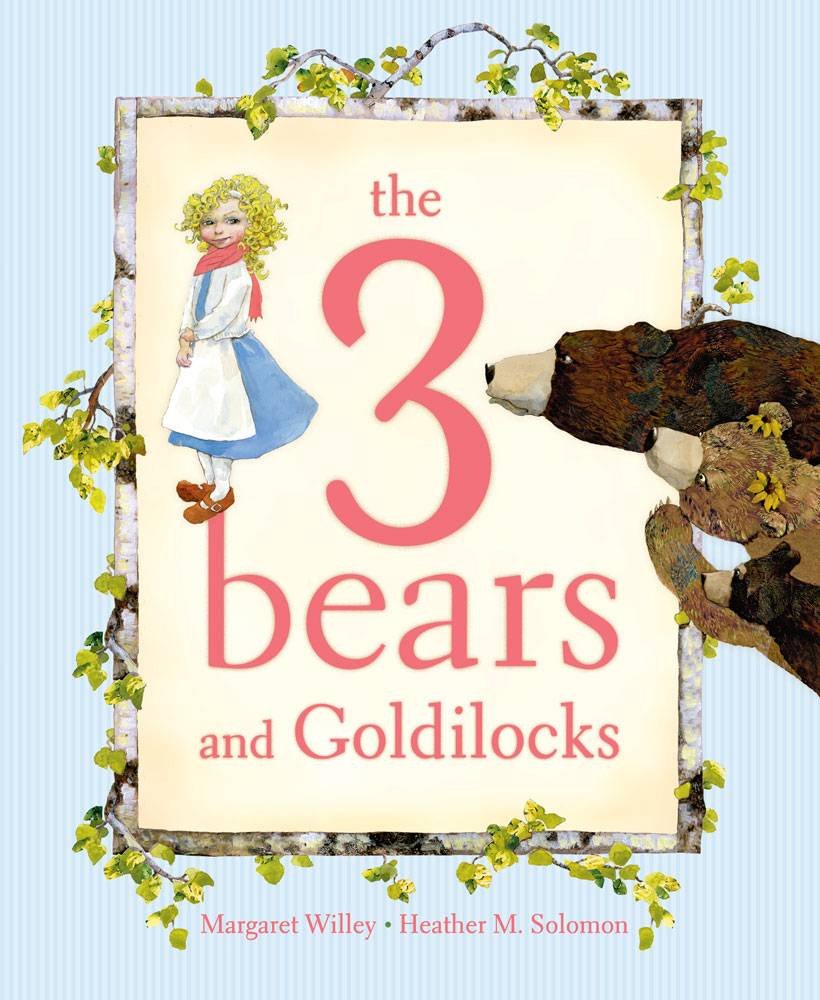
The 3 Bears and Goldilocks by Margaret Wiley, illustrated by Heather Solomon (Atheneum Books, 2008). Margaret Wiley’s retelling is one I kept thinking of as I pondered this project. In fact, her creative retelling prompted me to consider this project in the first place! Goldilocks is a curious girl, and her father warns her in the beginning

Read Post

Goldilocks and the Three Bears by Roberto Piumini, illustrated by Valentina Salmaso (Storybook Classics). My son said of Piumini’s version, “It’s not a good story. Goldilocks did not say sorry.” But she doesn’t say “sorry” in many of the books, so I’m not sure why this one stood out as not a favorite for him. It’s true

Read Post