How does a blind person understand the majesty of a cathedral? The narrator in Raymond Carver’s short story “Cathedral” tries to describe it. His underlying epiphany, however, is not about architecture but about his own prejudices and stereotypes. He discovers in the end that he has been the one blind. He has not understood the

Read Post

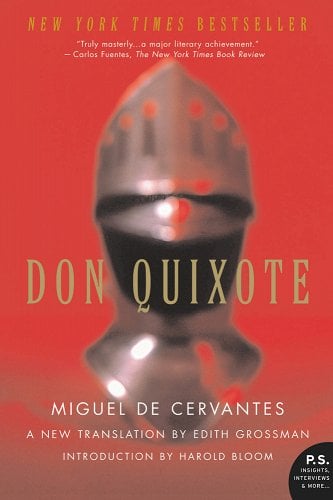
The goatherds’ observation that “This gentleman must have a few vacant chambers in his head” (page 439) comes at the end of part 1 of Don Quixote by Miguel de Cervantes (first published 1605, translated by Edith Grossman 2003). Yet, that is exactly the thought I had as I began the novel. Why, oh why,

Read Post

I cannot remember which blogger mentioned the poetry of Anne Bradstreet as among their favorite (please, tell me if it was you!), but I must agree that her poems are spectacular. I love Bradstreet’s religious themes, but also I loved her personal accounts of life. Although her writing was from a comparatively primitive pioneer era,

Read Post

I certainly hope there is not snow in the coming 48 hours, but in honor of one last crazy storm this winter-ish season, here’s one more “snow day” book that Raisin and I enjoyed. It’s one that would be fun any time of year. Zoo Flakes ABC by Will Howell is a fabulous ABC art

Read Post

Whenever I read a novel with stunning writing, I am always reminded why I seek novels with great writing to begin with. For Whom the Bell Tolls by Ernest Hemingway (first published 1940) is one such novel. It is deceptively simple in its plot, dialog, and sentence structure. I felt I was there. For Whom

Read Post

Although I don’t think her debut novel is necessarily as polished as her later novel, Half of a Yellow Sun, Chimamanda Ngozi Adichie stunned me with her perfectly crafted story in Purple Hibiscus (published 2003). It’s full of symbolism, but the touching story of a girl coming to terms with life in general (her abusive

Read Post

Henrick Ibsen A Doll’s House (Et Dukkehjem, written 1879) is better known than Ghosts (Gengangere, written 1881), and in my opinion, the former is also a more polished drama. Yet, when I think of one of these plays by Ibsen, I cannot but think of the other. I don’t remember which I read first, but

Read Post

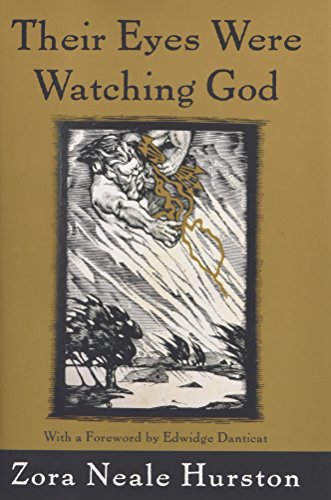
Ships at a distance have every man’s wish on board. For some they come in with the tide. For others they sail forever on the horizon, never out of sight, never landing until the Watcher turns his eyes away in resignation, his dreams mocked to death by time. (page 1) From this beginning, Zora Neale

Read Post

How readily our thoughts swarm upon a new object, lifting it a little way, as ants carry a blade of straw so feverishly, and then leave it. Virginia Woolf’s short piece “The Mark on the Wall” captures a few moments of thought-wandering. I’ve been impressed in the past with Virginia Woolf’s ability to perfectly capture

Read Post