The ever-talented Mo Willems wrote City Dog, Country Frog (Hyperion, 2010), but did not illustrate it himself; the also talented John J. Muth added his soft illustration style to this story. In this book, a dog from the city forms an unlikely partnership with a country frog. They play all spring and summer and remember during the fall.

Read Post

Subway by Christoph Niemann (Greenwillow, 2010), was on a new bookshelf recently; it caught my eye because my son (age 3) loves trains and has never yet been exposed to what a subway is. He loves this book! The illustrations are on a black background, with white-painted rounded-edged figures of a parent and two kids, taking

Read Post

Part of my problem with Jane Austen’s Emma (first published in 1815) lay in the main character. Jane Austen once famously said, “I’m going to take a heroine whom no one but myself will much like.” Unfortunately, such was the case for me. I disliked Emma Woodhouse’s immature manipulation of others around her, and found

Read Post

Half of a Yellow Sun by Chimamanda Ngozi Adichie (published 2006) tells the story of the Nigerian Civil War, when the minority, repressed Igbos in Southeastern Nigeria established the independent republic of Biafra. My understanding of the war comes from my reading of the novel, but I did also reference Wikipedia. (Adichie mentions in an

Read Post

According to my Harmon and Holman A Handbook to Literature, “romance” has had a special meaning in terms of literature since the beginning of the novel. As opposed to a “novel,” a term which suggested realistic manners and society, a “romance” was more unlikely to happen in reality. In common usage, [romance] refers to works

Read Post

Brigham Young: American Moses (by Leonard Arrington, first published in 1985) captures the unusual personality and able leadership of the controversial second president of The Church of Jesus Christ of Latter-day Saints (the Mormon church). Although I did not find Mr. Arrington’s text to be fascinating, the stories about Brigham Young were noteworthy, and I

Read Post

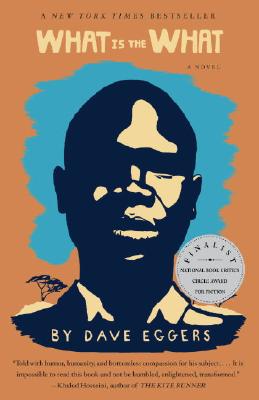
According to the tradition of the Dinka, the people who live in southern Sudan, after God created the world and the first man (a Dinka), he gave the first man a choice. “You can have either these cattle, as my gift to you, or you can have the What,” he said. The Dinka chose the

Read Post

Ginko Ogino was just sixteen when her mother and older sister arranged her marriage, as was custom in nineteenth-century Japan. When she returned home violently ill three years later, overcome with fever and infection due to gonorrhea, her family was shamed. Her story begins here, though, for during her embarrassing treatment in the male-dominated hospital,

Read Post

Last year, I read Baking Cakes in Kigali by Gaile Parkin, and I really enjoyed it. I suggested it to my book club, and I was delighted it when it was selected as this month’s read! I reread it last week and searched for some discussion questions online. To my surprise, I couldn’t find any!

Read Post

The Joys of Motherhood by Buchi Emecheta (1979) is about Nigerian tradition versus a modern and Western lifestyle, but it’s also about a woman coming to terms with her role as woman and a mother. I found myself viewing the main character, Nnu Ego, with conflicting emotions throughout the novel. From a modern, feminist perspective,

Read Post