The Body Book by Shelley Rotner is one of my favorite nonfiction books for my toddler. We’ve checked it out a few times. It shows photos of children at all different ages, and it shows them engaging in fun outdoor activities with their feet, hands, legs, heads, eyes, noses. This is not a boring anatomy book,

Read Post

I know I’ve mentioned it before, but the David books by David Shannon are funny child-friendly books with child-like illustrations. These are books my two-year-old son relates to completely. My favorite is still the original (No, David) but the baby David board books (called “Diaper David”) are also well done. Two that I have found

Read Post

I’ve found that fiction can help my son relate to himself as he deals with his current awkward “am I a baby or a big boy?” stage. (It comes with a lot of tears and frustration on his part.) Baby Happy, Baby Sad by Leslie Patricelli is one fictional picture book that he enjoys. He can

Read Post

My favorite nonfiction books to read are the ones that I see help my two-year-old son to better understand himself. Hands Can by Cheryl Hudson is full of pictures of real children, and it illustrates some of things he can do. Sometimes when he does something with his hands, like clapping or carrying or climbing, he notices

Read Post

In The Snow Day by Komako Sakai a little bunny and his mommy are stranded at home and daddy’s airplane can’t come home because of snow. The bunny watches it snow, he plays in the snow, and finally Daddy’s plane comes home. How perfect is that parallel? The beautiful illustrations and well-spaced text perfectly captured the feeling

Read Post

After reading Siesta by Ginger Guy and illustrated by Rene King Moreno (An ALA Notable Book), I decided to try this. In the book, two kids and their teddy bear, gather together a few things, such as a yellow book and a blue backpack and then a brightly multi-colored blanket and then go outside for their “siesta.”

Read Post

Junichiro Tanizaki’s Naomi is about obsession. Joji, a mediocre businessman, lets his obsession of the mysterious girl Naomi overtake him. Yet, while the novel is full of sensual obsession, it is ultimately about obsession with Western culture, for Naomi is a Western-looking girl that personifies an idealization of the west.

Read Post

In The Masterpiece, Zola captures the pain of creation, as he claimed himself: I want to depict the artists’ struggle with reality, the sheer effort of creation which goes into every work of art, the blood and tears involved in giving one’s flesh, in trying to make something that lives.  (Introduction to Oxford World Classics

Read Post

Shakespeare’s King Lear captures family relationships (father to daughter, father to son, brother to brother, sister to sister) in an undeniable tragedy. Lear is betrayed by his two eldest daughters and Gloucester is betrayed by his eldest (and illegitimate) son. But although there is broken trust and mourning, there are also tender expressions of true

Read Post

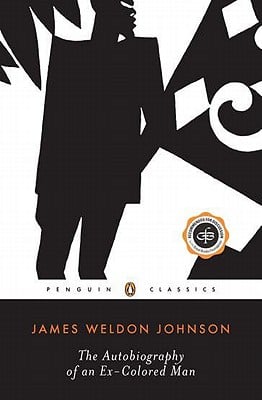
I had to keep reminding myself that The Autobiography of an Ex-Colored Man by James Weldon Johnson was actually a novel. It was realistic, and it was engaging and entertaining at the same time. Even more, it has a place in history alongside true-life narratives as an account of what some African-Americans may have felt

Read Post

I wanted to read more about genetics, so I picked up The X in Sex: How the X Chromosome Controls Our Lives by David Bainbridge (Harvard University Press, 2003), which focuses on the genetics of the sex chromosomes. It was a very engaging and easy to understand book, and it has left me even more interested in

Read Post