

Goldilocks and the Three Bears by Roberto Piumini, illustrated by Valentina Salmaso (Storybook Classics). My son said of Piumini’s version, “It’s not a good story. Goldilocks did not say sorry.” But she doesn’t say “sorry” in many of the books, so I’m not sure why this one stood out as not a favorite for him. It’s true

Goldilocks and the Three Bears by Emma Chichester Clark (Candlewick Press, 2010). As with James Marshall’s version, Ms. Clarks’ version has a distinct voice in the telling. Her Goldilocks is not as obnoxious as James Marshall’s, but she still deserves to be laughed at in the end (and to hide under her bed for a week). I

Goldilocks and the Three Bears by Gennady Spirin (Marshall Cavendish, 2009). Gennady Spirin’s story reminds me a lot of Jan Brett’s, in that his story seems to have a distinct voice, thanks to its distinct realistic illustrations. To be honest, I am not a fan of the dark illustrations in this one. The bears and the house

“Goldilocks and the Three Bears” in Yummy by Lucy Cousins (Candlewick, 2009). Lucy Cousins also has a distinct illustration style. Although the story was standard and nothing stood out to me or to my son, the bright illustrations may be a favorite. It comes in a collection with seven other fairy tales retold and illustrated by Ms. Cousins,

The Three Bears by Byron Barton (Harper, 1991). Byron Barton’s illustrated story is as basic as it can be, yet I have always enjoyed Mr. Barton’s simple stories and illustrations for a young child. He seems to show that less is more, that patterns and simplicity seem to capture the reader in ways that detailed illustrations do

Goldilocks and the Three Bears by Jan Brett (Puffin, 1996). Jan Brett’s strength is in her detailed illustrations. She is the master of detail. I love the depiction of Goldilocks; she looks like a girl from a photograph given the painstaking detail. I also particularly like the details on the three different bowls of porridge.

Goldilocks and the Three Bears by James Marshall (Dial, 1988). James Marshall’s version is the one, of all of these, that we own. Goldilocks is a rotten and dense girl with a strong personality. It is just so funny. We’ve also seen the Scholastic animation of the story, which use the same illustrations, and James
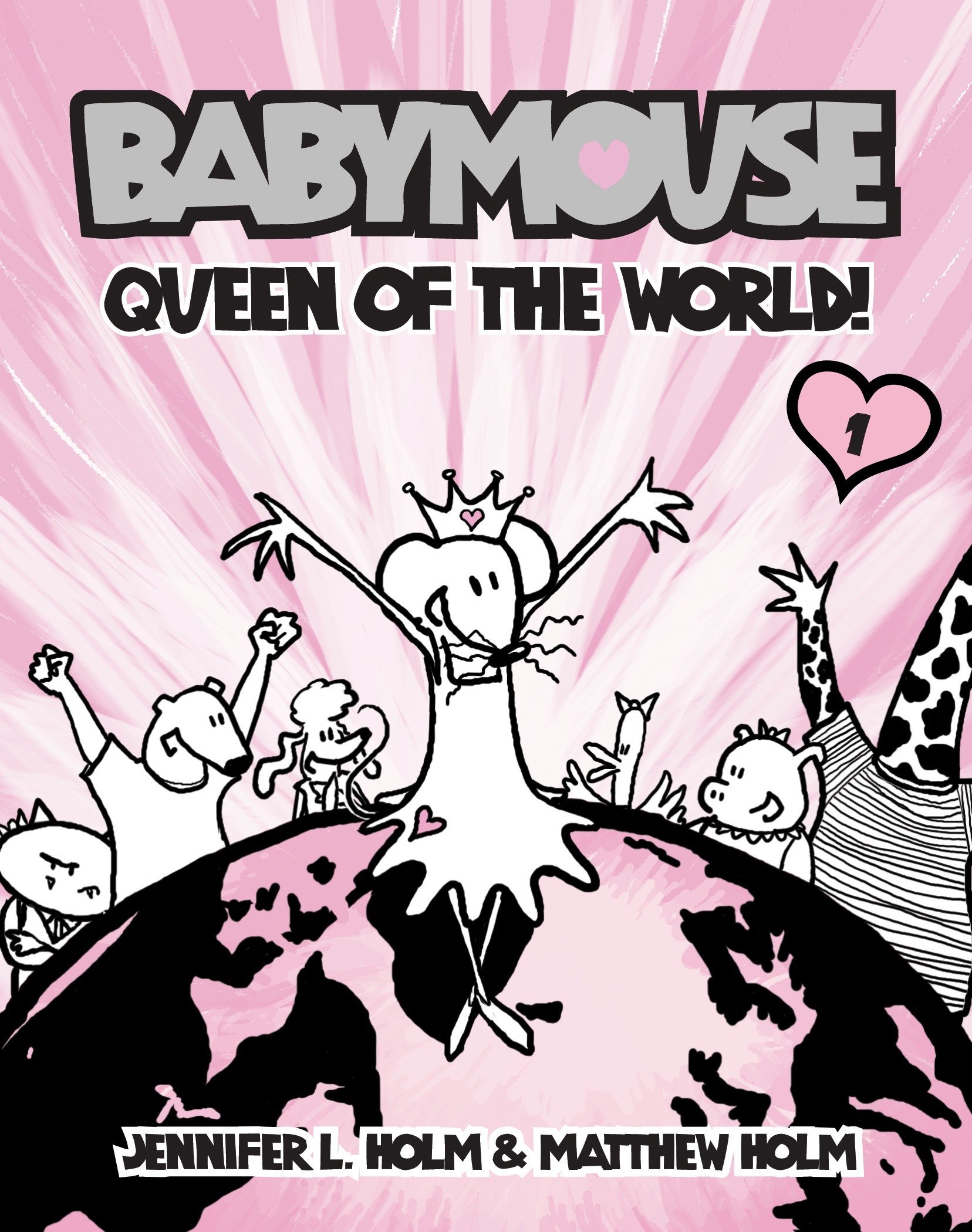
Babymouse: Queen of the World by Jennifer L. Holm and Matthew Holm is another graphic novel about a preteen searching for her place in the world. Babymouse is an awkward mouse wanting to fit in with the popular (animal) crowd (particularly, the popular Felicia Furrypaws) of middle school. It takes place in a typical middle

The graphic novel Hereville: How Mirka Got Her Sword by Barry Deutsch is subtitled “Yet Another Troll-Fighting 11-Year-Old Orthodox Jewish Girl,” and that just about describes its universality and its strangeness. Mirka lives in an Orthodox Jewish town, and she is struggling not only with being a preteen but also with her nemesis: learning to

Goldilocks and the Three Bears: A Tale Moderne by Steven Guarnaccia (Abrams, 2010). Although the story follows the traditional story for the most part, Mr Guarnaccia’s retelling relies on the illustrations, which feature modernist art and style, to give it a different feel. There are a few things in the story’s text itself that also make it

Goldilocks and the Three Bears by Dik Brown, William Walsh, graphic novel (Classics Illustrated Junior). A sparrow and a squirrel provide commentary on Goldilock’s adventure in the Classics Illustrated graphic novel version of the story. In the end, Goldilocks sends an apology note to the bears, and invites them for breakfast! I was not a fan

Goldilocks and the Three Bears by Lauren Child, photography by Polly Borland and models by Emily Jenkins (Disney Hyperion, 2008). Although the story follows the traditional story quite closely, Lauren Child’s story has a distinct voice: Goldilocks is given strict instructions, for example, to take care of her new red shoes. Beyond the distinct voice, though,
Page [tcb_pagination_current_page] of [tcb_pagination_total_pages]