

Sometimes it’s really nice to stray from the traditional just a little bit. These authors were impressive in how they added a little new life into a worn out story, through both illustration and story tweaks. Goldilocks and the Three Bears by Caralyn Buehner and Mark Buehner (Dial Books for Young Readers, 2007). The Buehner’s rendition of
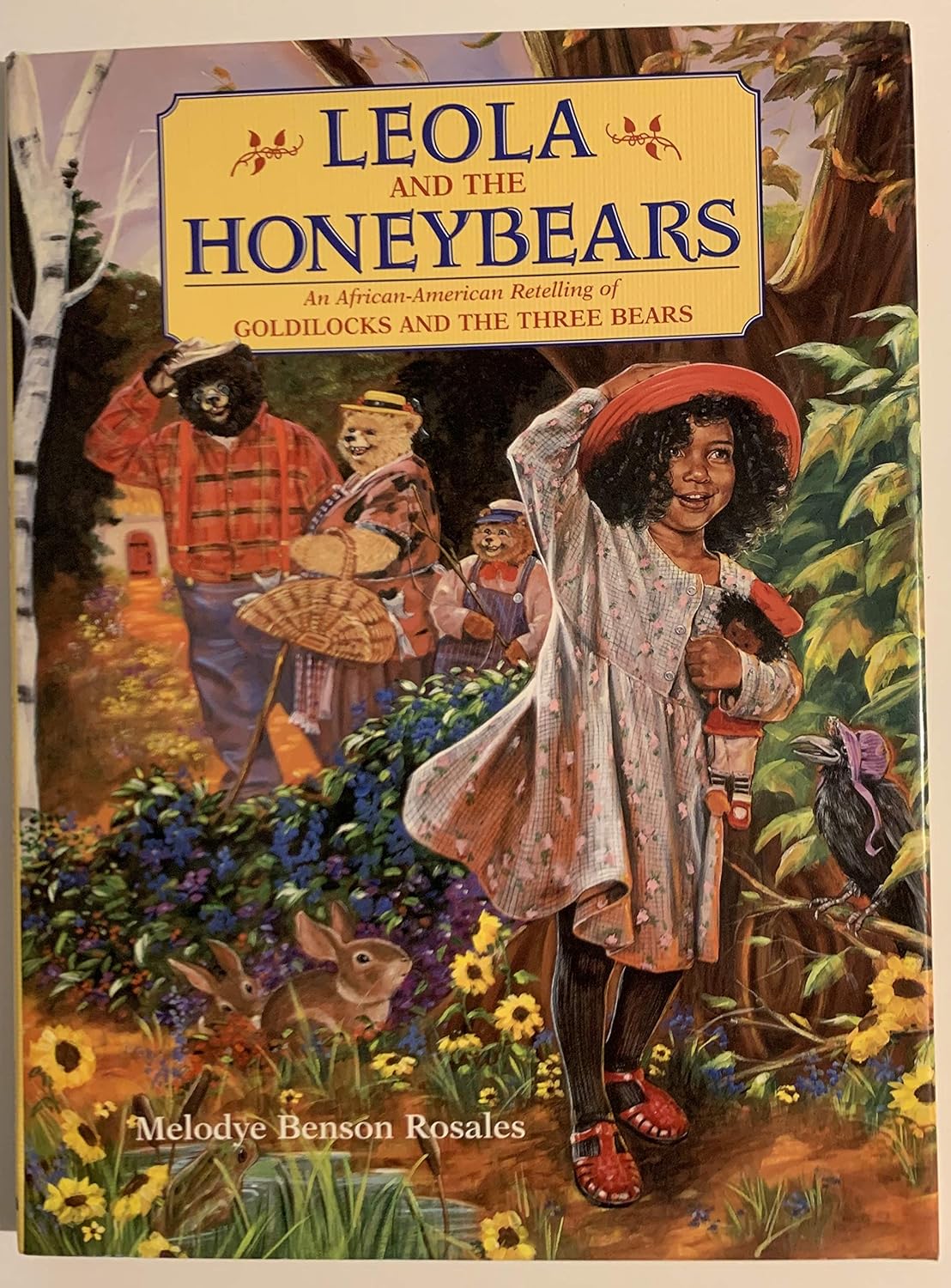
Leola and the Honeybears by Melodye Benson Rosales (Cartwheel, 1999). Leola’s story was my favorite of all the Goldilocks retellings; I think it was one of my son’s too. Leola is about his age, and he says he liked her because “I just like her. Leola was cute.” He had a big smile when we finished this

Fantastic Mr. Fox by Roald Dahl is not just for preteens; it’s a classic Roald Dahl novel, which means anyone will probably enjoy it. Three farmers determine to destroy the fox invading their storage sheds, and so they hunt after Mr. Fox. He is not to be deterred, though, when his family’s life is on

The story of Goldilocks and her visit to an unoccupied house of three bears has inspired a plethora of picture books, retellings, and rewritten accounts of the story. Robert Southey first recorded the folkloric story in an 1834 collection. (See Wikipedia for a rundown of the story’s history and reincarnations). My three-and-a-half-year-old son loves the

Jane Austen: A Life Revealed by Catherine Reef (to be published June 6, 2011 by Houghton Mifflin Harcout) is a short biography of the authoress geared for young readers. It has a second dimension, though, and that is as a biography of the novels that Austen created. As an adult, I must admit that I

From the moment he awakens in the morning, my four-year-old son’s best friends are by his side. They live in Busytown, which is sometimes directly above our house and other times underground, where it snows in April. Goldbug is his best friend (sometimes he is my son’s brother), with Huckle, Sally, and Hilda Hippo frequently

In some respects, Crossed Wires by Rosy Thornton is a “chic lit” novel as the pinkish cover suggests it is: you kind of know what will happen in the end. However, it is so much deeper than a stereotypical romance novel. I probably wouldn’t have picked it up on the cover alone. But there are

Claude McKay was born in Jamaica 1889, and in 1912, after his first volume of Jamaican dialect poetry was published in Jamaica, he traveled to the USA, eventually settling in New York City and becoming a part of the Harlem Renaissance movement of artistic expression. In Harlem Shadows (published 1922), McKay captures his shock and
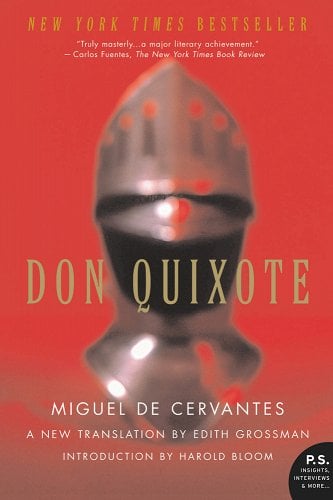
The second half of Don Quixote of La Mancha (written in 1615, a full decade after the first half) is much better than the first half (thoughts here). As the novel progresses, Cervantes’ writing improves, the plots improve, and the character’s personalities become far more distinct. I was drawn into the story in a way

How does a blind person understand the majesty of a cathedral? The narrator in Raymond Carver’s short story “Cathedral” tries to describe it. His underlying epiphany, however, is not about architecture but about his own prejudices and stereotypes. He discovers in the end that he has been the one blind. He has not understood the
The goatherds’ observation that “This gentleman must have a few vacant chambers in his head” (page 439) comes at the end of part 1 of Don Quixote by Miguel de Cervantes (first published 1605, translated by Edith Grossman 2003). Yet, that is exactly the thought I had as I began the novel. Why, oh why,

I cannot remember which blogger mentioned the poetry of Anne Bradstreet as among their favorite (please, tell me if it was you!), but I must agree that her poems are spectacular. I love Bradstreet’s religious themes, but also I loved her personal accounts of life. Although her writing was from a comparatively primitive pioneer era,
Page [tcb_pagination_current_page] of [tcb_pagination_total_pages]