

The illustrations to Abraham Lincoln by Ingri and Edgar Parin d’Aulaire are quaint color pencil, which matches the folktale-like subject matter. They don’t wow me as other Caldecott winners do, but as the 1940 Medal Winner, I think the art in d’Aulaires’ biography about Lincoln are sufficiently award-worthy. Abraham Lincoln reads like a novel; it was easy

The Ugly Duckling illustrated by Jerry Pinkney, with Hans Christian Andersen’s text adapted by Jerry Pinkney (Caldecott Honor 2000), is a picture book with sprawling, all-encompassing detailed watercolors. The illustrations do the traditional, familiar story justice. Pinkney does an incredible job of getting in to detailed “close-ups” of the scenes. From the birth of the ducklings

Puss in Boots illustrated by Fred Marcellino and with text translated from Charles Perrault by Malcolm Arthur (Caldecott Honor 1991) has gorgeous pictures. Each picture has a texture to it that gives it a sophisticated feel. The details are amazing. The story is the traditional story of Puss in Boots. I feel a bit ambivalent

Rapunzel by Paul O. Zelinsky is absolutely beautiful and much deserving of the 1998 Caldecott Award. Zelinsky explains in the note at the end that he was trying to imitate the Renaissance style of art because that is what he thought of when he recalled the story of a girl in a tower. The story is

Rumpelstiltskin by Paul O. Zelinsky (Caldecott Honor 1987) is a beautiful picture book that retells of various versions of the Grimm’s story. I liked the tenderness in the expression of the mother and baby and the golden room was gorgeous. Rumpelstiltskin himself was exotic and strange and highly appropriate for the story at hand. I have

Snow-White and the Seven Dwarfs illustrated by Nancy Ekholm Burkert with text translated by Randall Jarrell (Caldecott Honor 1972) is a retelling from the Brothers Grimm. I did not like this book, either the translation or the illustrations. The illustrations are infrequent and the text heavy (there is a two-page spread of text and then a

Snow White and the Seven Dwarfs as translated and illustrated by Wanda Gág is an enjoyable illustrated retelling of the fairy tale, first published in 1938. It is rather text heavy, and the story is morbidly close to the Brother’s Grimm’s account with the witch eating the boar’s heart. But in this version, the black-and-white line
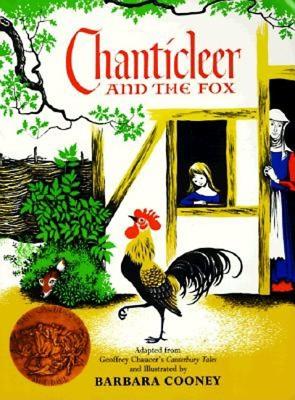
Chanticleer and the Fox by Barbara Cooney takes its story from Chaucer’s Canterbury Tales. It is the story of the rooster named Chanticleer who let himself be flattered by a cunning fox. He is saved in the end, but the reader learns the lesson. There are few things about it that don’t sit well for me

The 1985 Caldecott winner is a retelling of a story from Edmund Spencer’s Faerie Queen, Saint George and the Dragon, by Margaret Hodges and illustrated by Trina Schart Hyman. I’m not familiar with the original story, but this retelling is full of adventure as the brave knight faces the dragon day after day until it is

The Graphic Alphabet by David E. Pelletier (Caldecott Honor 1997) illustrates the letters doing various things, all with graphic design. This is not your normal alphabet book of “a is for apple”! The “A” illustrates an avalanche, the “B” is illustrates a “bounce”, and so forth. I think it is a clever alphabet book for other
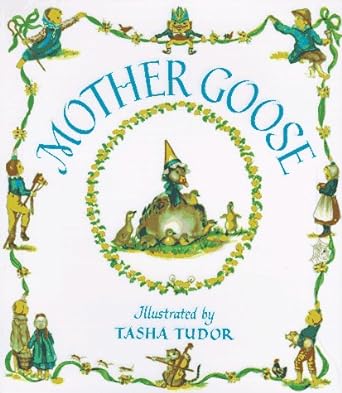
Tasha Tudor’s illustrated Mother Goose is gentle and adorable. The children she illustrates are all rather cherubic. At the same time, there was a dated feel to her collection of nursery rhymes. That may be because some of her rhymes are unfamiliar, but the pictures were not as bright and engaging as other collections. In fact, every
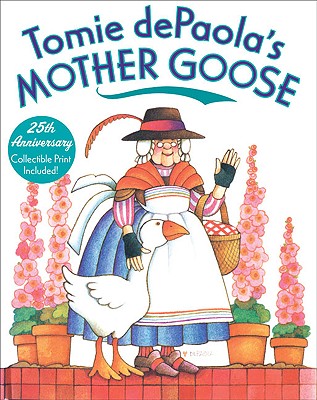
I like how in Tomie De Paola’s Mother Goose, the author has included the lyrics for lullabies along with nursery rhymes in his classically illustrated Mother Goose book. There are often many short rhymes per page. Because there is no structural organization, it is somewhat confusing at times and I wished for thematic structure. But I
Page [tcb_pagination_current_page] of [tcb_pagination_total_pages]