
Last year, I read The Stranger by Albert Camus (L’Étranger, published 1942, translated from French by Matthew Ward), and the book struck me as odd and a bit disturbing given the themes. Overwhelmingly, the story seemed to say that life is meaningless. I read it again this summer for my book club, and I think

This summer, my son and I conquered a major accomplishment in his reading. We successfully read three full-length classic chapter books together: The Lion, The Witch and the Wardrobe by C.S. Lewis; Winnie-the-Pooh by A.A. Milne; and Peter Pan by J.M. Barrie. For the first book, I read as he played. Then, for the others,
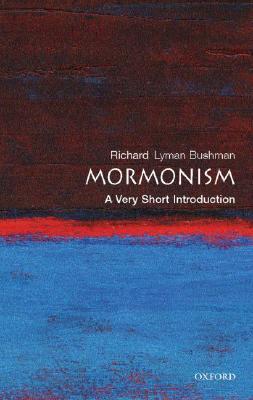
A fellow blogger asked recently for a book that might give a general introduction to Mormonism, and I’m pleased to suggest the Oxford University Press Very Short Introduction on the subject (Mormonism by Richard Bushman, published in 2008). Colombia professor of History (emeritus) Richard Bushman does a wonderful job of introducing and blending the doctrinal

Usually when it comes time to write my thoughts about a book I’ve read, I have no trouble putting things into an “enjoyment” category of some kind, whether that is because I both enjoyed reading it and liked it or because I didn’t like it at all or because there was value to reading it

Author Lloyd Jones obviously enjoys Charles Dickens and the novel Great Expectations in particular. But his novel Mister Pip (published 2006) even more celebrates the power of the written word and story in our everyday life. Matilda is a teenager on a small forgotten Pacific island that is ravaged by Civil War. Pop Eye (aka Mr. Watts), the last

Given my recent emphasis on Victorian Literature, I don’t think it would surprise you to know I’ve enjoyed all the Charles Dickens novels I’ve read thus far. A Christmas Carol (discussed here) is one I have read regularly during the holidays since I was a teenager, and while I didn’t love the other Christmas novellas,

As a mother raising a child in a world of video games and television, electronic gadgets and noise makers, I have often wondered how to encourage my son’s imagination. This seems to be a challenge even now when he’s a toddler, and it may be even more so as he grows. Society’s emphasis on after-school

Note: This post may contain spoilers for Wives and Daughters, Agnes Grey, and Middlemarch. Although the three Victorian novels by women that I read this summer all dealt with Victorian women’s limits in society, each captured distinct roles of women in society in radically different ways. The titles reveal the depth of each novel. Agnes
I went through a summer children’s and YA binge during my blogging break. These books did not take long to read, and I read them for the pure entertainment value. They also are not ones that I’ll remember for long, although they were enjoyable. It may be that I am not thinking much of them

Victorian London was smelly, and that is where Ms Picard begins her nonfiction summation of the city from 1840-1870 (Victorian London by Liza Picard, published 2005). From her detailed descriptions of the polluted Thames to the horrors of being a “maid of all work” to the entertainments of the great capital, the city of London
Please note: This post may contain “spoilers,” particularly for Huckleberry Finn. Rereading The Adventures of Tom Sawyer (written 1876) and The Adventures of Huckleberry Finn (written 1876-1885) as an adult reminds me just why I love Huckleberry Finn so much more. Tom Sawyer is a book I have always had fond memories of because of
Reading a bulk of haiku at once helped me to get a general appreciation for the format. I enjoy the clear but succinct image that three short lines are able to conjure. The volume I enjoyed (Haiku, selected and edited by Peter Washington and published by Everyman’s Library Pock Poets series) included mostly Japanese classic
Page [tcb_pagination_current_page] of [tcb_pagination_total_pages]