

The Tale of Three Trees: A Traditional Folktale by Angela Elwell Hunt and illustrated by Tim Jonke (David Cooke 1989) tells us of three trees with big dreams. One wants to be a treasure chest, one wants to be a mighty ship, and one wants to stay where he is and point to heaven. When

The Littlest Angel by Charles Tazewell and illustrated by Paul Micich (Worthy Kids, 2006) is the story of a little angel in heaven who wants to give a special gift to the baby Jesus. I love the beautiful illustrations, and the story resonates with the rest of us who long to make a difference, but

I reread The Gift of the Magi by O. Henry a few months ago, but I appreciated reading an adapted version, illustrated by Carol Heyer (Guidepost books 1994), in celebration of the Christmas season. The adaptation takes out some of O. Henry’s tedious wordiness, thus emphasizing the true message and spirit of the story. Heyer’s

Room for a Little One: A Christmas Tale by Martin Waddell and illsutrated by Jason Cockcroft (Margaret K. McElderry 2004) is a gorgeous animal-themed Nativity story. In this wintery story, the Gentle Ox invites the Old Dog, Stray Cat, and Small Mouse into the warm stable before Tired Donkey and the Baby Jesus join them.

The animals of the stable are often the focus of children’s Nativity picture books, possibly because children tend to love animals and because they are so lovely in illustrations. The image of the babe in the manger, humbly surrounded by gentle animals, is a memorable part of the season. One such book that I love

One of our family traditions is to read the Biblical account of the first Noel. I have found a fantastic picture book the illustrates the Bible verses for families to do so! The picture book The Christmas Story features paintings by Gennady Spirin. These paintings appropriately remind me of Europe and the Renaissance, and I

One of my favorite books for celebrating the Christmas season is a small picture book that my son received for his first Christmas: My First Story of Christmas by Tim Dowley (Moody Publishers, 2004). The illustrations are simple but fun, reverent but childlike. There are a few editorial opinions sprinkled in the story of the

In honor of the snow Chicago is “enjoying,” I found some Winter-related Caldecott-winning books this month at my local library.
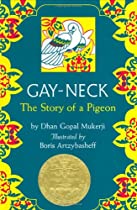
I was putting together the list of Newbery Medal winners a few weeks ago, and I saw Gay-Neck: The Story of a Pigeon by Dhan Gopal Mukerji on the list as winner in the 1920s. A novel about a pigeon? I pictured New York City, Central Park. I pictured the “Feed the Birds” scene in

Charles Dickens wrote one book that never appears on his “collected works” lists. That is The Life of Our Lord, a “child’s new testament” that he wrote for his own children for Christmas one year. It was first published in 1934, 64 years after Dickens’s death. In The Life of Our Lord, Charles Dickens retells

Betty Smith expertly recreates the 1912 Brooklyn of 11-year-old Francie Nolan in A Tree Grows in Brooklyn. Through Betty Smith’s words, I learned of the awfulness of enduring agonizing hunger and dire poverty in the tenements of Brooklyn during a volatile time. But Francie’s poverty is only part of Francie’s story. As Francie grows from
Equality 7-2521 lives in a dark futurist dystopia in Ayn Rand’s novella Anthem. He has no words for love or self, and being alone is a crime. Yet, as do characters in countless other dystopian novels, he still finds moments to write his story of discovery. By itself, Anthem is slim – just 100 pages
Page [tcb_pagination_current_page] of [tcb_pagination_total_pages]