

In The Professor and the Madman, Simon Winchester delves into two contrasting yet similar personalities who helped to create the Oxford English Dictionary (OED). One is the professor, Dr. James Murray, a prolific scholar who undertakes the daunting task of creating a comprehensive dictionary; the other is a madman, Dr. William C. Minor, a schizophrenic

Mirth, noun: gladness or gaiety as shown by or accompanied with laughter [amazon_link asins=’0140187294′ template=’RightAlignSingleImage’ store=’rebereid06-20′ marketplace=’US’ link_id=’09ffaf72-17f4-11e7-81e6-99323011447d’]If you are looking for “mirth,” The House of Mirth by Edith Wharton is not the book for you. The House of Mirth is about a woman searching for happiness where true happiness will not to be found:
I loved reading Chekhov’s stories. I read a volume of them, translated by Richard Pevear and Larissa Volokhonsky, as well as “The Kiss,” which was recommended by Bloom and unfortunately wasn’t included in the volume translated by Pevear and Volokhonsky. My favorite stories tended to be the shorter ones that focused on one character or
Anton Chekhov’s “The Student” is the perfect story. Decide for yourself by reading it at Project Gutenberg (1,500 words) or listening to it at LibriVox (10 minutes). Note that I read a new translation by Richard Pevear and Larissa Volokhonsky. Here are some elements that make it perfect for me.
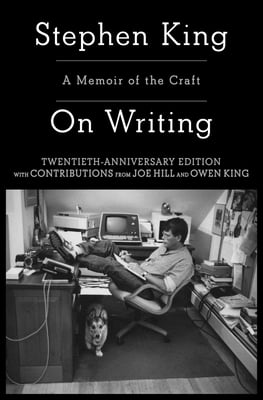
At age five, my mother was my scribe as I wrote my first book (“The Three Little Pigs”). Since then, I have wanted to be a writer. I picked up Stephen King’s memoir, On Writing, because it seems to be a commonly recommended book for aspiring writers. I’ve never read any Stephen King. I am

The Arrival by Shaun Tan is the story of all immigrants. By relying solely on pencil illustrations, Shaun Tan attempts to capture the emotions and the story of not just one man leaving his family to enter a new world but the story of all immigrants entering a new life. I was not completely convinced

I didn’t understand The Little Prince by Antoine de Saint-Exupéry at all. I guess I’m not a child. A pilot has crashed his plane in the desert. While striving to repair it, he meets a young boy from a asteroid-star planet. The little prince’s planet has 44 sunsets a day, and the little prince is
At Harold Bloom’s suggestion in HTR&W, I tackled “Bezhin Lea” and “Kasyan from the Beautiful Lands” by Ivan Turgenev. I say “tackled” because, unfortunately, these stories were evidence to me that I am accustomed to reading quickly and easily; reading them was a “difficult pleasure.” I expect not all of the stories on Bloom’s reading

In The Complete Maus, Art Spiegelman tells not just his mother’s and father’s story but the story of all Jews in World War II Poland. The Complete Maus is the story of the Holocaust. In a break-through way, he tells this story in the form of a graphic novel. I was amazed not just with
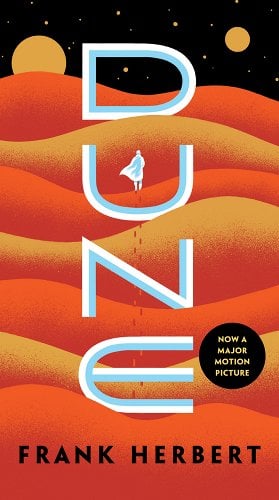
Dune by Frank Herbert is a story of a boy searching for himself, and what Paul Atreides discovers about himself is beyond his expectations. Dune is a story of realization. Paul must face his fear, and Jessica, his mother, must face hers as well. For me, Dune was a reminder that it is better not

In How to Read & Why, Bloom doesn’t dwell long on defining the short story in his introduction to the genre. However, he does introduce some ideas of what a short story may be and asks generally how one should read a short story. He bases his comments on other’s definitions. Some of these he
I’m giving away a copy of How to Read and Why to someone joining my personal challenge. Read my discussion of the preface for more information. This is a very long post; I’m breaking my own rules of length because I spent a long time reading and pondering Bloom’s prologue, and I have a lot
Page [tcb_pagination_current_page] of [tcb_pagination_total_pages]