
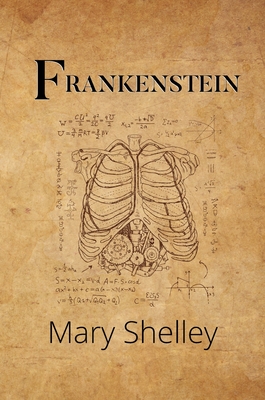
In Frankenstein (originally published January 1818), Mary Shelley questions what makes one human, ultimately questioning the meaning of life. When Dr. Victor Frankenstein imbues his cadaverous monster with life, he has become a God-like creator, and his monster, a gigantic being with the ability to feel all emotions and use all of his senses, is

Because I am studying American history with my young son this year, I find myself drawn to books about the subjects I’m teaching him. Obviously, my studies are simply for my own enrichment and enjoyment; much of what I’m learning will not be taught to my five-year-old child. This was our second week of official

Grammar has a reputation of being dull and dry, but a turn-of-the-century classic, Grammar-Land by M.L. Nesbitt (first published 1878), attempts to make it fun by turning learning the parts of speech into a game. In the imaginary world of Grammar-Land, the parts of speech have been arguing about which of them is most important.

I decided to start my son on a formal spelling program this year (his K4 year). Although my son is quite young (almost 5), he is constantly asking me “how do I spell _____?” so he can write notes or type on the computer. (I opened a private blog for him to post his pictures
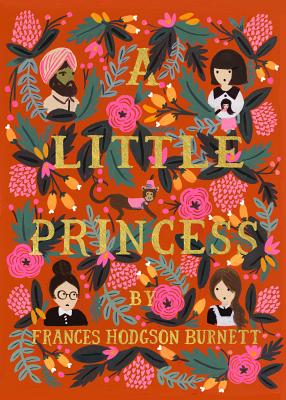
In A Little Princess (originally published 1905), Francis Hodgson Burnett creates a turn-of-the-century London-based Cinderella story. The protagonist, Sara Crewe, is a truly remarkable heroine. Although raised with extravagant wealth and spoiled with whatever servants, toys, clothes, and so forth she could desire, she remained kind, pleasant, sensitive, and polite. But reading of a perfectly

My four-year-old son and I are reading about the Amazon rainforest as a theme right now. Our fiction favorite this time around was The Umbrella by Jan Brett. Carlos, who lives in Costa Rican rainforest, walks to the nearby rainforest to spy on the animals. He places his umbrella on the ground and climbs a

My four-year-old son and I are reading about rainforests this week. Looking Closely in the Rain Forest by Frank Serafini (Kids Can Press, 2010) changes things up a little bit compared to the other picture books we’ve read. Using his photographs of the rainforest flora and fauna, Mr. Serafini has created an “I Spy” picture

The Rainforest Grew All Around by Susan K. Mitchell and illustrated by Connie McLennan (Arbordale, 2007) is a rhythmic story much like “the house that Jack built.” Each line builds on the previous one, and we quickly see how a rainforest throbs with life, from the tiny seed in the ground to the cat, snake,

Rain Forests by Nancy Smiler Levinson, illustrated by Diane Dawn Hearn (Holiday House, 2008), is an early reader just perfect for my young son (age 4). There were tropical animals illustrated and labeled on each page, and the book covered rainforests around the world. Yet, there was not too much text on each page, and

Since my daughter is quite little (7 months) but happens to sit in on our reading times, I was delighted to see a picture book that is somewhat related to rainforests at her level. Our current learn-at-home subject for my four-year-old is rainforests, especially the Amazon. Good Morning, Toucan (Dwell Studios, Blue Apple Books 2011)

This week my four-year-old son and I are reading about rainforests. Nature’s Green Umbrella: Tropical Rain Forests by Gail Gibbons is a few steps above my son’s read-aloud level with the level of detail, but I really liked it. In Gail Gibbons’s trademark way, it had detailed text and illustrations to cover even more details

Cynthia Rylant is one talented writer! Her early readers have kept my son (almost 5) busy for months. The Henry and Mudge stories feature a young boy and his best friend, his dog. I think these were my son’s favorites, and since there are probably about 30 (or more?) different books of Henry’s adventures, it’s been a
Page [tcb_pagination_current_page] of [tcb_pagination_total_pages]