

A Passion for Victory: The Story of the Olympics in Ancient and Early Modern Times by Benson Bobrick (Knopf Books for Young Readers, June 2012) is a highly readable history for children about the international phenomenon of the Olympics through the ages. Beginning in ancient Greece by looking at archeological as well as historic records,

I greatly enjoy American history so I was excited to read Mary Theobald’s Death By Petticoat: American History Myths Debunked (Andrews McNeel Publishing, June 2012). I ended up leaving it a bit disappointed because of the lack of depth behind the book. It was an amusing and quick read, and I did learn some trivial

The Art of Changing the Brain by James E. Zull (2002, Stylus Publishing) is subtitled “Enriching the Practice of Teaching by Exploring the Biology of the Brain” and I picked it up because of my new role as teacher to my homeschool aged son. As his primary teacher, I want insight and assistance in understanding

I really enjoyed reading Shakespeare’s Henry VI part 1 in January, mostly because it include Joan of Arc and mentioned Margaret of Anjou, who married Henry VI. Joan of Arc has fascinated me since I dressed up as Joan for my sixth grade Medieval feast, and Margaret of Anjou is an ancestor of mine. Shakespeare’s

As a mother just beginning the journey of elementary level home education, I have been busy searching the web and my library for free resources to aid me as I teach my young son. When I saw Free Resources for Elementary Teachers by Colleen Kessler (2012, Prufrock Press) on the Library Thing Early Reviewer list,
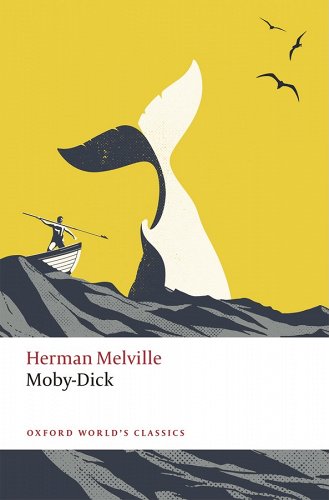
I will not put Herman Melville’s Moby Dick (published 1851) on my favorite books list because it’s simply not a favorite novel (I shudder at each description of whale blubber). And yet, I must give Moby-Dick a solid five stars out of five for the rich reading experience it provides. I simply loved reading it.

Our homeschool studies took us to Australia this month! One picture book we enjoyed helped us appreciate the size of Australia and the various scenery. Are We There Yet? by Alison Lester was a child’s perspective of a month-long road trip around Australia. My four-year-old son enjoyed learning about the various landmarks and began to
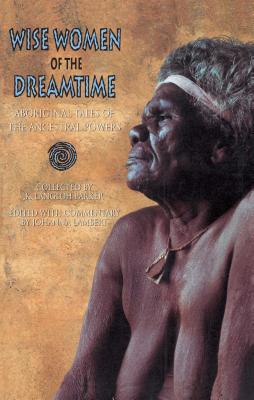
Wise Women of the Dreamtime: Aboriginal Tales of the Ancestral Power (Inner Traditions International, 1993) is a fascinating collection of tales from Australian Aboriginal woman as dictated to a Western woman in the late 1800s. Editor Joanna Lambert expands upon these tales by providing commentary and discussion after each tale, focusing on the various folkloric

I’ve been looking forward to rereading Herman Melville’s masterpiece, Moby-Dick, since I first read it about a decade ago. Alas, my book club meets in two weeks and I’m struggling to get time to read the marvelous epic! Before I picked it up, I decided to read Nathaniel Philbrick’s small tribute to the novel, appropriately

Because my son is so young, I’m just beginning to re-familiarize myself with middle grade fiction; I haven’t really read much since I was a youngster. I remember really loving the gentle rural setting of Patricia MacLachlan’s Sarah, Plain and Tall when I was a young girl: it was one of my favorite books. When

It’s interesting how a year and a half changes one’s perspective. In the early fall of 2010, I read a wonderful nonfiction examination of how parents can help children embrace imagination. Revisiting Awakening Children’s Minds: How Parents and teachers Can Make a Difference by Laura Berk (2001, Oxford University Press) provided me with some necessary

Show Me a Story: Why Picture Books Matter (Candlewick, May 2012) is a collection of interviews conducted by Leonard S. Marcus with 21 different children’s illustrators over the past two decades. From Quentin Blake to Eric Carle, Helen Oxenbury, Peter Sis, William Steig, Mo Willems and many more, Mr Marcus covers a variety of backgrounds,
Page [tcb_pagination_current_page] of [tcb_pagination_total_pages]