

The Big Snuggle-Up by Brian Patten (illustrated by Nicola Bayley; Kane Miller, 2011) is a story of a young child inviting a scarecrow in from the cold on a snowy evening. After the scarecrow comes in, the other animals outside want to come in and get warm too. As the evening settles, a crowd of animals,

Stars by Mary Lyn Ray (illustrated by Marla Frazee; Beach Lane Books, 2011) is somewhat about stars. Not real stars, but the “magic” that comes from a star: wear a star to become a sheriff or tape one on a stick to create a magic wand. Marla Frazee’s illustrations are stunning and make the book
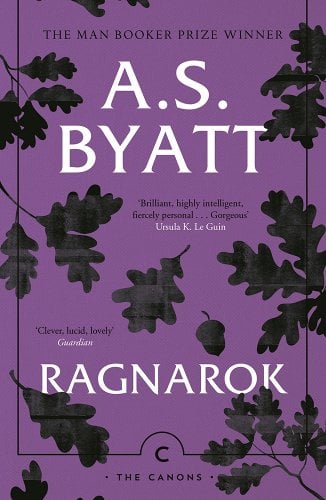
I wrote about my thoughts on D’Aulaires’ Norse Gods and Giants separately. However, I don’t believe one needs an introduction to Norse mythology to fully appreciate A.S. Byatt’s Ragnarok (published in the U.K. in 2011; to be published in the U.S. in February 2012). In Ragnarok, Byatt creates the world of the Norse gods and
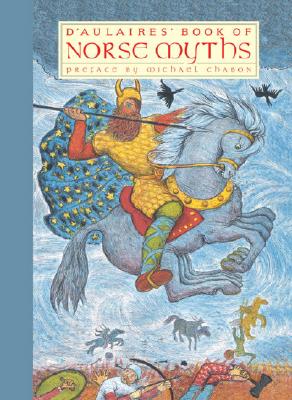
Although I grew up with D’Aulaires’ Greek Myths, I have never been familiar with traditional Norse mythology. I have a Scandinavian heritage, so this seems a bit sad to me. When I saw that A.S. Byatt’s new addition to the Canongate Myths series was about the end of the world according to Norse mythology, I
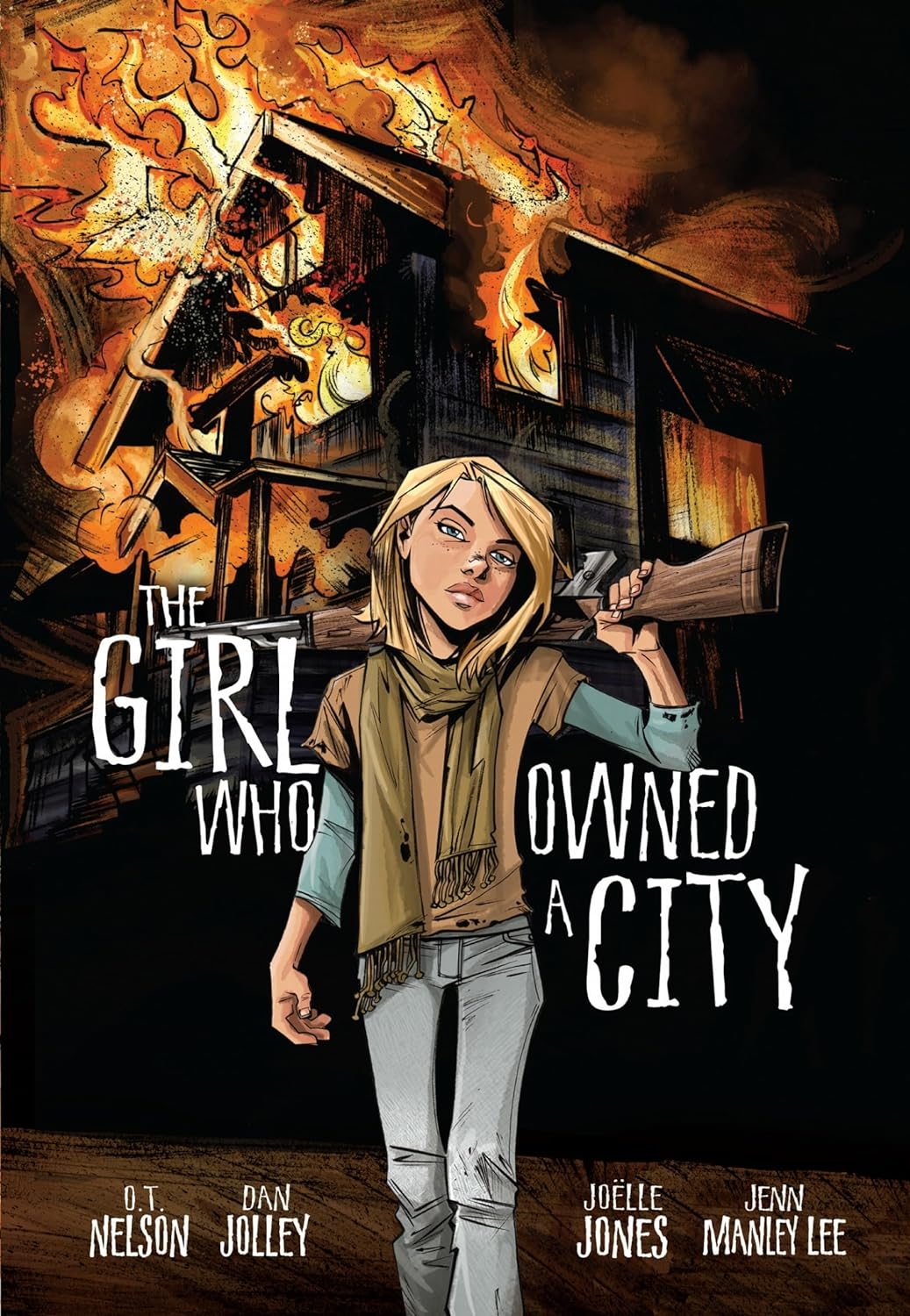
As I mentioned when I reread The Girl Who Owned a City by O.T. Nelson last year, I grew up with fond memories of the plot, characters, setting, and the entire premise of the story. My older brother and I would imagine ourselves conquering the world, pouring over maps and phone books to determine where

The Princess and the Pig by Jonathan Emmett and illustrated by Poly Bernatene (Walker and Company, September 2011) is the story of a princess and a pig whose parents believe they are in a fairy tale. In a rather amusing switch, a baby princess is swapped with a baby piglet. The farmer and his wife are amazed

Dog in Boots by Greg Gormley and illustrated by Roberta Angaramo (Holiday House, 2011) tells the story of a bookish dog who wants to find wonderful boots like the fascinating cat he read about in a storybook. (He apparently loves to read fairy tales.) But each pair of shoes he finds has some flaw that makes life

The Wise Fool: Fables from the Islamic World by Shahrukh Husain and illustrated by Micha Archer (Barefoot Books, 2011) tells the fables of Mulla Nasruddin, a fabulist I was unfamiliar with. Mulla, who is called a “wise fool,” comes from the Arabian Middle East and reaches in traditions to as far as Greece, parts of Russia, and

Aesop’s Fables by Beverley Naidoo and illustrated by Piet Grobler (Frances Lincoln Children’s Books, 2011) adds a new multicultural layer to Aesop’s tales. Using her knowledge of African folktales and noting the similarities to Aesop’s own tales, South African author Beverley Naidoo gives an African twist to the tales that seems remarkably appropriate. I grew

Never Forgotten by Patricia C. McKissack and illustrated by Leo and Diane Dillon (Schwartz & Wade, 2011) tells the African tradition of the slave trade through rhythmic verse and using the Mother Elements that African tales focus on: Earth, Fire, Water, Wind. A young boy in eighteenth-century Africa is training to be a blacksmith like his father

The Secret River by Marjorie Kinnan Rawlings and illustrated by Leo and Diane Dillon (Atheneum Books, 2011) is a unique Cybils 2011 fiction picture book nominee in that it is a republished version of a children’s story that received the Newbery Honor in 1956. It is clear why it did receive recognition. It is a deceptively simple

King Hugo’s Huge Ego by Chris Van Dusen (Candlewick, 2011) is a funny story about a very short king that thinks too highly of himself. When he is rude to a young woman who happens to have magical powers, she makes certain he’ll reap his just rewards. His head swells to humourous consequences, and in
Page [tcb_pagination_current_page] of [tcb_pagination_total_pages]