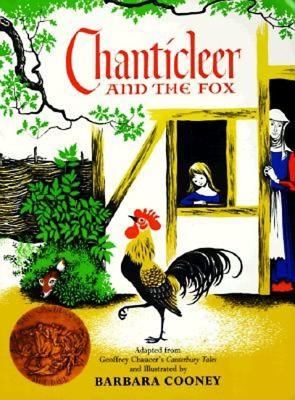
Chanticleer and the Fox by Barbara Cooney takes its story from Chaucer’s Canterbury Tales. It is the story of the rooster named Chanticleer who let himself be flattered by a cunning fox. He is saved in the end, but the reader learns the lesson. There are few things about it that don’t sit well for me
Read Post

The 1985 Caldecott winner is a retelling of a story from Edmund Spencer’s Faerie Queen, Saint George and the Dragon, by Margaret Hodges and illustrated by Trina Schart Hyman. I’m not familiar with the original story, but this retelling is full of adventure as the brave knight faces the dragon day after day until it is

Read Post

The Graphic Alphabet by David E. Pelletier (Caldecott Honor 1997) illustrates the letters doing various things, all with graphic design. This is not your normal alphabet book of “a is for apple”! The “A” illustrates an avalanche, the “B” is illustrates a “bounce”, and so forth. I think it is a clever alphabet book for other

Read Post

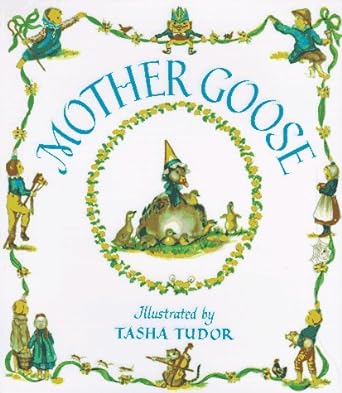
Tasha Tudor’s illustrated Mother Goose is gentle and adorable. The children she illustrates are all rather cherubic. At the same time, there was a dated feel to her collection of nursery rhymes. That may be because some of her rhymes are unfamiliar, but the pictures were not as bright and engaging as other collections. In fact, every

Read Post

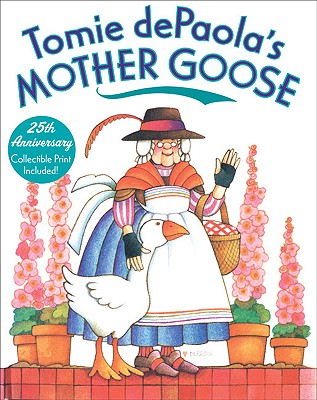
I like how in Tomie De Paola’s Mother Goose, the author has included the lyrics for lullabies along with nursery rhymes in his classically illustrated Mother Goose book. There are often many short rhymes per page. Because there is no structural organization, it is somewhat confusing at times and I wished for thematic structure. But I

Read Post

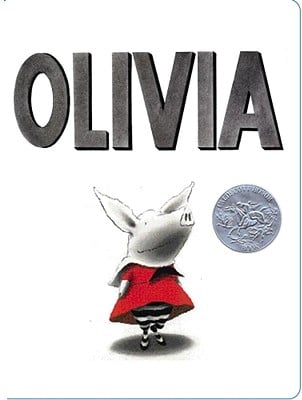
Olivia! by Ian Falconer (Caldecott Medal 2001) is a picture book that perfectly captures the nature of being a child: everything is fun and drama to the little pig Olivia. She wears herself out. She finds her little brother annoying. She likes to try on clothes. The illustrations expand on the subtleties of the text. For

Read Post

Cinderella, or, The Little Glass Slipper by Marcia Brown (Caldecott Winner 1955) has crayon, watercolor, and ink with appropriately gentle pictures for the story of a little Cinderella, who pines after the ball. At first glance (the cover) I wasn’t sure about the illustrations, but once I opened the book and saw the coloring of

Read Post

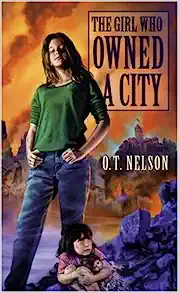
In The Girl Who Owned a City (first published 1975, reissued 1995), O.T. Nelson creates an entirely unbelievable post-apocalyptic scenario for middle-grade readers. In the story, the world population of adults has died of a rapidly spreading plague within the last month. All that remains in ten-year-old Lisa’s immediate world are other children, all under

Read Post

With detailed pencil illustrations (every other page in color) and well organized and entertaining prose, Ingri and Edgar Parin D’Aulaire capture the simplicity and the complexity of the Greek myths for young readers. Although D’Aulaire’s Book of Greek Myths is not divided into chapters, each two-page spread is (for the most part) about a different

Read Post

My Caldecott challenge: Although these Caldecott winner and honor books are not, for the most part, books I’ve read aloud to my son, I still found them interesting. A few I had strong negative opinions of; they show that even books that earned the Caldecott award do become dated! Make Way for Ducklings by Robert

Read Post

My Caldecott challenge: Although these Caldecott winner and honor books are not, for the most part, books I’ve read aloud to my son, I still found them interesting. A few I had strong negative opinions of; they show that even books that earned the Caldecott award do become dated! When I saw the title for

Read Post

My Caldecott challenge: Although these Caldecott winner and honor books are not, for the most part, books I’ve read aloud to my son, I still found them interesting. A few I had strong negative opinions of; they show that even books that earned the Caldecott award do become dated! The illustrations in The Hello, Goodbye

Read Post