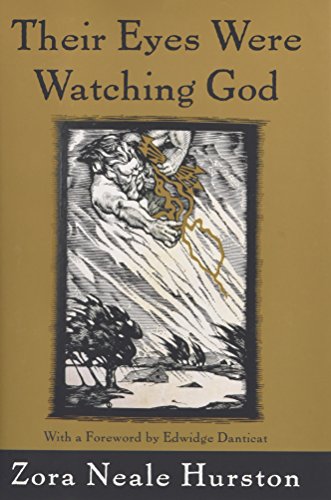
Ships at a distance have every man’s wish on board. For some they come in with the tide. For others they sail forever on the horizon, never out of sight, never landing until the Watcher turns his eyes away in resignation, his dreams mocked to death by time. (page 1) From this beginning, Zora Neale

Read Post

How readily our thoughts swarm upon a new object, lifting it a little way, as ants carry a blade of straw so feverishly, and then leave it. Virginia Woolf’s short piece “The Mark on the Wall” captures a few moments of thought-wandering. I’ve been impressed in the past with Virginia Woolf’s ability to perfectly capture

Read Post

In the introduction to his translation of Beowulf, Irishman Seamus Heaney ponders the epic nature of the story and the mythology of the Anglo-Saxon tradition. He wonders at why Beowulf’s story is not as well known as Greek mythology and Homer. My initial thought on reading the poem (in Heaney’s poetic translation) is that it’s

Read Post

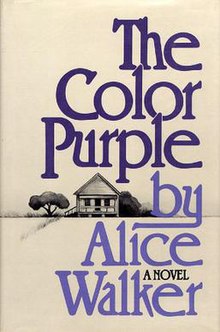
In her personal journal to God, young Celie tries to make sense of the incestuous rape she’s experiencing from her Pa. A few pages later, she tries to make sense of the unhappy marriage she’s thrust in to. For Celie, life entails hard work, submission, violence, and daily rapes from her (nameless) husband. Does that

Read Post

Cranford (published 1851) is a quiet book, focusing on traditions in a changing pre-Victorian society in a small rural community. Given it’s slow pace, when I first read Cranford (thoughts here), I really struggled. I felt stifled by the overbearing traditions of the community of Cranford, and I wondered where the plot was. Yet, by

Read Post

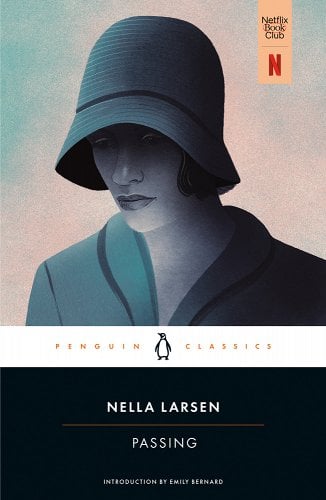
Passing by Nella Larsen (first published 1929) captures the conflicts that young African-American women face in 1920s America. Although solidly a part of the Harlem Renaissance in the ways it tackles racial issues, Passing also magnificently captures a young woman’s repressed sexuality. The terms “passing” refers to a light-skinned African-American acting as white in order

Read Post

This post may contain thematic spoilers of My Lady Ludlow. Lady Ludlow is the representation of the old aristocracy in England.  She is a conservative who does not want to allow the lower classes to gain an education or to gain “rights” in the post-Revolutionary years. Beyond those that are her servants, she essentially does

Read Post

I finished Jane Austen’s Persuasion almost a month ago now, and I’ve been putting off writing my thoughts simply because I didn’t like it. Before you attack me with incredulity, you should know that I read it in the midst of stressful and busy time of year, during a whirlwind trip to my grandmother’s funeral,

Read Post

The following post contains spoilers for War and Peace by Leo Tolstoy. I really didn’t intend to write yet another post on War and Peace, but as I was reviewing comments, I decided that Katrina had a fair point. I need to write about my disappointments in Tolstoy’s women.

Read Post

Sharing just my initial reactions are not enough for War and Peace, given its length and depth. I feel I should think about it some more. I’m ready to do so, now that I’ve let it sit for a week. I think I needed that week. I have not read much at all this week

Read Post

If you follow my twitter stream, you may have noticed that in the last few days a few complaint tweets about the never-ending nature of Tolstoy’s War and Peace. Well, it ended. This morning I finished the last fifteen pages. My book club discusses it tomorrow night, but I wanted to record my initial impressions

Read Post

The “lost generation” was a term coined by Gertrude Stein about the young American and British expatriates in Paris during the 1920s. Ernest Hemingway was one of the young friends of Ms Stein. In 1925 and 1926, he wrote his defining “lost generation” book, The Sun Also Rises, while he lived in Paris and visited

Read Post