As I mentioned, Maupassant was a best-seller in his day. What makes his stories resonate with the modern reader is the attention to our own natural wants.
- Home
- |
- Archives: Fiction

Classics, Nonfiction, and Children's Literature
As I mentioned, Maupassant was a best-seller in his day. What makes his stories resonate with the modern reader is the attention to our own natural wants.

The Jungle Book and The Second Jungle Book by Rudyard Kipling contain much more than the story of the adopted wolf-boy, Mowgli, who is probably the most familiar of Kipling’s characters. Kipling’s Jungle Books are collections of stories about animals and people from around the world. Each story seems to be rooted in traditional facts
If Guy de Maupassant lived and wrote stories or novels today, his name would appear on The New York Times best-seller lists many weeks out of a year. As it was, in the late 1800s, his stories were best-sellers from the time the first one, “Boule de Suif,” appeared in a collection with five other previously
[amazon_link asins=’B000I9VOO4′ template=’RightAlignSingleImage’ store=’rebereid06-20′ marketplace=’US’ link_id=’7ddffe1b-17f4-11e7-ad88-c96d2a60b2c1′]Making a movie of To Kill a Mockingbird (reviewed here) was like killing a mockingbird: a sin. In the beginning, I thought “Wow, this is bad; they should do a remake.” By the end, I decided that no remake could capture the beauty of the novel: any film is bound
It’s not Maupassant’s fault, but I have a grudge against him already: his book stinks. The librarian had to retrieve it from The Stacks. The first thing I noticed as she returned was its size. At more than 1300 pages, it thudded on the counter. Then, as she swiped my library card and pushed the

[amazon_link asins=’0446310786′ template=’RightAlignSingleImage’ store=’rebereid06-20′ marketplace=’US’ link_id=’debcb40e-17f3-11e7-ba88-d5e79d61f198′]Harper Lee wrote one novel, To Kill a Mockingbird, and it won the Pulitzer prize in 1961. Its themes still resonate with readers and her novel has become a part of our culture. That, I believe, is success. To Kill a Mockingbird by Harper Lee almost perfectly captures the main

Mirth, noun: gladness or gaiety as shown by or accompanied with laughter [amazon_link asins=’0140187294′ template=’RightAlignSingleImage’ store=’rebereid06-20′ marketplace=’US’ link_id=’09ffaf72-17f4-11e7-81e6-99323011447d’]If you are looking for “mirth,” The House of Mirth by Edith Wharton is not the book for you. The House of Mirth is about a woman searching for happiness where true happiness will not to be found:
I loved reading Chekhov’s stories. I read a volume of them, translated by Richard Pevear and Larissa Volokhonsky, as well as “The Kiss,” which was recommended by Bloom and unfortunately wasn’t included in the volume translated by Pevear and Volokhonsky. My favorite stories tended to be the shorter ones that focused on one character or
Anton Chekhov’s “The Student” is the perfect story. Decide for yourself by reading it at Project Gutenberg (1,500 words) or listening to it at LibriVox (10 minutes). Note that I read a new translation by Richard Pevear and Larissa Volokhonsky. Here are some elements that make it perfect for me.

I didn’t understand The Little Prince by Antoine de Saint-Exupéry at all. I guess I’m not a child. A pilot has crashed his plane in the desert. While striving to repair it, he meets a young boy from a asteroid-star planet. The little prince’s planet has 44 sunsets a day, and the little prince is
At Harold Bloom’s suggestion in HTR&W, I tackled “Bezhin Lea” and “Kasyan from the Beautiful Lands” by Ivan Turgenev. I say “tackled” because, unfortunately, these stories were evidence to me that I am accustomed to reading quickly and easily; reading them was a “difficult pleasure.” I expect not all of the stories on Bloom’s reading
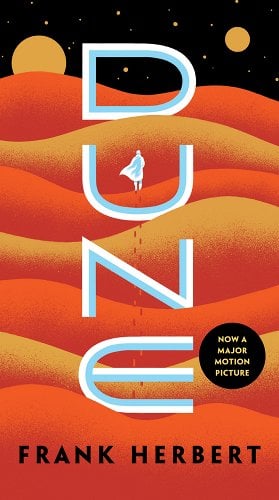
Dune by Frank Herbert is a story of a boy searching for himself, and what Paul Atreides discovers about himself is beyond his expectations. Dune is a story of realization. Paul must face his fear, and Jessica, his mother, must face hers as well. For me, Dune was a reminder that it is better not
Page [tcb_pagination_current_page] of [tcb_pagination_total_pages]
