The Quiet Gentleman by Georgette Heyer (published 1951) is almost more mystery than romance. In this story, it seems like the new Earl of St. Erth is being targeted by his younger half brother, Martin, who would inherit all if not for Gervase. With the help of the others in residence at Stanyon, including the

Read Post

Our titular hero in Sylvester (Or, The Wicked Uncle) by Georgette Heyer (published 1957) has only one flaw: his monstrously large and memorable eyebrows. So although he’s a wealthy and kind gentleman and a caring uncle to his deceased twin’s son, it’s unfortunate that Phoebe Marlow used his most distinctive feature as the defining characteristic

Read Post

Mr. Darcy: the swoon-worthy hero we all are waiting for. But maybe not? In The Darcy Myth: Jane Austen, Literary Heartthrobs, and the Monsters They Taught Us To Love (Quirk Books, November 2023), literature scholar Rachel Feder retells this narrative in a more accurate way. With an abundance of humor and with plenty of modern

Read Post

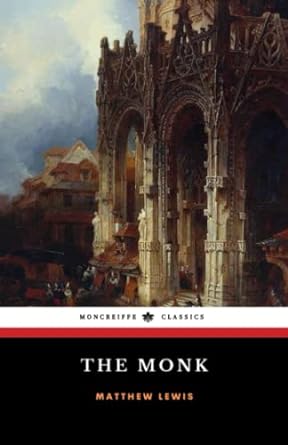
I have not read many gothic novels. The only one I’ve read is Matthew Lewis’ The Monk, which I was not a fan of (thoughts here). Notre-Dame de Paris by Victor Hugo (first published 1831) seemed far above The Monk in terms of quality. In addition to the better writing, there was the symbolic centrality

Read Post

According to my Harmon and Holman A Handbook to Literature, “romance” has had a special meaning in terms of literature since the beginning of the novel. As opposed to a “novel,” a term which suggested realistic manners and society, a “romance” was more unlikely to happen in reality. In common usage, [romance] refers to works

Read Post

I always had a tender spot in my heart for Sesame Street’s Count von Count. He had his organ and a mysterious castle, and mysterious music. I love Toccata and Fugue to this day. (My dad can play it on the organ and it sounds so cool!). The Count was just plain cool. Now that

Read Post

The Dangerous Alphabet by Neil Gaiman is a clever alphabet book. While it’s clearly a children’s book, it has an element of spookiness to it and somber, spidery illustrations that make it just right for adults too. The illustrations by Gris Grimly are not my normal preference. I tend to like more realistic illustration and

Read Post

After reading Edgar Allan Poe last week, I thought I’d stay in the same era and read Nathaniel Hawthorne’s stories. To my delight, many of Hawthorne’s stories perfectly fit the “gothic” theme of Halloween in a style that I loved. Even though I dislike of being “scared,” these stories were again the perfect amount of

Read Post

In my mind, Edgar Allan Poe is the most well-known Halloween-ish short story writer. To keep up with the season, I reread some of Poe’s short stories. I enjoyed his stories when I was younger – I even rewrote “The Fall of the House of Usher” as a play for my high school’s Halloween “one-act

Read Post