
Late one evening in 1849, art teacher Walter Hartwright walks from his mother’s home in suburban London into the city. He meets a mysterious woman wearing white on his path, and he helps her to the city. The next day, he travels to his new employment in Limmeridge House, the Lake District, to teach the lovely Miss Fairlie. As the subsequent events are told through various people’s remembrances, letters, and journal entries, we learn how all the mysterious people and strong personalities are connected. It doesn’t all become clear until the very end.
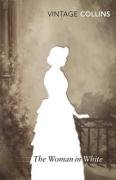 I loved how I never knew what was coming next as I listened to the audiobook for The Woman in White by Wilkie Collins. I was surprised to find that the titular woman in white appeared at the very beginning, and then I was surprised to find that I had no idea what would happen next and how it all fit together. I had suspicions that were generally correct, but the details were impossible to predict. That doesn’t mean it was out of the blue: far from it. I was just kept in eager anticipation for how the unknown would eventually resolve.
Beyond that, I delighted in the characters. I loved the recording I listened to, which was downloaded from librivox.org. While it was amateur, the narrators did a great job of capturing the personalities of the different narrators, and after listening to it, I wonder if the writing spoke clearly for itself. Were the characters written this strongly? I suspect they were, for most of the people in my librarything group (which read this two months ago) loved the characterization as well.
Collins’ style in The Woman in White was epistolary and legal. As the preamble says, “The story here presented will be told by more than one pen, as the story of an offence against the laws is told in Court by more than one witness” (quote taken from Wikipedia since I don’t have a physical copy of the book). While I haven’t always been crazy about epistolary novels, this one really worked because each voice seemed different.
I recall reading somewhere that The Woman in White by Wilkie Collins is a classic mystery-thriller. I don’t read many mysteries or thrillers, but I have a hard time labeling it as either of those. It was subtle, so I don’t think it really fits in the same category as what I think of as “thriller.” But I was always eager to find out what happens next and the suspense would build. In fact, since I normally listen when I’m driving or doing chores, I found myself going out of my way to do chores so I could listen to more of it!
I hadn’t heard of Wilkie Collins before I began book blogging. It turns out he was a contemporary and good friend of Charles Dickens. Why do we all know of Dickens and not Collins? According to Wikipedia, Collins lost his literary edge after Dicken’s death because it was “the loss of his literary mentoring.” That made me sad. I wonder if his later writing would have been better had he had some other mentor to help him get focused.
I did enjoy it and only had a few qualms about the ending, which seemed a bit rushed. I realize the author was trying to tie up loose ends, and I don’t really want to complain. Overall, I am delighted to have discovered Wilkie Collins, who I’d never read before.
P.S. The musical sounds dreadful! What were they thinking?!
What Wilkie Collins novels have you enjoyed?
Do like epistolary novels? When you read them, do you find that each letter has a different voice?

I think this is a classic mystery/thriller because it seems to be the grandfather of the modern mystery and thriller genres. Just like Robert Louis Stevenson wrote the books that become the basis of the horror genre, even though they aren’t really horror themselves. Collins set up a mystery, with a lot of suspense, that eventually resolved, and I don’t know if anyone was really doing that before him. Maybe they were, I don’t know, but that’s what I’ve been told about Collins. I can’t wait to discuss this with my book group in November!
This was my first Wilkie Collies also, but it won’t be my last! The characters really were wonderful.
Lezlie
I’m so glad you liked this one! I have the exact same copy sitting (un-read) on my shelf, and I’m looking forward to it. I know I have to conquer my fear of big books… maybe this one will start the trend! I think I will need to wait until I finish 2666, because I don’t think I can handle having two such big books on the go, but the timing will work out well, since the end of 2666 will coincide with the start of October, which is the perfect month to dive into Victorian ghost stories!
Amanda, yeah I wouldn’t have pegged Robert louis Stevenson as the father of horror either, but I guess I’m thinking of his poetry….I did like the suspense.
Do you read all the books this far in advance? Do you reread them? I’d worry I’d forget the details for the discussion! If I were reading this for a discussion, I wouldn’t have listened to it. I already can’t remember certain particulars.
Lezlie, I’m glad the characters came across in the writing. I wondered if it was just the narrators voices building them.
Steph, I don’t own the book, but that was the prettiest cover I found! I didn’t even know how long it was so it didn’t intimidate me: with physical books, I skip to the end and see how many pages. With this audiobook, I just kept listening until it was over. 🙂 I think it would be a good October book!
I haven’t read any of Wilkie Collins work, but I’d like to since I read Drood. I love epistolary novels!
I’ve only ever read The Moonstone, but I loved loved loved it. The Moonstone is one of the first and finest examples of a detective novel. (It’s also very suspenseful!) Since then, I’ve bought No Name and am excited to start it. Your review of The Woman in White makes me want to read that one too! I think that your description of the characterization in Collins novels is spot on–while reading The Moonstone, I felt like I really got to know the people in the book.
Kathy, I think Drood was the first place I heard of Collins. Haven’t read it, but heard about it in the blogging world.
Molly, I look forward to that one! Sounds great.
I loved The Woman in White too! Wasn’t Marian an amazing character? I was so impressed with Collins for his positive and complex depiction of a “masculine” woman in the Victorian period, when women were usually punished for not conforming to the “Angel in the House” stereotype. I echo others in recommending The Moonstone as well. Oh also, in addition to the loss of his literary mentor, Collins’s career suffered because of a serious opium addiction he developed. Such a waste!
I’ve been saving this for the RIP challenge the whole year! I’m really looking forward to starting it. I’ll read your and everyone else’s thoughts more carefully once I’ve read it myself. I’m happy to hear you enjoyed it, though!
One more reason I love the blogosphere. I have not read “The Woman In White,” but after a close friend said her reading club in England read it, and now I see you enjoyed it, Wilkie Collins has moved to (near) the top of the list. I’m currently in my Daphne du Maurier phase.
I’ve read three Collins and loved them all! This one, The Moonstone, and No Name (which is probably my fave). I definitely want to read all of his books one day.
Earlier this month, I finished listening to Portrait of a Lady on CD, and it was a wonderful audio experience. 🙂
Emily, I look forward to the Moonstone. Too bad about the opium. I wonder how the end of his life’s work would have been otherwise.
Nymeth, I think it would be perfect for the RIP challenge: nice and mysterious.
Bruce Oksol, isn’t blogging fun? I hope you enjoy it when you read it. I’ve only read one duMauier and I enjoyed it. Should revisit her too, I supose!
Eva, Oh, I hadn’t heard raves on No Name, I should look in to that one too! I have Portrait of a Lady on my shelf, probably not until next year. Glad you hear that you liked it!
The musical was really awful – I misguidedly saw it the first time I was in London and it hurt my brain with so much awfulness. But the book is a delight, and I think The Moonstone is even better. Collins uses the same technique of having different narrators tell the story, and it’s both more amusing and more effective in The Moonstone.
Jenny, I just read the summary on Wikipedia and I can’t believe how they bastardized the story. Egh. But thanks for the Moonstone rec. Looking forward to it!
I’ll be reading this soon for the COlorful Reading Challenge, so am excited I’m hearing nothing but good.
claire, I hope you enjoy it!
hm, Wilkie Collins is new to me, too. It sounds interesting despite the flaws. I may check into it.
Pam, i didn’t think it was overly filled with flaws, and maybe the end felt rushed because I was listening to it much quicker (i.e., I couldn’t stand stopping so I went out of my way to find time). I hope you like it!
I forgot to get back to you. As noted above, I moved “The Woman in White” to the top of my reading list and completed it some time ago. I forgot to come back and tell you. It turned out to be an excellent book; I loved it. I am now reading Robert D Richardson’s bio of William James. It turns out he was a fan of “The Woman in White,” also.
.-= Bruce Oksol´s last post on blog ..Mythology and Romanticism: The Minor Poets =-.
I HAVENT READ THE WOMAN IN WHITE BUT AFTER READING THE COMMENTS , I WILL READ IT. THANKS FOR THE SUGGESTION.