
When my son was a young infant in the middle of 2008, and I purchased Professor Seth Lerer’s Children’s Literature: A Reader’s History and spent months reading and rereading chapters, hoping to gain a better understanding of where children’s literature fits in the world history. Although I’ve since finished the book, I still plan on rereading portions and finding children’s literature that I can read to fit the eras Lerer discusses about what children read (see my project page; I haven’t done much with this project lately, but it is an ongoing project).
Then I saw Emily’s review of Professor Lerer’s Inventing English last year. Since I love language, I loved the idea of little episodes of the history of the language. I also read this slowly, simply because the subject of the early development of English is new to me. (Yes, despite the fact that I was an English major in college, I don’t recall much of the historical development of early, Old English.)
In the end, both books are ones I can recommend to fans of language and nonfiction.
Children’s Literature: A Reader’s History from Aesop to Harry Potter
I love reading classics, so I thought I’d read my son some of the classics. Reading Professor Lerer’s overview of children’s literature throughout history was an education. I think of children’s literature as Charlotte’s Web. Lerer takes us on a journey much farther back, to “Aesop’s Fables” and The Iliad, which was foundational to children’s learning in the Western tradition. The real question ends up being: where do children fit in history? At what point did literature written specifically for children enter the canon?
Surprisingly, it’s much more recent then we may anticipate. Children’s literature only became such once children were accepted as different from adults.
I began a project of writing a post for each chapter I read in this book; I was trying to read the key foundational books that children, through history, used as their formative texts. When I got the chapter on Robinson Crusoe, Treasure Island, and so forth, I slowed down and I have not gone back and continued this project for the subsequent chapters. Part of this I got distracted with other projects, challenges and books. But also, there began to be so many books mentioned in each chapter that I didn’t feel I could catch up! So while this project is still an active page on this site, it is kind of incomplete at this point. I still own the book, so I will work on it when I feel like it again. I do want to keep reading children’s classics!
My current thoughts about this book, having finished it, revolve somewhat around the first half, since that is the part I read two or three times. It’s a testimonial to me of classics. What amazed me is that children were able to read and learn from Robinson Crusoe in the 1800s. Why is it considered too advanced in language and concept for ten-year-old children today? In some respects, in reviewing the history of what children read, I realized that children are underestimated today. The fast-paced world of television and computer games has built generations of children that feel most comfortable with Captain Underpants and Diary of a Wimpy Kid. (Although I’ve read neither of these, they are the best-sellers and not Robinson Crusoe, so I feel safe making a stereotyped generalization.)
After reading about the history of children’s reading, my overall impression is that we need to offer our kids more. True, it’s okay to let them be kids: it took thousands of years to recognize the need for that stage of life. Professor Lerer’s chapters about the more recent themes in children’s literature are also important, because they illustrate the changing needs of children. After all, their role as children has only recently been created for them! It’s okay to have a separate children’s literature that they can best relate to. But at the same time, we need to believe in their abilities to understand, cope, and appreciate depth. It’s okay to give them a classic book we may consider “adult.” Chances are, two hundred years ago, it would have been a child’s favorite.
Inventing English: A Portable History of the Language
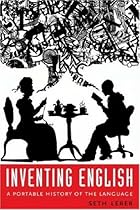 I’m glad I went slowly through Inventing English as well, because it was meant to be savored and enjoyed. I fell in love with the concept of this book that Professor Lerer introduced in his introduction:
These chapters may be read in sequence, as you read a textbook or novel; or they may be read as individual essays, each one suitable for bed or as a pause in the day’s tasks. My book, therefore, is less a history of English in the traditional sense than it is an episodic epic: a portable assembly of encounters with the language.
How delicious! Since I’m no longer in school, I’m not completely keen on reading textbooks. But I love the idea of taking a pause from my day to read about my language, and I like to read at the end of the day as a way to wind down.
In terms of the old stuff, Professor Lerer provides chapters on the origins of old English poetry, Old English Literature (I really need to read Beowulf), and the politics that influenced the changing nature of the English literature, among other things. I still haven’t even read Chaucer, so seeing how he and others fit into the changing face of English makes me all the more eager to do so!
The modern essays seemed more loosely tied together, but they were much easier to read through, probably because I’m much more familiar with the Mark Twain’s literature (or at least his style) and the modern histories he discusses when he addresses war’s impact on language and African-American English’s impact on the language (for example). These, then, were more fun to read.
For me, although I liked the modern chapters (they were fun), it was the early stuff that really fascinated me. Maybe it’s because I read the first half much slower, I spent a longer time pondering it. Or maybe it’s just that I want to read my mother’s Ph.D. dissertation (on the Cycle plays in the 1300s) and I really would love to understand the English she quotes!
The entire book was enjoyable, and I look forward to learning more about the history and development of English – as well as seeing how it continues to develop through my lifetime!
- What children’s literature histories can you suggest?
- What histories of English language development have you enjoyed?
I may be sticking with the originals for now (i.e., the children’s books and the really old classics) but I’m always on the lookout for another enjoyable nonfiction overview.

Wow, loved your review. I have Children’s Literature: A Reader’s History from Aesop to Harry Potter on my Kindle but haven’t started it yet, after reading your review I am moving it up on my list. Inventing English sounds really interesting as well!
Amy, I really enjoy it. It is more textbook-y than the other, so just a warning!
No worries, I assumed as much. That is part of the reason I haven’t started it yet, heh. I will probably try to read a chapter a month or something.
.-= Amy´s last post on blog ..Review: Before Green Gables by Budge Wilson =-.
I MUST have the Children’s Literature book now. Thanks for bringing these books to light.
.-= A Bookshelf Monstrosity´s last post on blog ..All Things Kid Lit: My Garden =-.
A Bookshelf Monstrosity, I hope you like it! An interesting perspective on children’s lit.
These sound so good, especially Inventing English which I have just added to my TBR list. I don’t know much about children’s literature but if you are looking for something about how language development in humans and not really a history fo English, The Language Instinct by Steven Pinker is challenging but fascinating.
.-= Stefanie´s last post on blog ..What Am I Doing? =-.
Stefanie, Thanks for the suggestion. It sounds good! I like learning about how language develops too.
Oh, I’m so glad you enjoyed Inventing English! I agree with you that the chapters dealing with more ancient language, maybe because they were more foreign to me, were the most fascinating parts of the book. The chapter on the introduction of French influences and the advent of English rhyming poetry has particularly stuck with me & given me a new outlook on English poetry in general.
And I second Stefanie’s suggestion of The Language Instinct!
.-= Emily´s last post on blog ..Essay Mondays: Tanizaki =-.
Emily, I was surprised by how much I enjoyed the older English histories! Ooo a second for that book. I must read it, then!
I can’t suggest it as I haven’t read it yet, but I have The Evolution of Language on my shelf that is supposed to be quite good! Not only about English- about language in general.
.-= Aarti´s last post on blog ..Review: Bone – Out From Boneville =-.
Aarti, I like language in general too. Thanks for the mention, I’ll have to look it up.
Seth Lerer’s “Children’s Literature” has won the 2010 Truman Capote Award.
http://news-releases.uiowa.edu/2010/april/041410capote-award-lerer.html
Winston, thanks so much for the heads up!
I’m a mother of three kids and I’ve come to realize that books are quite costly. Always costly. And with having three kids, I needed to find a way to save. Not just a little but a lot of savings. I use http://www.bigwords.com now because it has saved me so much money. My kids love to read and I enjoy reading to them. So being able to provide them with that is amazing without it putting a whole in my wallet. I highly suggest using this site and i’m sure it’ll save you money too.
Hi Liz, I have an even better solution to the costliness of books: use a library!!!! I have a great one 🙂