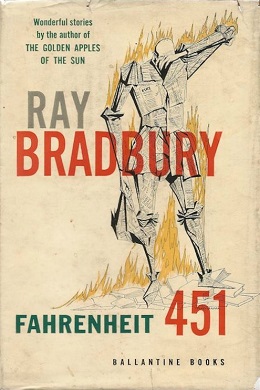
As my son sat watching Dora the Explorer, I thought of my recent read of Fahrenheit  451 (1953). “Say, ‘backpack!’” Dora said. “Backpack,” Raisin responded. “Louder!” Dora’s friend prompted. “Backpack!” Raisin yelled. And this is just what Guy Montag’s wife (did she garner a name? It slips my mind now) does all day long in
Read Post

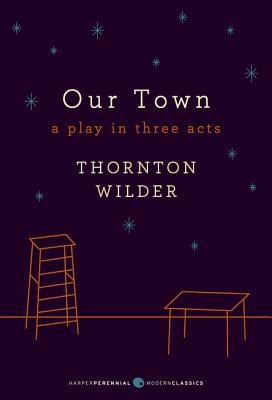
Thornton Wilder’s sparse and simple play Our Town was first produced during the Great Depression (1938). In a set without any scenery beyond chairs and tables and in three short acts, Thornton Wilder creates an intimacy with the characters. This is probably due to the familiarity of the subject: life, love, and death in a

Read Post

In honor of my recent trip to New York City, I bring you thoughts on two books about the buildings in the city: Urban Animals and Building Stories, both picture books by Isabel Hill featuring images from the buildings of New York City. Urban Animals By showing the images of animals as carved in and

Read Post

Harper Lee’s To Kill a Mockingbird is a story of two children’s growing understanding of the double standards of the world. It’s also the story of a small community struggling to come together during the economic era of the Great Depression and the political upheaval of a mixed racial pre-Civil Rights southern town. It is

Read Post

After I finished reading The Pickwick Papers by Charles Dickens (first published serially in 1836-7), I began to read the introduction to my edition1. Almost immediately, it confirmed what I’d thought as I’d read it: that Mr. Pickwick is a Don Quixote and Bertie Wooster character. So I stopped reading the introduction; I’ll tell you

Read Post

When I first read it, I pitied Emma Bovary. How stuck she was in her world! What a victim of circumstance! True, she made wrong decisions. But she was trapped in a relationship that bored her. On this read, I hated her. She made stupid decision after stupid decision. She did not have the ability

Read Post

Previously by Allan Ahlberg, illustrated by Bruce Ingman is a different type of fairy tale. It goes backwards, showing that each nursery rhyme or fairy tale characters came from somewhere else. showing the effect of the action before showing the action. It begins, for example, with Goldilocks: Goldilocks arrived home all bothered and hot. And

Read Post

The Three Snow Bears by Jan Brett (Putnam, 2007). Aloo-ki is a young Inuit girl. Her huskie team has floated away from her on an ice flow, and she sees a little igloo with the warm smell of soup. What follows is, of course, her finding what is just right in the house: the smallest bowl of

Read Post

Goldilocks by Ruth Sanderson (Little, Brown, 2009). Although Ms Sanderson’s story begins in a traditional way, the end has a rewarding twist. Goldilocks stays to help make the beds, repair baby bear’s chair, and then, just when she thinks she will be eaten, she suggests her gathered blueberries. The book includes a recipe for the blueberry muffins

Read Post

Goldie and the Three Bears by Diane Stanley (HarperCollins 2007). As the cover suggests, Ms Stanley’s version of the story has an autumn setting. Young Goldie is a picky girl who only likes her peanut butter sandwiches one way, loves to read books every afternoon, and otherwise ostracizes friends by her honesty about her preferences. One day,

Read Post