In a similar manner to What the World Eats (reviewed here), Material World by Peter Menzel attempts to illustrate the material wealth (or material poverty) of various families around the globe by photographing a family’s household belongings and illustrating the family’s daily life in photographs. Using full-color photography, each country is highlighted first with a

Read Post

In flowing, beautiful language, The Silmarillion tells the origin and early tales of J.R.R. Tolkein’s middle-earth. Written as “Elven” songs, The Silmarillion is dense at times. Yet as the tale of the creation of Arda and the children of Ilúvatar (both Elves and men) unfolded, I was in awe of not just Tolkein’s incredible control

Read Post

Tom Ang’s Fundamentals of Photography is aptly subtitled “the essential handbook for both digital and film cameras.” As a very amateur photographer, I was fascinated by the technical explanations for photography: how cameras work, how light is best captured, and how to process photographs appealingly. While I will never again photograph using film cameras, I

Read Post

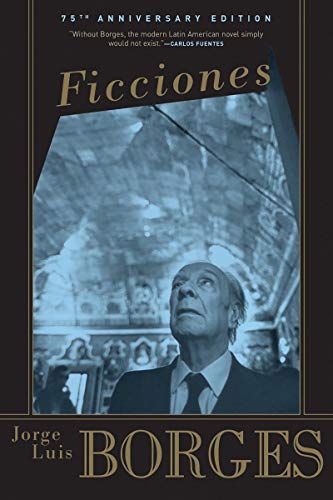
Ficcciones by Jorge Luis Borges is about 170 pages in Spanish; the English translation of the same book is about 120 pages (within Borges’ Collected Fictions). Why, then, has this book taken weeks to get through? Borges’ writing style is powerful. In some sense, I’m glad I struggled through Borges just to get a feel

Read Post

In the history of western children’s literature, after Pilgrim’s Progress came Isaac Watt’s elegies for children, Divine Songs. But while Pilgrim’s Progress was actually intended for adults and children learned from it, Divine Songs was intended to be for children. And while Pilgrim’s Progress actually does have some relevance for Christians today (even given how

Read Post

Pilgrim’s Progress by John Bunyan was one of the first modern novels when it was published in 1679 and 1685 because it uses dialogue as a main tool to drive the story. As an allegory, Pilgrim’s Progress plainly tells the story of each Christian’s lifelong quest from a sinful life to eternal life using the

Read Post

What do you eat in one week? What does a typical American eat? What does a typical Brit eat? What does a family in the Darfur Refugee Camp in Chad eat? What do the people of the world eat? These are the questions that photographer Peter Menzel seeks to answer through his coffee table book

Read Post

I remembered reading Harry the Dirty Dog by Gene Zion, illustrated by Margaret Bloy Graham (Harper and Row, 1956), as a kid, so I picked it up again to relive it now, reading it to my son (he’s currently 15 months). Harry the white dog with black spots doesn’t want to take a bath, so he hides his

Read Post