The Most Magnificent Thing by Ashley Spires (Kids Can Press, April 2014) is a STEM book. (For those not in the “know,” as I was not until recently, STEM is educational slang for something relating to Science, Technology, Engineering, or Mechanics.) A creative girl heads out to make the “magnificent thing,” but cannot seem to get

Read Post

I am a mother that is not comfortable with mess. I don’t like noise or chaos either. And yet, I’m learning to adapt. In fact, when I read Recipes for Play by Rachel Sumner and Ruth Mitchener (The Experiment, September 2014), I started actually getting excited about trying out some of the activities and crafts mentioned.

Read Post

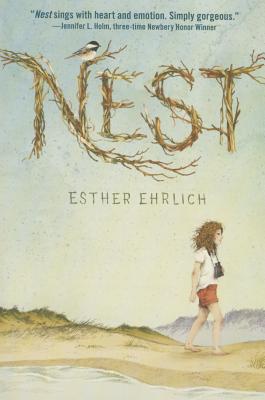
Nest by Esther Ehrlich (Random House Children’s Books; published today!) is an emotionally charged novel about a young girl facing stark change after her mother develops a serious disease. Naomi, “Chirp” to her family and friends, is a bird-loving sixth grader on Cape Cod in the early 1970s. Her life is full of nature and

Read Post

I love history but given my busy schedule these days, I feel I have limited time to read. A 400+ page book about history just is not going to get read in a timely manner. A young adult book, however, is often just the thing I need! Bomb by Steve Sheinkin (Roaring Brook Press, 2012)

Read Post

Super Red Riding Hood by Claudia Dávila (Kids Can Press, August 2014) is a twist on the fairy tale of Little Red Riding Hood, with an emphasis on the super powers of Ruby, a girl who has no fear … or does she? With delightful cartoon-like and friendly illustrations, Ruby’s story shows us that sometimes our

Read Post

The Baby Tree by Sophie Blackall (Nancy Paulsen Books, 2014) is my new favorite “expecting a baby” book for kids. Although it is full of nonsense as a a soon-to-be-big brother is told all sorts of whoppers about where a baby comes from, it is in fact a no-nonsense book for parents interested in opening

Read Post

I’ve mentioned before that I love the nonfiction books I’ve read by Sally M. Walker. Ghost Walls (Lerner, 2014) is no exception. With Ms. Walker’s conversational style of writing and clear explanations of both science and history, Ghost Walls digs into the anthropological history of a seventeenth-century house in Maryland, giving life to a house that fell into

Read Post