
It’s been a while since I’ve reviewed what my son (age 21 months) is reading, so I thought I’d jump in and mention some highlights. It’s so much fun to see my son loving reading. He’s also definitely developing preferences and favorite things in his life, so now his reading is becoming focused on what

The Words We Live By: Your Annotated Guide to the Constitution by Linda Monk is simply brilliant. Monk takes the Constitution of the United States, including its amendments, and dissects it line by line, explaining the historical significance and the modern significance of the wording. She does so in layman’s terms, with amusing quotes in
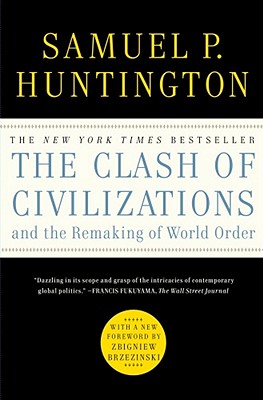
In The Clash of Civilizations and the Remaking of World Order, Samuel P. Huntington attempts to define the post-Cold War world. His conclusion is that, instead of an “us” and “them” approach to world politics, we must view the world as that of many civilizations, including mainly the West (generally Christian), Sinic (Chinese), Islamic, Hindu
While I still enjoyed In Chancery and To Let, the second two novels of The Forsyte Saga by John Galsworthy felt less developed, less powerful, and less important. In essence, to me they felt like merely sequels to a powerful novel. My thoughts on the first novel of the trilogy were complimentary; these thoughts are
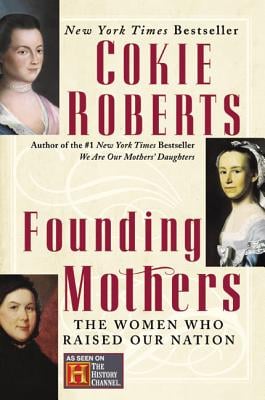
I like history and I always want to know more about American History. But in all the nonfiction and fiction about the Revolutionary War, it’s rather limited to dead white guys who fought the battles and otherwise founded our nation. Enter: Founding Mothers by Cokie Roberts. In a conversational tone, Roberts shares some of the
To my relief, I was not the only one at the book club meeting that didn’t love this month’s choice! I don’t usually read modern fiction; it’s just not my thing, and I can’t really say way. Maybe I’m just always reading the “wrong” modern fiction and so it has a bad rap in my

In Chapter 6 of my history of children’s literature textbook, Children’s Literature, Seth Lerer indicates: Almost from its original publication in 1719, Daniel Defoe’s Robinson Crusoe had an immense impact on literature for children and adults. It has been widely seen as one of the first major novels in English; as the stimulus for a
Carl Sandburg was born in rural Galesburg, Illinois in 1878. He quit school after eighth grade, and did a variety of jobs throughout the Midwest, including traveling as a hobo, working as a fireman, and threshing wheat, eventually settling down as a journalist in the city of Chicago. Through his experiences, he observed the dichotomy
My big excitement this week is that I was invited to start a classics book club at my local library! I had asked a librarian few weeks ago why there wasn’t a classics book club (only modern lit clubs), and apparently, it was because no one had ever offered to start it, so here I
My LibraryThing group (called Group Reads – Literature) read The Forsyte Saga in March and April; I’m rather behind. I’m now midway through the second of the three novels. The Forsyte Saga by John Galsworthy tells the story of the end of the 1800s and the early 1900s: the cusp of modernity. The younger generation
The problem with reviewing a book I listened to on audio is that I cannot properly go back and quote for you the passages that made me shudder. Nor can I describe in detail the scenes that horrified me. 1984 by George Orwell is such a book. In some respects, listening to it reminded me

Mrs. Piggle-Wiggle is a magical friend to children, with her upside-down house and delicious cookies that are always waiting for you. She’s also a wonderful help to parents, who often don’t know how to solve the problems of parenthood. When I was young I loved learning Mrs. Piggle-Wiggle’s “cures” for naughty children’s problems, such as
Page [tcb_pagination_current_page] of [tcb_pagination_total_pages]