

Tom Ang’s Fundamentals of Photography is aptly subtitled “the essential handbook for both digital and film cameras.” As a very amateur photographer, I was fascinated by the technical explanations for photography: how cameras work, how light is best captured, and how to process photographs appealingly. While I will never again photograph using film cameras, I

There was no doubt that John Bunyan’s Pilgrim’s Progress (reviewed here) was written to teach both children and adults lessons about Christianity and life; there was little attempt to veil the message behind the story. While the message in modern children’s literature may not be so thinly veiled, to me it seems obvious that authors
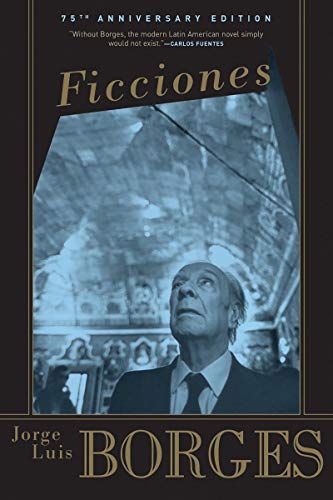
Ficcciones by Jorge Luis Borges is about 170 pages in Spanish; the English translation of the same book is about 120 pages (within Borges’ Collected Fictions). Why, then, has this book taken weeks to get through? Borges’ writing style is powerful. In some sense, I’m glad I struggled through Borges just to get a feel

In the history of western children’s literature, after Pilgrim’s Progress came Isaac Watt’s elegies for children, Divine Songs. But while Pilgrim’s Progress was actually intended for adults and children learned from it, Divine Songs was intended to be for children. And while Pilgrim’s Progress actually does have some relevance for Christians today (even given how

To my surprise, I greatly enjoyed reading The Book that Changed My Life, edited by Roxanne J. Coady and Joy Johannesson. The Book that Changed My Life is a collection of essays by writers, and since I don’t often read modern fiction, I didn’t expect to recognize many of the authors highlighted, much less did

Pilgrim’s Progress by John Bunyan was one of the first modern novels when it was published in 1679 and 1685 because it uses dialogue as a main tool to drive the story. As an allegory, Pilgrim’s Progress plainly tells the story of each Christian’s lifelong quest from a sinful life to eternal life using the

What do you eat in one week? What does a typical American eat? What does a typical Brit eat? What does a family in the Darfur Refugee Camp in Chad eat? What do the people of the world eat? These are the questions that photographer Peter Menzel seeks to answer through his coffee table book

I first read about Wynken, Blynken, and Nod by Eugene W. Field, illustrated by Giselle Potter (Schwartz & Wade, 2008), at The Well-Read Child. So when I saw it on the new books shelf in the children’s section of the library, I was very excited to check it out. I’ve read the Eugene Field poem before, but

I remembered reading Harry the Dirty Dog by Gene Zion, illustrated by Margaret Bloy Graham (Harper and Row, 1956), as a kid, so I picked it up again to relive it now, reading it to my son (he’s currently 15 months). Harry the white dog with black spots doesn’t want to take a bath, so he hides his

This month, I found my favorite Dr. Seuss book: My Many Colored Days (Knopf, 1996). My Many Colored Days was published posthumously and was not illustrated by Dr. Seuss (paintings by Steve Johnson and Lou Fancher). But probably for that reason, I love the brightly painted pages. The abstract paintings nicely capture animals in various moods and colors,

I’ve been reading my son Horns to Toes and In Between by Sandra Boynton (originally published 1984) since he was four months old. He’s now 15 months and I’m delighted that he has begun to respond as we read together. This board book is a ridiculous book for learning our body parts because the narrators

In Possession, A.S. Byatt powerfully creates characters so believable that I found myself assuming that the events she writes of really happened, that the feelings described were truly felt, and that the characters actually lived. For me, Possession‘s strength lies in this powerful creation. While I enjoyed the developing action (it is a literary mystery)
Page [tcb_pagination_current_page] of [tcb_pagination_total_pages]