

In Julieta and the Diamond Enigma by Luisana Duarte Armendariz (Tu Books, 2020), nine-year-old Julieta is caught in a scandal when she and her father witness the Regent diamond being stolen. When Julieta accidentally lets the thief out of the building and she and her father are suspected, she is determined to free themselves from

Ruth Bader Ginsburg Couldn’t Drive? by Dan Gutman (Norton Young Readers, 2022) is a part of the Wait! What? series by the creator of the popular My Weird School series (and a number of other fun middle-grade books). In this kid-friendly middle-grade biography, two kids, named appropriately Paige and Turner, teach the reader all about

Note: I received a digital copy of the book for review consideration. Cloaked in Courage by Beth Anderson, illustrated by Anne Lamelet (Calkins Creek, 2022) tells the unique story of Deborah Sampson, a woman who pretended to be a man and joined the army during the Revolutionary War to help fight for freedom. Subtitled Uncovering

Note: I recieved a digital review copy of this book, an adaptation for young adults. Also, I haven’t read the original, so these are just my thoughts on this adaptation as a book for young adults. I had only ever been familiar with the word caste in terms of the people who live in India,

The Cool Code by Deirdre Langeland, illustrated by Sarah Mai (Clarion Books, 2022), is an amusing graphic novel about a formerly homeschooled eighth-grader who creates an app to help her be “cool” in her new school. Zoey enters school worried about how to make friends, and in the end, she finds the true meaning of

In Nothing is Little by Carmella Van Vleet (Holiday House, 2022), middle schooler Felix begins to come to terms with himself, his place in his family, and his identity as a person. His story is driven by his own search for the identity of his absent father, with “detective work” he hides from his mother

I did always wonder what the COVID-19 pandemic would have been like from the very beginning, even when no one yet knew what it was in Wuhan, China. I only have my experience, watching the progression of the disease through the world before our own world shut down. Morning Sun in Wuhan by Ying Chang Compestine
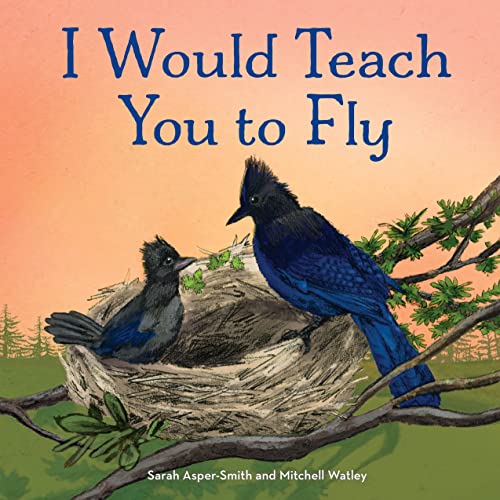
I Would Teach You to Fly by Sarah Asper-Smith (Sasquatch Books, 2022) shows mother animals caring for and teaching their baby animals. I Would Teach You focuses on parents of all divisions of the animal kingdom, all of whom are teaching their young. In a sweet bedtime tone, I Would Teach You ends with the sweet

Drop: An Adventure Through the Water Cycle by Emily Kate Moon (Dial Books for Young Readers, 2021). Watercolor (specifically, India ink mixed with water) seems to be the perfect medium for illustrating the water cycle. In Drop, the author/illustrator emphasizes the eternal existence of Drop as she has cycled through Earth’s atmosphere and surface over
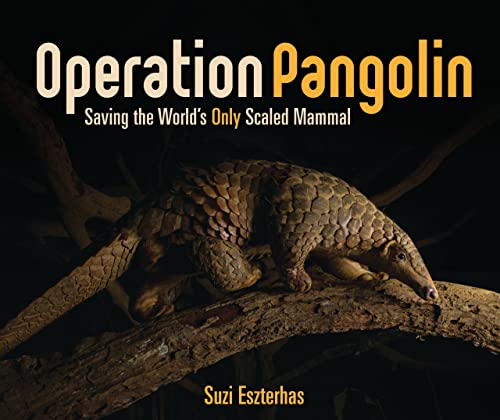
Did you know that there is a mammal that has scales? I didn’t until I read Operation Pangolin by Suzie Eszterhas (Millbrook, 2023). This book refers to one man’s mission to save the dwindling population of pangolins from human poachers. I hadn’t even heard of this small reptile-looking, ant-eating mammal. Surprisingly, it is more closely

Elephants Remember: A True Story by Jennifer O’Connell (Tilbury House, 2022) tells the true story of the “Elephant Whisperer,” Lawrence Anthony, who ran a wild animal reserve in Zululand, South Africa. Despite the wild nature of a herd of elephants, with Anthony’s care and civility, the herd is able to thrive in his reserve. When

The twin sisters Clara and Hailey in Gemini by Sonya Mukherjee (Simon & Schuster, 2016) are not your average 17-year-old twins. As conjoined twins, they are attached at the base of the spinal cord, and as such have never been apart. Their personalities could not be more different, though. And although their life has been
Page [tcb_pagination_current_page] of [tcb_pagination_total_pages]