

Breaking Stalin’s Nose by Eugene Yelchin (Henry Holt Books for Young Readers, 2011) is a lighthearted look at a serious time in Russian history. From the other books, I reviewed this week about Pakistan child slavery and the Sudanese civil war, I have had a heavy week reviewing difficult subjects. Breaking Stalin’s Nose, on the other hand, is

A Long Walk to Water by Linda Sue Park (Clarion Books, 2011) is a fictionalized version of two related stories in the recent history of Sudan. It tells two parallel stories, one in the 1980s and the other just a few years ago. In the early story, a young boy is caught in the crossfires of the Southern
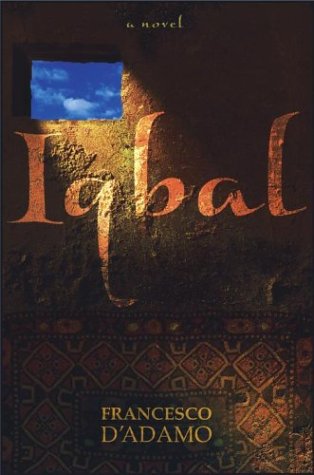
Iqbal by Francesco D’Adamo (translated by Ann Leonori) is a young adult novel based on the true story of a boy who, as a child slave in Pakistan, changed the outlook for the hopeless children who work at the rug-making factory he has been transferred to. As told from the fictionalized perspective of a young girl

Remember the last dream you had that seemed to be completely random? One minute it makes sense: the next minute it doesn’t. Fortunately, the Milk by Neil Gaiman is a strange, dream-like story. It is a story told by a father to his children as an explanation of why he took too long to go to
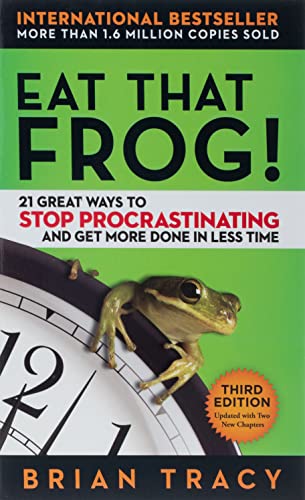
Eat That Frog by Brian Tracy is an inspiration inspirational book for anybody needing the motivation to put off procrastination and become more efficient in using their time, their energy, and their talents to improve their career or their life as a whole. I read Eat That Frog initially as inspiration for me and my small
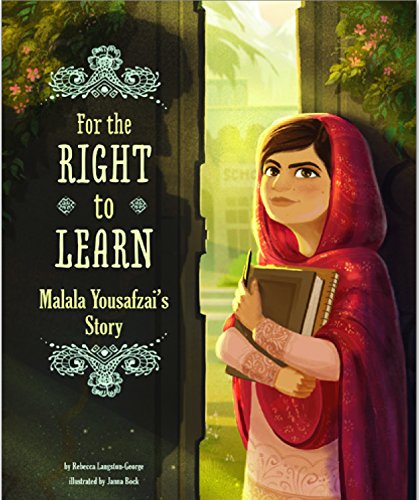
For the Right to Learn by Rebecca Langston-George (Capstone, September 2015) is a picture book biography of Malala Yousafzai that gives younger readers a background of just what she was able to accomplish. I’ve said before that her story is inspiring, and I think this book did a great job of also making it accessible to young
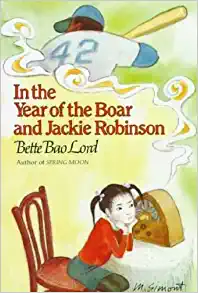
In the Year of the Boar and Jackie Robinson by Bette Bao Lord (published 1984) tells of one girl’s journey from her traditional Chinese home to New York City in 1947. How can Shirley hold on to her heritage in such a strange land? At the beginning of the story, the girl is known by

Nicholas Nickleby by Charles Dickens (published serially from 1838-1839) meets the Dickensian stereotype of a very long book. I began reading it when my daughter was newborn and I finally finished it, now that she’s three and half. Nicholas Nickleby is definitely not my favorite Dickens novel. In some respects it’s obvious that its a early

The Homework Machine by Dan Gutman is a clever chapter book written from the perspective of four different preteens who have been caught cheating on their homework with a “homework machine.” The book is also fun as the students overcome their own prejudices and judgments of one another in order to unite in using the
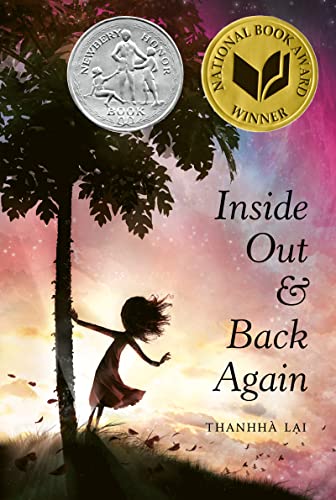
Inside Out and Back Again by Thanhha Lai (2011 National Book Award for Young People and Newbery Honor Award) is a novel in poetry about a young girl’s relocation to American from Vietnam during the Vietnam War. It is about the challenge of starting over and the pain of discrimination in a strange new country and

Titanic: Voices from the Disaster by Deborah Hopkinson (originally published 2012) is an amazing nonfiction account of the Titanic disaster, drawn directly from first-hand accounts written by the survivors of the Titanic crash, as well as the letters and notes of those who did not survive. What most impressed me by Ms. Hopkinson’s account was the amazing readability

The Stories Julian Tells by Ann Cameron (originally published 1987) is a clever early chapter book about a boy and his younger brother, along with the crazy stories Julian makes up to explain the world around him. When seven-year-old Julian does not know the answer to his three-year-old brother Huey’s questions, he makes up stories! For example, he tells his
Page [tcb_pagination_current_page] of [tcb_pagination_total_pages]