I read Lois Lowry’s The Giver (1993, winner of the Newbery Medal 1994) when it was first published (I was a teenager), but the related books to it, Gathering Blue (2000) and Messenger (2004), were both written after my childhood days, so I hadn’t read them before. My book club recently decided to read Messenger,

Read Post

Delia has recently been orphaned and finds herself among a truly odd assortment of characters when she arrives at Oddfellow Bluebeard’s orphanage. Each child at Oddfellow’s Orphange has something that sets them apart from the others, from the boy with an onion head, to the girl with blue tattoos all over her body, to a

Read Post

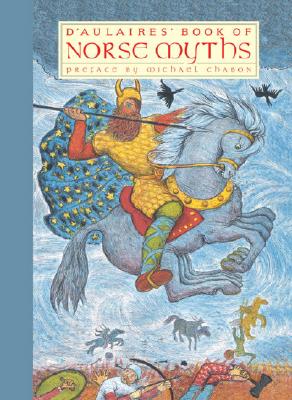
Although I grew up with D’Aulaires’ Greek Myths, I have never been familiar with traditional Norse mythology. I have a Scandinavian heritage, so this seems a bit sad to me. When I saw that A.S. Byatt’s new addition to the Canongate Myths series was about the end of the world according to Norse mythology, I

Read Post

The Wise Fool: Fables from the Islamic World by Shahrukh Husain and illustrated by Micha Archer (Barefoot Books, 2011) tells the fables of Mulla Nasruddin, a fabulist I was unfamiliar with. Mulla, who is called a “wise fool,” comes from the Arabian Middle East and reaches in traditions to as far as Greece, parts of Russia, and

Read Post

In the middle grade historical novel in poetry May B. by Caroline Rose (to be published January 2012 by Swartz and Wade), young Mavis Betterley, called May, has been sent away from home for the first time, assigned to be a helper for one of her rural Kansas farm neighbors for six months. Despite her

Read Post

The Phantom Tollbooth by Norton Juster and classically illustrated by Jules Feiffer (1961) is a book for the clever reader. The book is full of wonderful wordplay, cliché, word stereotypes, and logic puzzles for a young child (and the adult!) to chuckle over and enjoy. In the story, the young Milo is bored of school

Read Post

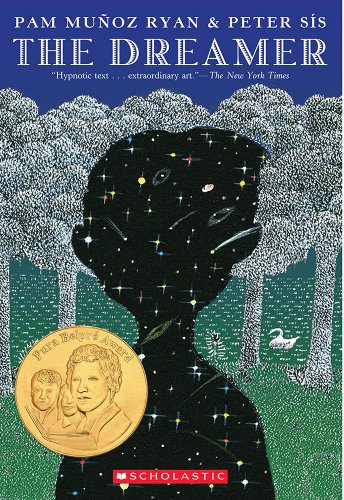
Neftalí is a dreamer, always looking for objects to treasure. When special things happen to him, his imagination takes him away on a wave or a cloud. But his father constantly berates him, calling him an absent-minded idiot. As Neftalí grows, he finds that the poetry he sees in the world around him must escape

Read Post