Follow the Water from Brook to Ocean by Arthur Dorros (Let’s-Read-and-Find-Out, Stage 2, HarperCollins Children’s Books, 1991) emphasizes the collection and movement of water. It names and explains underground water systems, springs, brooks, rivers, and water’s power to carve through rocks to create canyons. Water’s interaction with Earth creates waterfalls, causes floods, and is dammed

Read Post

Build, Beaver, Build by Sandra Markle is a book about beavers at the largest beaver dam in the world. Sandra Markle is a name that I’ve come across many times in my years of reading children’s fiction. I have reviewed two of her scientific mystery books on this site: The Case of the Vanishing Little

Read Post

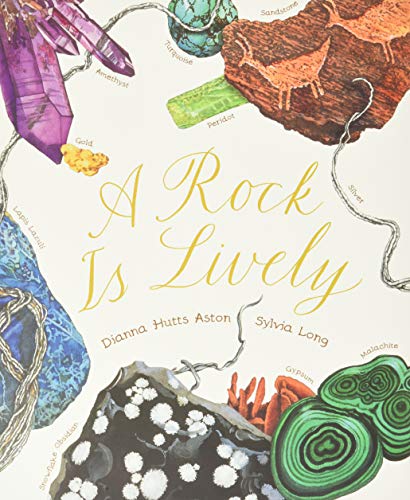
A Rock is Lively by Dianna Hutts Aston and illustrated by Sylvia Long (Chronicle Books, 2012) is a lovely illustrated book about rocks. I never thought of rocks as alive or lively and yet, Ms Aston has a good argument for it. In an elegant cursive font, the text tells us that rocks “bubble” (with

Read Post

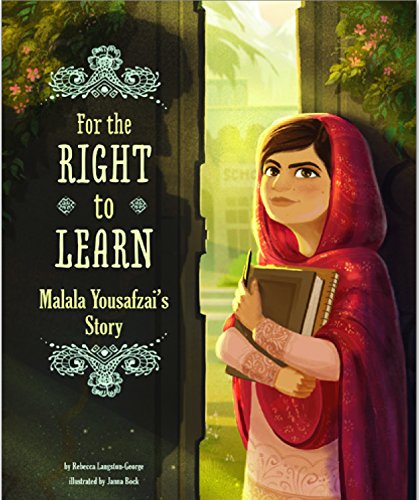
For the Right to Learn by Rebecca Langston-George (Capstone, September 2015) is a picture book biography of Malala Yousafzai that gives younger readers a background of just what she was able to accomplish. I’ve said before that her story is inspiring, and I think this book did a great job of also making it accessible to young

Read Post

The nonfiction picture book Dinosaurs from Head to Tail by Stacey Roderick and illustrated by Kwanchai Moriya (Kid Can Press, 2015) provides the young dinosaur fan with a guessing game. First, a two-page spread shows a zoomed-in view of a part of a dinosaur’s body, with a question for the reader to determine which dinosaur

Read Post

School Days Around the World by Margriet Ruur and illustrated by Alice Feagan (Kids Can Press, 2015) captures Malala’s vision in the epigram at the beginning: “I don’t mind if I have to sit on the floor at school. All I want is education.” In the cut-paper collage illustrations, the stories of real children around the

Read Post