With a focus on the Great Barrier Reef in Australia, The Coral Kingdom by Laura Knowles (illustrated by Jennie Webber; words and pictures, 2018) introduces the basic animals of the coral reef with the colorful coral reef ecosystem as the highlight of the picture book’s pages. Rhyming couplets on each page help make the text

Read Post

The fictional picture book Gopher to the Rescue: A Volcano Recovery Story by Terry Catasus Jennings (illustrated by Laurie O’Keefe; Sylvan Dell Publishing, 2012) will help young children understand how habitats are recovered after a natural disaster such as a volcano or fire. In the story, our title character Gopher naturally digs under the ground

Read Post

From Seed to Plant by Gail Gibbons (Holiday House, 1991) is a detailed Let’s-Read-and-Find-Out book with details on how seeds grow into plants. It includes charts with the parts of the seeds details on how pollination occurs, and clear charts of the various stages of photosynthesis. The detail provides a nice full instruction in how

Read Post

Earthquakes by Ellen J. Prager (illustrated by Susan Greenstein; National Geographic Kids, 2017; Jump into Science! series) is an illustrated nonfiction picture book that teaches about earthquakes in a child-friendly way. Cartoon illustrations, maps, and diagrams make the book easy to approach. By asking questions, the book encourages the reader to consider before they continue

Read Post

The nonfiction picture book, Old Enough to Save the Planet by Loll Kirby (illustrated by Adelina Lirius; Harry Abrams, 2021) shows how kids can help our environment. Each two-page spread highlights a real child that made a difference in his or her community by noticing an issue and starting an initiative for change. The top

Read Post

Throughout the picture book Flick a Switch: How Electricity Gets to Your Home by Barbara Seuling (illustrated by Nancy Tobin; Holiday House, 2003), a girl and her dog comment on what they see and learn about switches and electricity. It includes basic facts at an easy-to-read level, making it a great upper elementary-level research book

Read Post

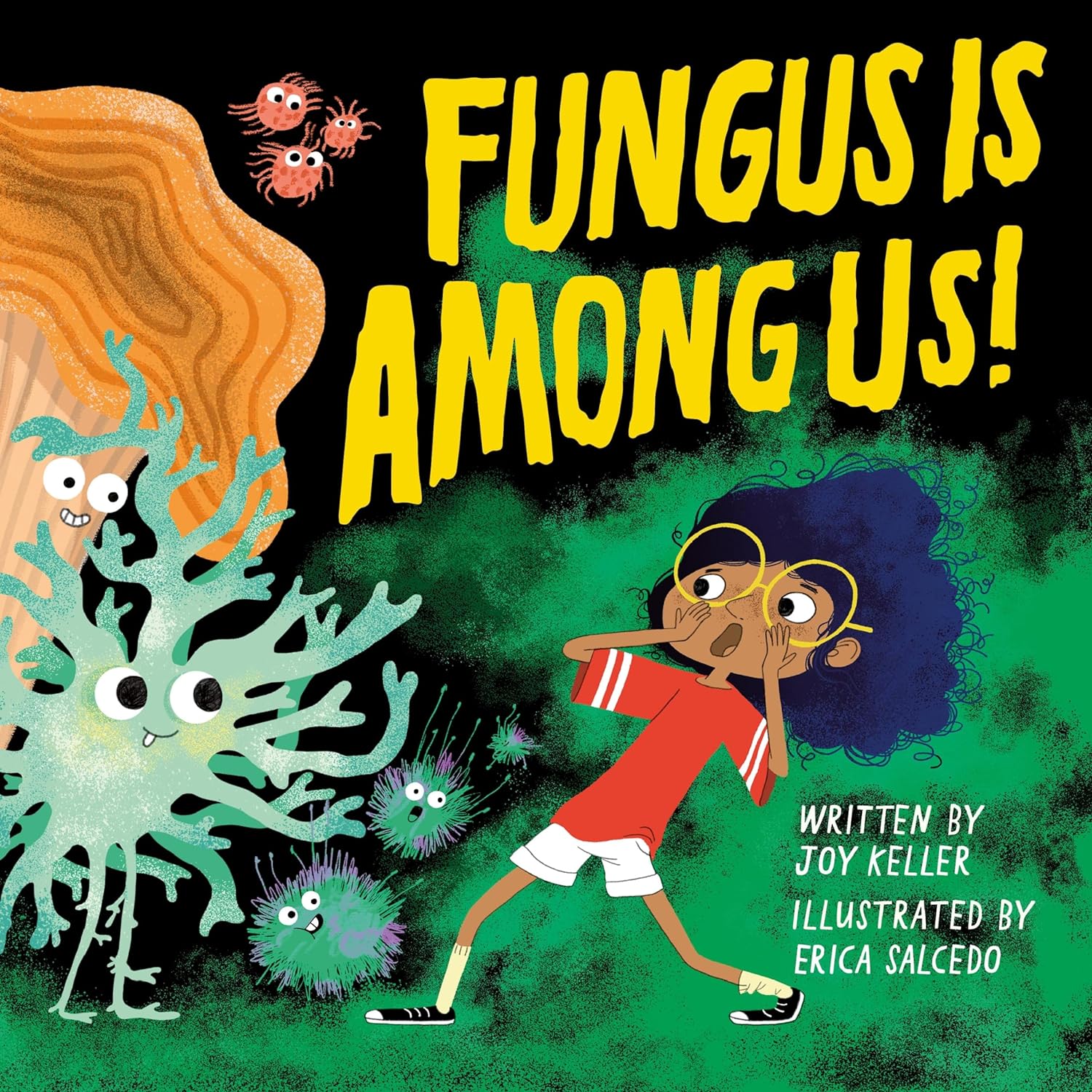
Fungus is Among Us! by Joy Keller (Innovation Press, 2019) has a fictional and rhyming story-line that follows a girl walking in a forest and through her home. Throughout her walk, she learns about all the fungus that is in her life. This includes mushrooms, moss, mold on old food and on shower walls (ewwww).

Read Post

The non-fiction picture book One Night in the Coral Sea by Sneed B. Collard III (illustrated by Robin Brickman; Hyperion, 2006) tells about the yearly spawning of coral. Brickman’s three-dimensional painted paper illustrations make this book stand out in the pile. But also Collard’s detail about the mass spawning of the coral in the world

Read Post

How Mountains Are Made by Kathleen Weidner Zoehfelt (illustrated by James Graham Hale; Harper Collins, 1995) is a Lets-Read-and-Find-Out book (Level 2). The books in this picture book informational science series are sometimes uneven, but this one hits the mark for teaching many concepts with a friendly frame. In How Mountains Are Made, the facts

Read Post

Courage Like Kate: The True Story of a Girl Lighthouse Keeper by Anna Crowley Redding (illustrated by Emily Sutton; Random House 2022) is based on the true story of Kate Moore, the first official female lighthouse keeper. In order to help her father, young Kate takes care of the lighthouse for him. Illustrations are created

Read Post