It is not often that I finish a book and feel nothing positive. I tend to like most of what I read, and even if I don’t like it, I try to find something that sheds light on life in some way. I struggle now to think of what I could possibly find redeeming in

Read Post

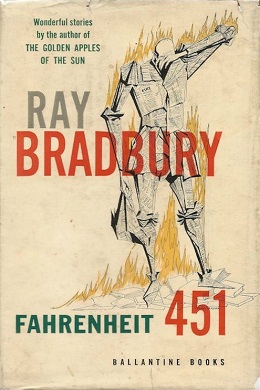
As my son sat watching Dora the Explorer, I thought of my recent read of Fahrenheit  451 (1953). “Say, ‘backpack!’” Dora said. “Backpack,” Raisin responded. “Louder!” Dora’s friend prompted. “Backpack!” Raisin yelled. And this is just what Guy Montag’s wife (did she garner a name? It slips my mind now) does all day long in

Read Post

Harper Lee’s To Kill a Mockingbird is a story of two children’s growing understanding of the double standards of the world. It’s also the story of a small community struggling to come together during the economic era of the Great Depression and the political upheaval of a mixed racial pre-Civil Rights southern town. It is

Read Post

After I finished reading The Pickwick Papers by Charles Dickens (first published serially in 1836-7), I began to read the introduction to my edition1. Almost immediately, it confirmed what I’d thought as I’d read it: that Mr. Pickwick is a Don Quixote and Bertie Wooster character. So I stopped reading the introduction; I’ll tell you

Read Post

When I first read it, I pitied Emma Bovary. How stuck she was in her world! What a victim of circumstance! True, she made wrong decisions. But she was trapped in a relationship that bored her. On this read, I hated her. She made stupid decision after stupid decision. She did not have the ability

Read Post

In some respects, Crossed Wires by Rosy Thornton is a “chic lit” novel as the pinkish cover suggests it is: you kind of know what will happen in the end. However, it is so much deeper than a stereotypical romance novel. I probably wouldn’t have picked it up on the cover alone. But there are

Read Post

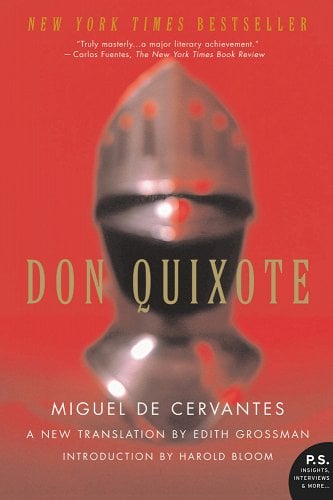
The second half of Don Quixote of La Mancha (written in 1615, a full decade after the first half) is much better than the first half (thoughts here). As the novel progresses, Cervantes’ writing improves, the plots improve, and the character’s personalities become far more distinct. I was drawn into the story in a way

Read Post

How does a blind person understand the majesty of a cathedral? The narrator in Raymond Carver’s short story “Cathedral” tries to describe it. His underlying epiphany, however, is not about architecture but about his own prejudices and stereotypes. He discovers in the end that he has been the one blind. He has not understood the

Read Post

The goatherds’ observation that “This gentleman must have a few vacant chambers in his head” (page 439) comes at the end of part 1 of Don Quixote by Miguel de Cervantes (first published 1605, translated by Edith Grossman 2003). Yet, that is exactly the thought I had as I began the novel. Why, oh why,

Read Post

Whenever I read a novel with stunning writing, I am always reminded why I seek novels with great writing to begin with. For Whom the Bell Tolls by Ernest Hemingway (first published 1940) is one such novel. It is deceptively simple in its plot, dialog, and sentence structure. I felt I was there. For Whom

Read Post

Although I don’t think her debut novel is necessarily as polished as her later novel, Half of a Yellow Sun, Chimamanda Ngozi Adichie stunned me with her perfectly crafted story in Purple Hibiscus (published 2003). It’s full of symbolism, but the touching story of a girl coming to terms with life in general (her abusive

Read Post