I loved reading Vladimir Nabokov’s short stories a few months ago because his control of language is so powerful, although I did feel that some of his stories were rather odd. Nabokov’s novel Pale Fire is similar in that it is both odd and powerfully written. It is a masterwork of creation: who but Nabokov

Read Post

I thought that The Odyssey by Homer (trans. by Robert Fagles) was much more readable than The Iliad (also trans. by Fagles) was. It was driven by far more action, and the ending was happy.  I found it a delight to read, as I did The Iliad. And yet, I was surprised by how much

Read Post

I read The Odyssey when I was in high school, but I didn’t recall much about it. If you aren’t familiar with it, here are some basic facts of the story. Please note that I’m not an expert, and these are only preliminary thoughts after having read the poem twice in the course of my

Read Post

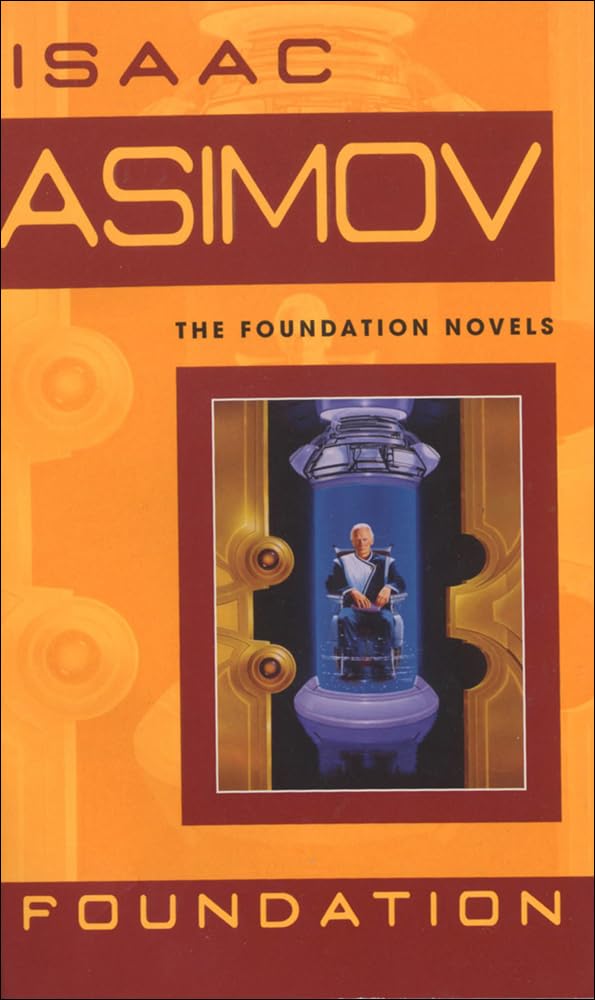
For the Try Something New Mini-Challenge as part of the Dewey’s Books Challenge, Jackie from Farm Lane Books and I teamed up to read something a little bit out of our comfort zone. We chose to read science fiction, a genre neither of us is completely comfortable with. Our choice was Isaac Asimov’s Foundation. What

Read Post

I’m somewhat at a loss of what to say about Gogol’s Wife and Other Stories by Tommaso Landolfi. In some respects, Landolfi’s stories reminded of Borges’ Fictions: they have elements the bizarre. I didn’t enjoy reading Borges (thoughts here), but I did sense a genius and power behind the writing. Landolfi’s writing is likewise laudable,

Read Post

I could not put down the 140-page novella The Stranger by Albert Camus after I picked it up, despite the fact that it is odd and rather disturbing. Camus’ Nobel Prize-winning writing style was absolutely beautiful: it reminded me of both John Steinbeck’s in The East of Eden (which I thought was a perfect combination

Read Post

Reading Grimm’s Complete Fairy Tales was a repetitive process. My 630-page leather edition (from Barnes and Noble Books; not same version as the Amazon link at left) included numerous retellings of stories very similar; it felt as if the compilers were taking translations from multiple sources. Then again, maybe the Grimm brothers wrote down similar

Read Post

I read Jane Austen’s Pride and Prejudice as a teenager – and I loved it. Since then, I watched the A&E movie multiple times, and then last year I watched the newer movie, which was OK. I felt it was certainly time to revisit the novel itself. I was not disappointed. I loved it even

Read Post

In George Orwell’s Animal Farm, the boars lead the other farm animals in a revolution against Mr. Jones’, in hope of a better life. Together, the animals take over Manor Farm, making it their own farm. Running a farm is a lot of work, but the farm animals are convinced the work is worth it

Read Post

In Edwin A. Abbott’s novella Flatland, A Square explains to the three-dimensional world how he lives in Flatland, his world of two dimensions. When a sphere visits his world, his familiar, customary world is upset. Although I had read Flatland a decade ago, I recalled none of the details and greatly enjoyed reading it again.

Read Post

In flowing, beautiful language, The Silmarillion tells the origin and early tales of J.R.R. Tolkein’s middle-earth. Written as “Elven” songs, The Silmarillion is dense at times. Yet as the tale of the creation of Arda and the children of Ilúvatar (both Elves and men) unfolded, I was in awe of not just Tolkein’s incredible control

Read Post

Ficcciones by Jorge Luis Borges is about 170 pages in Spanish; the English translation of the same book is about 120 pages (within Borges’ Collected Fictions). Why, then, has this book taken weeks to get through? Borges’ writing style is powerful. In some sense, I’m glad I struggled through Borges just to get a feel

Read Post