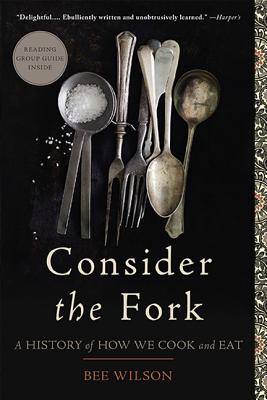
Consider the Fork: A History of How We Cook and Eat by Bee Wilson (to be published October 2012 by Basic Books) captures not just culinary history but cultural history, describing the foods eaten throughout history based on the tools available to prepare them. As a history of cooking, it left me grateful to live
Read Post

Deconstructing Penguins by Lawrence and Nancy Goldstone (Ballantine Books, 2005) has the attractive subtitle of “Parents, Kids, and the Bond of Reading.” Given my love of reading classic and quality literature to my son, this sounded like it would be a perfect fit for me. Once I began reading, however, I found that the Goldstone’s

Read Post

Eliezer Wiesel was a deeply observant 13-year-old Jewish boy when Moishe the Beadle came to his town with descriptions of the horrors of the war, where Jewish men, women, and children were buried in graves they had themselves dug. No one in Eliezer’s town of Sighet in Hungary believed this was happening. It only a

Read Post

I have been wanting to read a general overview of world history, so without any other ideas I picked up Cracking the AP World History Exam 2012, a general review book for high school students produced by The Princeton Review. I read about 200 pages of world history summaries, timelines, and key terms. As was

Read Post

The Art of Changing the Brain by James E. Zull (2002, Stylus Publishing) is subtitled “Enriching the Practice of Teaching by Exploring the Biology of the Brain” and I picked it up because of my new role as teacher to my homeschool aged son. As his primary teacher, I want insight and assistance in understanding

Read Post

Show Me a Story: Why Picture Books Matter (Candlewick, May 2012) is a collection of interviews conducted by Leonard S. Marcus with 21 different children’s illustrators over the past two decades. From Quentin Blake to Eric Carle, Helen Oxenbury, Peter Sis, William Steig, Mo Willems and many more, Mr Marcus covers a variety of backgrounds,

Read Post