
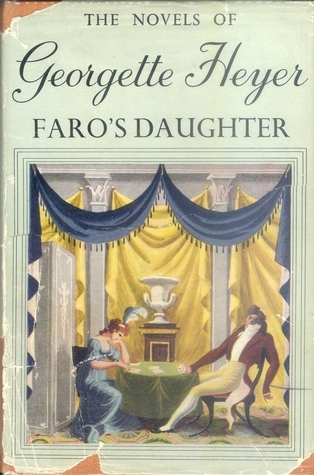
Faro’s Daughter by Georgette Heyer (published 1941) is a dark comedic Regency romance in which the main characters detest each other for most of the novel. Deb Grantham lives in her aunt’s “gaming house,” but she is a respectable young woman in unfortunately circumstance, and she knows that her flirtation with the young and innocent Lord Mabelthorp couldn’t possibly lead her to marriage. But when Mabelthorp’s cousin Max Ravenscar hears of Adrian’s inamorata, Ravenscar is determined to separate the couple, going so far as to bribe Miss Grantham to abandon her attentions toward Mabelthorp. Offended, Miss Grantham is determined to embarrass Max at any cost.
The main focus of the novel is misunderstanding, for Max misunderstands Deb’s purpose, and Deb misunderstands Max’s responses. Misunderstanding continue. As revenge, Deb has Max kidnapped! Other revengeful actions make the novel more and more ridiculous. This is a book with tons of gambling references and boxing too. It’s both ridiculous and perfectly set in the pre-Regency era England.
The first time I read (listened) to the book, I found it quite dark. Max and Deb spend most of the novel insulting each other. Upon this re-listen, I loved the ridiculousness of these insults and the ultimate satisfying ending. It is ultimately as sweet as the other Heyer novels I’ve read, although maybe more ridiculous and improbable than some of them.
