
Garram the Hunter: A Boy of the Hill Tribes by Herbert Best was a Newbery Honor book in 1931. It tells the story of a talented young man in the hilly country in Nigeria and his adventures with his tribe and as he visits the city nearby and learns from the leaders there.
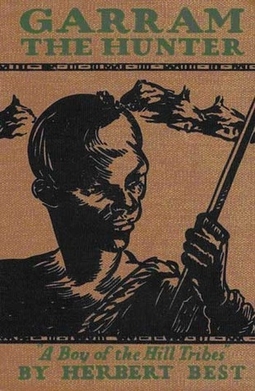
Garram must flee his village when he is suspected of manufacturing a plot against his father, the tribal chief. He flees to a city where he must learn their language and about their religion (Islam). He is able to build trust and positive reputation with the people of the town. When he returns to his village he is able to prove his loyalty as well as bravery from attacks by rival tribes. Through it all, Garram is a hero. It is the traitor, Menud, who must face the consequences. He has framed Garram and ultimately betrays the whole tribe.
I didn’t like this book at all. Although it was short, it dragged a lot. I didn’t like any of the things happening. I felt it was improperly drawing a stereotype of a foreign (to me) civilization. It was written by a white man for a white audience, that much was clear. The foreign-ness was apparent as the story was told. The author emphasized Garram’s black skin time and time again. In other places, the city’s belief in Islam did not feel respectfully portrayed. In fact, the people were afraid of a pig in one scene, which made the Muslim leaders seem ridiculous.
As a whole, the novel Garram the Hunter just gave me an icky feeling. It was a story of bravery but only as much as it illustrated a “foreign” world of tribes and poisoned arrows and warfare. Wikipedia suggests that the author wrote it as inspired by his time in pre-colonial Africa as a civil servant; it read as if it were meant to show the tribes and culture as foreign and uncivilized. Is this how Nigerians would have wanted to be portrayed 1930? Is this a portrayal of the past that Nigerians would accept as OK today?
