
In The Highest Calling: Conversations on the American Presidency, David M. Rubenstein documents his number of interviews with historians, writers, and presidents themselves as they discuss what the presidency means to the presidents of the United States of America. When Rubenstein interviews an historian, it is one who has studied the particular president at length. These scholarly interviews were most informative in giving an overview not just of the men themselves, but of their thoughts and understandings of what the presidency meant to the president.
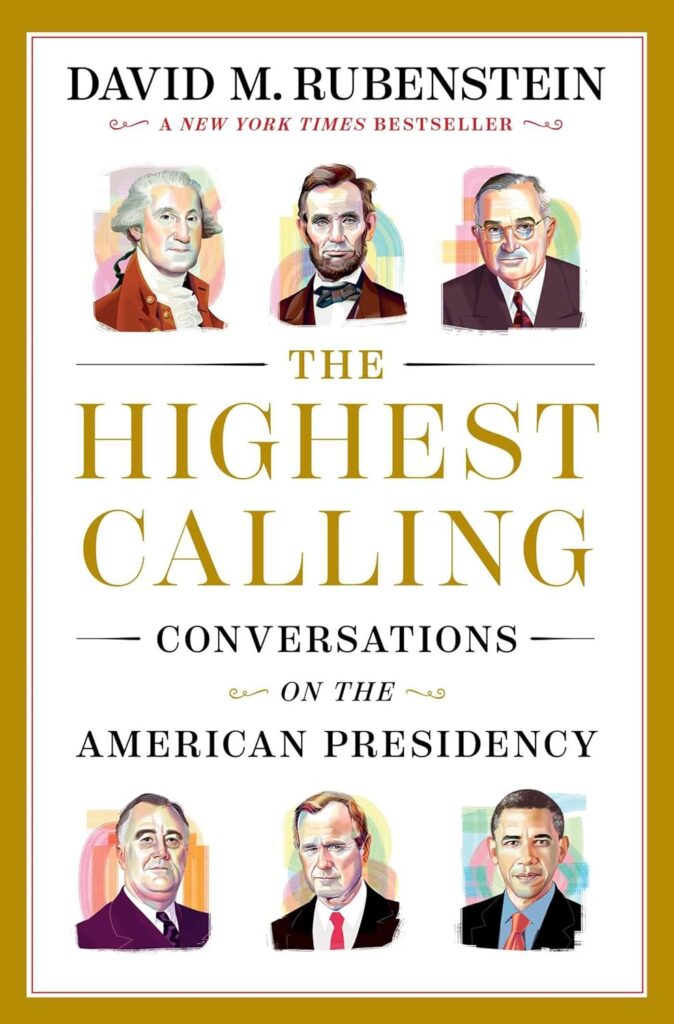
I really enjoyed the brief biographical introduction to a number of presidents. Not all presidents were discussed, but a good number of the most monumental were. I most appreciated those who discussed the presidents of the past. The earliest presidents were the most familiar to me, since I’ve read some biographies of them already, but some of the later presidents were not as familiar in terms of personality and basic biological history. I love President Calvin Coolidge! That sounds so ridiculous since I know so little about him, except that based in this book. That said, I grew up visiting a man who, as a child, had met President Coolidge, so I’ve always had a soft spot for the man.
“It’s a great advantage to the President and a major source of safety to the country for him to know he is not a great man.” Calvin Coolidge, on the presidency.
And one more story: someone said to Calvin Coolidge, junior, “If my father wad president, I would never work in a tobacco field.” Calvin Jr. responded, “If my father were your father , you would.”
Rubenstein had also interviewed the most recent, living presidents, I found these interviews to be less engaging for some reason. I believe distance really does make a difference as we determine how successful or not the presidency of a particular man really has been. Hearing from the Clintons, George W., Trump, and Biden themselves didn’t feel like a history book. It’s just too close to home, I guess. How will we feel about them in the next generation?
In all, I really enjoyed Rubenstein’s interviews. Now I want to read his other books of interviews: How to Lead, in which he interviews leaders of a variety from successful businessmen to social leaders, and The American Experiment, in which he interviews personalities and historians about significant events in American history and how they reflect on the American Dream.
Get The Highest Calling at Amazon. See also How to Lead and The American Experiment.
