The Graphic Alphabet by David E. Pelletier (Caldecott Honor 1997) illustrates the letters doing various things, all with graphic design. This is not your normal alphabet book of “a is for apple”! The “A” illustrates an avalanche, the “B” is illustrates a “bounce”, and so forth. I think it is a clever alphabet book for other

Read Post

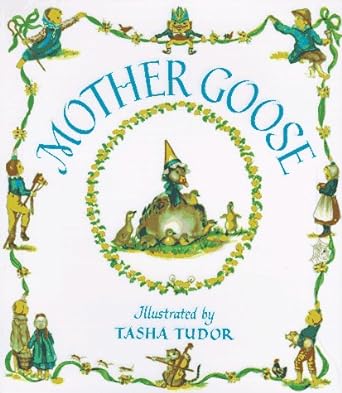
Tasha Tudor’s illustrated Mother Goose is gentle and adorable. The children she illustrates are all rather cherubic. At the same time, there was a dated feel to her collection of nursery rhymes. That may be because some of her rhymes are unfamiliar, but the pictures were not as bright and engaging as other collections. In fact, every

Read Post

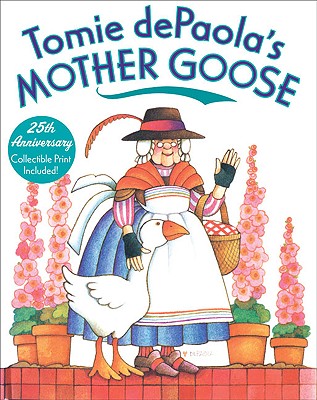
I like how in Tomie De Paola’s Mother Goose, the author has included the lyrics for lullabies along with nursery rhymes in his classically illustrated Mother Goose book. There are often many short rhymes per page. Because there is no structural organization, it is somewhat confusing at times and I wished for thematic structure. But I

Read Post

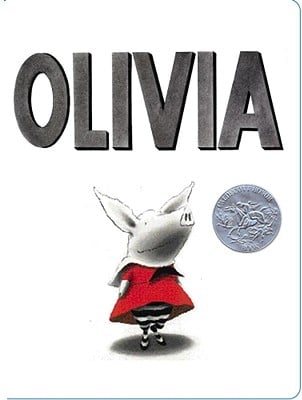
Olivia! by Ian Falconer (Caldecott Medal 2001) is a picture book that perfectly captures the nature of being a child: everything is fun and drama to the little pig Olivia. She wears herself out. She finds her little brother annoying. She likes to try on clothes. The illustrations expand on the subtleties of the text. For

Read Post

Cinderella, or, The Little Glass Slipper by Marcia Brown (Caldecott Winner 1955) has crayon, watercolor, and ink with appropriately gentle pictures for the story of a little Cinderella, who pines after the ball. At first glance (the cover) I wasn’t sure about the illustrations, but once I opened the book and saw the coloring of

Read Post

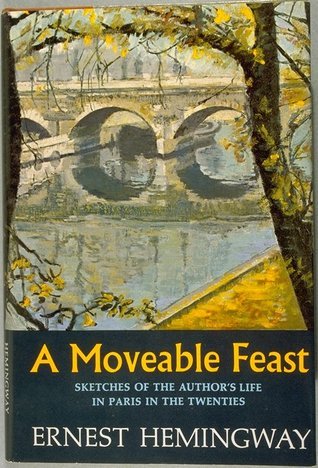
In the introduction to A Moveable Feast (published 1964), his memoir of the years between the wars during which he lived in Paris, Ernest Hemingway writes: If the reader prefers, this book may be regarded as fiction. But there is always the chance that such a book of fiction may throw some light on what has

Read Post

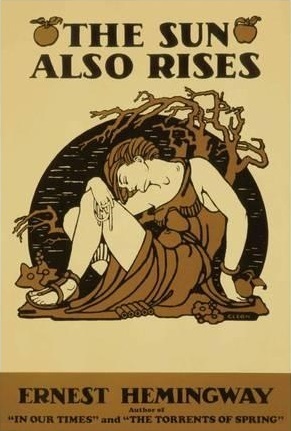
The “lost generation” was a term coined by Gertrude Stein about the young American and British expatriates in Paris during the 1920s. Ernest Hemingway was one of the young friends of Ms Stein. In 1925 and 1926, he wrote his defining “lost generation” book, The Sun Also Rises, while he lived in Paris and visited

Read Post

I read both Tropical Fish by Doreen Baingana and The Book of Chameleons by Jose Eduardo Agualusa more than a month ago, and they were both excellent. They deserve a little bit of book blog attention. Have you read them? What do you think of them? Tropical Fish by Doreen Baingana (2006) is a collection

Read Post

It’s my pleasure to welcome Anthony Trollope to my site as a part of the Anthony Trollope Classics Circuit. Today Mr. Trollope is also visiting It’s All About Books with The Way We Live Now and nomadreader with thoughts on The Warden. See the schedule to see where else he’s visited this week, and if

Read Post

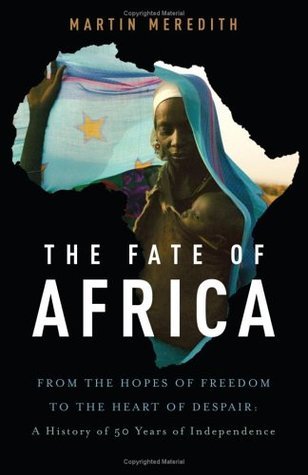
At nearly 800 pages, The Fate of Africa by Martin Meredith is overwhelming in scope. Subtitled A History of Fifty Years of Independence, the book attempts to capture the histories of all the countries on the African continent. Yet, such an ambitious subject cannot adequately be captured in less than 800 pages: each country has

Read Post

I loved George Eliot’s Middlemarch (published 1874; thoughts), despite its 800 pages. I can’t say the same about Eliot’s Silas Marner (published 1861), despite its comparative brevity. Now, if you have been reading my blog in the past, you will know that I tend to read classics and I normally love them, especially Victorian novels.

Read Post

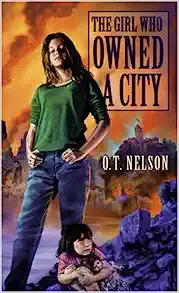
In The Girl Who Owned a City (first published 1975, reissued 1995), O.T. Nelson creates an entirely unbelievable post-apocalyptic scenario for middle-grade readers. In the story, the world population of adults has died of a rapidly spreading plague within the last month. All that remains in ten-year-old Lisa’s immediate world are other children, all under

Read Post