The Dangerous Alphabet by Neil Gaiman is a clever alphabet book. While it’s clearly a children’s book, it has an element of spookiness to it and somber, spidery illustrations that make it just right for adults too. The illustrations by Gris Grimly are not my normal preference. I tend to like more realistic illustration and

Read Post

In medieval children’s primers, the alphabet was the main tool of learning and was often portrayed in a way that also taught religion (Seth Lerer, Children’s Literature, page 61). Poems and teachings would be in the order of the alphabet. This had biblical precedence, as the 22 stanzas of Psalm 118 “use the twenty-two letters

Read Post

After reading Edgar Allan Poe last week, I thought I’d stay in the same era and read Nathaniel Hawthorne’s stories. To my delight, many of Hawthorne’s stories perfectly fit the “gothic” theme of Halloween in a style that I loved. Even though I dislike of being “scared,” these stories were again the perfect amount of

Read Post

In The Uncommon Reader by Alan Bennett, the Queen discovers the joys of reading. As I read about the Queen’s reading journey, I found many similarities to my own reading journey. The Queen voiced my own thoughts about reading, and I loved relating to her. But while The Uncommon Reader was a funny, easy read,

Read Post

I spent two months in Jerusalem in 2000 as part of a religious study abroad experience. While our focus was on Old and New Testament Biblical studies, I also got a healthy dose of Jewish and Palestinian history and religious information. I loved my time there and I loved the people I met – Jew,

Read Post

What am I looking for when I read the Iliad this month? I’ve been wondering that, especially now that I have four translations before me. As I mentioned when I wrote about Aesop’s writers last week, a translation can make a big difference in how a story is portrayed. I’m not against a literal translation,

Read Post

When I heard the concept of Good Masters! Sweet Ladies! by Laura Amy Schlitz (monologues given by  medieval children), I thought it would be horribly boring. Monologues? I thought. What is fun about monologues? I thought children would be bored by these “Voices from a Medieval Village.” To my delight, I found Good Masters! Sweet

Read Post

In The Handmaid’s Tale, Margaret Atwood creates a powerful futuristic dystopia in which a quasi-religious political organization has taken control of the United States, creating a men-centered universe determine to procreate, even if via “handmaids.” In the attitude of George Orwell’s 1984, Ray Bradbury’s Fahrenheit 451, Lois Lowry’s The Giver, and I’m sure many others,

Read Post

In my mind, Edgar Allan Poe is the most well-known Halloween-ish short story writer. To keep up with the season, I reread some of Poe’s short stories. I enjoyed his stories when I was younger – I even rewrote “The Fall of the House of Usher” as a play for my high school’s Halloween “one-act

Read Post

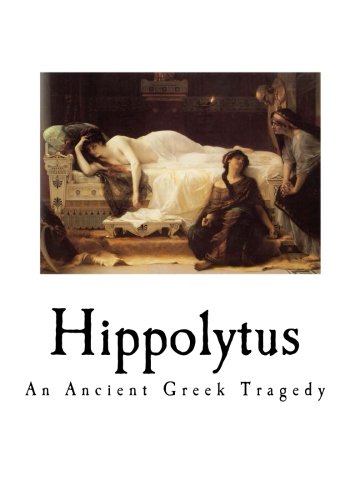
What would a young man say or do if he learned that his step-mother had fallen in love with him? In the play Hippolytus by Euripides, Hippolytus finds out that his step-mother has fallen for him. But what he doesn’t know is that the goddess Aphrodite has had her hand in these matters.

Read Post

A few months ago, I read a version of Aesop’s Fables that I found online at Project Gutenberg, written and published in the early 1900s. I thought I’d read Aesop’s Fables. I was interested, then, to read in chapter two (“Ingenuity and Authority”) of Seth Lerer’s Children’s Literature: A Reader’s History from Aesop to Harry

Read Post