
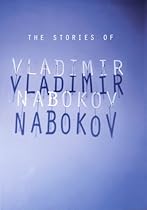
 In his stories, Vladimir Nabokov so perfectly captures a character, or a setting, or an emotion, that I feel that the character is real, the setting surrounds me, and the emotion is my own.
His writing in these stories is so well done that I, a very amateur writer, feel the urge to try my hand at capturing the images around me, a task I will surely fail because I know I will never even remotely measure up to Nabokov’s incredible talent.
The unfortunate aspect of reading more than 60 of Nabokov’s short stories in one month is that the characters he so adroitly creates, the settings he so carefully draws, and the feelings he so perfectly captures are, for the most part, miserable, gloomy, and ultimately depressing. Also, some of his stories have fantastical elements that failed to resonate with me, and most dwell on negative aspects of human nature – subjects that weren’t pleasant for reading in bulk.
But I feel that the overall quality of Vladimir Nabokov’s writing is so extraordinary that he should be read simply for the marvelous experience that comes from reading his words, even if the reader doesn’t necessarily consider the negative underlying themes amazing.
Nabokov’s Style
Unlike the concise Ernest Hemingway, Nabokov uses many words to write his poetic stories. Some paragraphs are longer than a page; sentences are five lines long. It’s very dense, but, to me, beautiful.
Through his wordiness, Nabokov carefully creates a scene, as did James Joyce, and the scene seems to be imperative to many of his stories. Also like Joyce, Nabokov’s purpose or theme for each story isn’t revealed until the end. While Joyce’s stories often left me confused (revealing my ignorance, I suppose), Nabokov’s left me depressed. Sometimes the abrupt endings are a sort of epiphany and sometimes they are just the result of the character’s actions, and we, the readers, must determine Nabokov’s aim.
In that way, Nabokov’s writing reminded me of Anton Chekhov’s stories. Both authors seemed to describe every-day people (peasants in Russia for Chekhov; poor Russian émigrés living in Berlin for Nabokov) living their lives, with a sudden realization (either for the character or the reader) in the last moments of the story illustrate the depressing state of human nature, life, and relationships.
Guy de Maupassant also wrote about the dirty side of human nature. But, while Maupassant’s stories ended up being funny, Nabokov’s stories rarely had humor (although I may have missed any high-brow humor). Some of the stories with fantastic elements reminded me of Edgar Allan Poe‘s or Washington Irving‘s stories. (In fact, one story appropriately refers to Rip Van Winkle.)
In the end, Nabokov has a style completely his own. Just as I felt after reading Flannery O’Connor‘s stories, I can’t place his style and themes into a category with any other short story writer.
Favorites
As I mentioned, Nabokov’s stories tend to be rather sad. My two favorite stories happened to be the least unpleasant. A number of other stories have also stayed with me.
Two Stories
In “First Love,” a man reflects on his first love. In the course of his description of a childhood summer’s events, it’s unclear to the reader whether his first love was traveling by overnight train; swimming at the beach; learning about butterflies; or meeting the little French girl, Colette. This story doesn’t have much plot or grand finale, but it is a beautiful story that I’ve already reread three times.
“The Vane Sisters” was the story that Harold Bloom recommended in his How to Read and Why book list. In this story, a man reflects on his relationships with two sisters, one of whom was once his girlfriend. It also is incredibly subtle. (Highlight to read spoiler.) Nabokov’s subtle ending tells us that this man’s life really hasn’t been all that affected by the life and then the death of these sisters. It’s kind of depressing for the sisters, but an interesting realization for the man. It made me think about my own life and relationships. What impact do certain people have on me? For example, how often do I think about old boyfriends? Did they really impact my life significantly?
Other Stories
While I can only see myself rereading those two stories, there are a number of other stories that I keep remembering, even after starting the next story. Note that I do think Nabokov’s writing improved through the years; if you read the 60+ story volume as I did, start in the middle or go backward.
Here are some that stayed with me, with short introductions.
- “That in Aleppo Once…” His wife never existed, he’s sure of it.
- “A Forgotten Poet.” A dead poet arrives at the banquet held in his honor.
- “A Guide to Berlin.” One man recounts the small details of Berlin.
- “Music.” At a recital, a man sees his ex-wife across the room.
- “Perfection.” A very proper tutor is asked to take his young charge to the sea shore.
- “The Visit to the Museum.” A man goes to a museum to acquire a painting for a friend – and gets lost inside.
- “An Affair of Honor.” A man finds that his wife is having an affair with his friend, an ex-cavalry man, and he must fight a duel to save his good honor.
- “A Slice of Life.” The woman once loved him; now that his wife has left him, he has come to her to get drunk and commiserate.
- “The Dragon.” A dragon awakes after his ten-century slumber.
- “The Fight.” The elderly man he sees at the beach is also the bartender; he observes one night’s bar fight.
- “The Potato Elf.” A small dwarf in the circus seeks love.
- “Terra Incognita.” A group of bug collectors in the tropics get sick, lost, and angry at one another, as told from the perspective of the ill, delirious man.
- “The Reunion.” Two brothers, one living in Russia and one an émigré in Germany, meet after ten years.
- “Breaking the News.” The elderly, deaf woman’s son has died, and no one wants to tell her.
- “Cloud, Castle, Lake.” A man is forced into his first vacation, and he’s hoping that he’ll find the elusive happiness he seeks.
- “The Thunderstorm.” A man awakens in a storm to see Elijah dropping his mantle for Elisha.
The Bottom Line
Have I made myself clear? Maybe not. To be safe, here it is as clearly as I can write it:
Read Nabokov’s short stories, at least one or two. His writing is incredible.
Have you read already read Nabokov’s stories? What did you think? How would you describe his writing style and the themes he writes about?
Note: Because Vladimir Nabokov’s stories are not in the public domain, I cannot link to them online. Here is Wikipedia’s information about him.

I need to get ahold of his short stories!
Amanda, the book cover is a link to the Amazon paperback 🙂 but of course the library is always a better option. (except, with 650+ pages, I had to try to scramble to get it read before it was due…)
Thanks for the great post, Rebecca! I’ll definitely check out his other works after reading Lolita.
Melody, I think I’m just about convinced to give Lolita a read. Thanks for your review…
My parents have one of Nabokov’s novels on their shelves (not Lolita, but I don’t remember which one) and for a long time I have been tempted to pick it up. Always I was a bit hesitant because of Nabokov’s “one famous work”. This post and your other one on Nabokov and the many great reviews of Lolita on other blogs are very much on the way to convincing me to pick up one of his works. I might even read Lolita. The power of bookbloggers!!
But, like you say, the guy wrote so much more than just Lolita, that I would like to read something else by him as well.
Thanks so much for this review, Rebecca!
I love Nabokov’s writing as well. 😀
Myrthe, bloggers have been pretty influential on my reading choices! His stories really are great!
Eva, glad to hear you also like Nabokov’s writing. (Long time, no see! Thanks for your comment and welcome back to the blogging world.)
A dissent on “The Vane Sisters”: the sisters have affected the narrator’s life significantly, even from beyond the grave, but he doesn’t realize it. There are clues embedded in his own telling of the story. Actual clues, and an actual trick ending. Nabokov said this trick could only be used once every thousand years, something like that.
These are certainly some of my favorite short stories. Nice review.
Amateur Reader, thanks for the dissent! I was tricked! I must go reread it now. I was afraid I’d misread something: there is so much in so many of these stories.
Not just you, me too. Also, the editors of the New Yorker – they had published a number of Nabokov stories but passed on this one because they missed the trick. A hint is that the type of puzzle that needs to be solved is specifically mentioned at least twice. My dissent from Nabokov is that not everyone wants to solve puzzles while reading stories!
By the way, your advice on starting at the end or in the middle of the Collected Stories is exactly right.
Amateur Reader, I wonder, in general, how many people read just the first few stories in a “collected works” collection and don’t feel impressed!
of late i perused Lolita by this auther; the philosophy behind the masterpiece was extraordinary. i hope u too give it a read . i’m about to skim off perusing some of his short stories just for the sake of their literary beauty.
saber, I haven’t yet read Lolita, but I plan on it. I love the literary beauty of these stories. Highly recommend them!
I saw your review at the short story challenge blog. I’ve been looking for another Nabokov book to read (I”ve only read Lolita) but I didn’t realise he wrote short stories as well. I love being able to compare an author’s work in two forms — in this case novel and short story. I love Chekhov’s short stories so I am definitely going to get onto this. Plus I just finished reading a Hemingway novel, so I’d like to read some paragraph-long sentences, just for a change! Also, love a story with an embedded mystery…now I’m too excited.
estelle, well, I loved it! It doesn’t really compare to any other style, and it is just great. I hope you enjoy the stories!
Nabokov is my favorite author. His use of language and the human psyche is intoxicating. Bend Sinister was the first book of his I read, and I was hooked. Lolita is also disturbingly beautiful, as are his short stories. I am currently reading his autobiography. Anyone who is teetering on the edge of reading Nabokov- just do it! All I suggest is having a dictionary handy, because his grip on the English language- not his native tongue- puts native English speakers to shame.
Melissa » I still need to read Lolita, I haven’t read much yet. Thanks for your reminder that I need to read more. I did love these short stories.